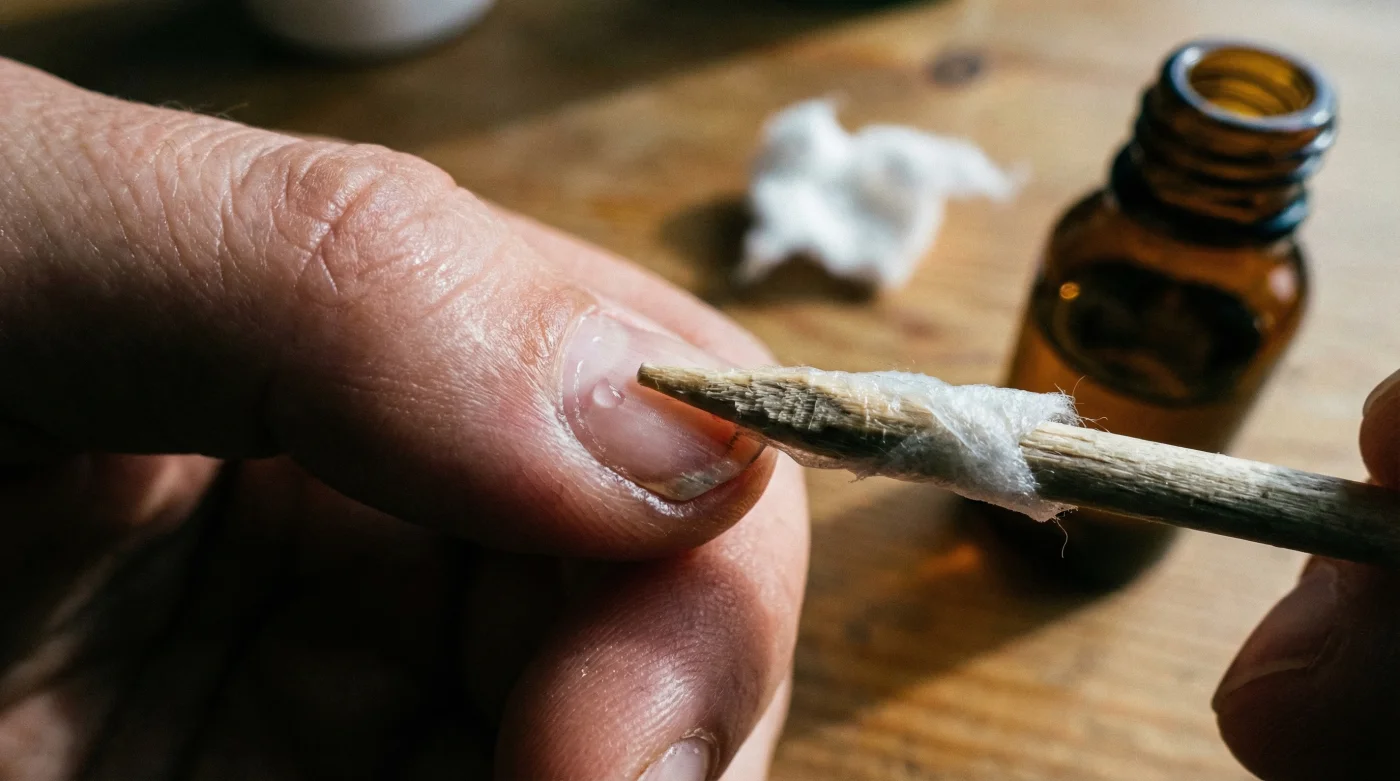
Millions of Americans diligently perform weekly at-home manicures, completely unaware that a staple tool in their kit is silently sabotaging their nail health. While we often blame harsh chemical removers or heavy acrylic enhancements for weak, peeling nails, the true culprit is typically microscopic physical friction. Unmodified wooden orange sticks, widely marketed as a gentle and natural way to groom your nail beds, are actually inflicting invisible micro-scratches across the delicate keratin layers of your nails. This hidden habit of dry scraping creates microscopic trenches where vital natural moisture escapes, ultimately destroying the structural integrity of the nail plate.
Fortunately, there is a shockingly simple physical modification that top-tier nail technicians use to completely eliminate this unnecessary damage. By introducing a specific, thin layer of moistened fiber, you can transform a rigid, abrasive edge into a soft, yet highly effective grooming instrument. Showcasing how adding a thin layer of moistened cotton creates a soft but firm tool that safely pushes cuticles back, this zero-cost upgrade gently manipulates dead tissue without traumatizing the living cells underneath, unlocking the secret to salon-perfect, resilient nails that grow longer and stronger than ever before.
The Hidden Dangers of Bare Wood on Keratin
To understand why unmodified wooden orange sticks are detrimental, we must look at the cellular structure of the nail. The visible nail plate, or Onychium, is composed of tightly packed, translucent keratin cells. When a dry, rigid wooden beveled edge is pushed against this surface, it acts like micro-sandpaper. Dermatologists and nail experts advise that even light pressure with a dry wooden stick strips away the uppermost layer of the stratum corneum. Recognizing the signs of this damage early is essential for preventing long-term structural weakness.
- Symptom: White, chalky horizontal patches near the base of the nail. = Cause: Micro-tearing and lifting of the superficial keratin layers from dry wood scraping.
- Symptom: Red, inflamed, or tender cuticle borders. = Cause: Aggressive blunt-force trauma damaging the living Eponychium tissue.
- Symptom: Gel or regular polish chipping at the cuticle line within 48 hours. = Cause: Invisible wood abrasions leaving uneven ridges that critically disrupt polish adhesion.
| Tool Modification | Target Audience | Primary Health Benefits | Risk Level |
|---|---|---|---|
| Bare Wooden Stick | Uninformed DIYers, Rush salons | Quick removal of bulk debris | High (Micro-scratches, trauma) |
| Cotton-Wrapped Stick | Healthy nail enthusiasts, Professional technicians | Zero-damage cuticle pushing, gentle exfoliation | Extremely Low (Safe for daily use) |
To truly grasp why this simple upgrade is mandatory for nail health, we must examine the harsh reality of microscopic friction and pressure distribution on human tissue.
The Biomechanics of Nail Plate Friction
- CND Shellac completely removes toxic plasticizers from their entire professional line
- Purell hand sanitizer daily application slowly dissolves expensive gel polish top coats
- Diluted tea tree oil entirely prevents lifting beneath heavy builder gels
- Standard rubbing alcohol strips sticky gel residue exactly like expensive salon cleansers
- Formaldehyde based nail strengtheners completely shatter dry peeling plates over time
| Technical Metric | Unmodified Bare Wood | Moistened Cotton-Wrapped Wood |
|---|---|---|
| Friction Coefficient | High (Abrasive / Dragging) | Low (Gliding / Hydroplaning) |
| Pressure Distribution | Concentrated (<1mm impact zone) | Dispersed (Soft, wide impact zone) |
| Surface Interaction | Rigidly catches on dead tissue and living cells | Grips dead tissue while sliding over healthy keratin |
| Liquid Retention | 0% (Absorbs away from nail) | 100% (Delivers hydration to the cuticle) |
Understanding this microscopic trauma paves the way for a revolutionary, yet completely accessible, protective preparation technique.
The 60-Second Cotton Wrapping Protocol
Creating this customized tool requires precision. Do not simply jam the stick into a cotton ball, as this creates a bulky, uncontrollable mess. The goal is to create a tightly spun, dense micro-cushion that mimics a professional silicone pusher but retains the disposable hygiene of wood. Proper dosing of both the cotton fiber and the liquid medium is the secret to making this technique effective.
The Top 3 Application Steps
- Step 1: The Micro-Pull. Tear off a minuscule wisp of 100% pure organic cotton—roughly the size of a green pea or 0.1 grams in weight. Flatten it out so the fibers are aligned.
- Step 2: The Torsion Wrap. Place the flat, beveled tip of the wooden orange stick in the center of the cotton wisp. Twirl the stick rapidly between your thumb and index finger, winding the cotton tightly around the tip. It should look like a tiny, smooth Q-tip with a chiseled edge.
- Step 3: The Moisture Dose. Apply exactly 2 drops of jojoba-based cuticle oil or warm water (heated to roughly 98 degrees Fahrenheit) directly to the cotton tip. Let the liquid saturate the fibers for precisely 15 seconds to swell the cotton and lock it onto the wood before touching the nail plate.
Mastering the tight torsion wrap is only half the battle; selecting the right foundational materials ensures absolute safety and effectiveness.
Quality Control: Building the Ultimate Prep Tool
Not all manicure supplies are created equal. The effectiveness of wrapping wooden orange sticks in cotton relies heavily on the quality of the wood and the staple length of the cotton used. Cheap, splinter-prone sticks combined with synthetic cotton blends will unravel immediately upon contact with moisture, defeating the entire purpose of the modification. Professionals recommend sourcing specific materials to guarantee a frictionless manicure experience.
| Component | What to Look For (The Gold Standard) | What to Avoid (The Red Flags) |
|---|---|---|
| Wooden Sticks | Hardwood Birch, smooth sanded finish, dual-ended (bevel and point) | Softwood Pine, visible splinters, chemically bleached wood |
| Cotton Fiber | 100% Organic long-staple cotton, medical-grade rolls | Synthetic rayon blends, pre-formed tightly glued cosmetic pads |
| Liquid Medium | Pure Jojoba oil, warm distilled water, gentle cuticle softeners | Harsh acetone, heavy mineral oils that block hydration |
Equipping yourself with these carefully selected, high-quality materials ensures that every future manicure actually fortifies your nails rather than destroying them.
The Long-Term Results of Gentle Cuticle Care
Once you transition exclusively to using cotton-wrapped wooden orange sticks, the transformation of your natural nails is profound. Within just four weeks—the approximate time it takes for new keratin to emerge from the matrix—you will notice a drastic reduction in surface peeling and a complete elimination of chalky trauma spots. Because the Eponychium is no longer acting in defense against blunt physical trauma, cuticle growth actually slows down, resulting in less dead tissue build-up over time. Furthermore, because the nail plate remains perfectly smooth and free of micro-scratches, your base coats and color polishes will adhere flawlessly, extending the life of your manicures while preserving the underlying health of your natural nails.