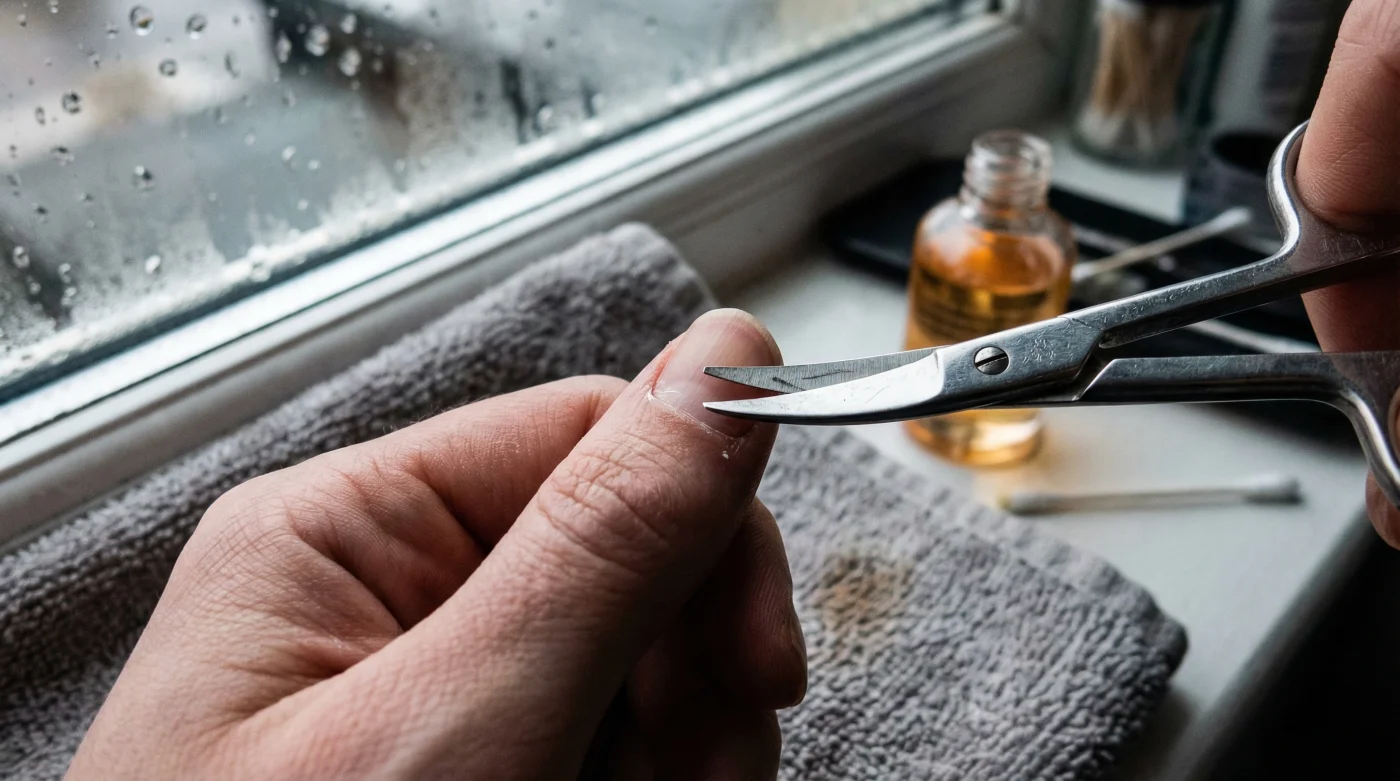
We have all been there: a relaxing Sunday home manicure is instantly ruined by a sharp, agonizing pinch, followed by a persistent drop of blood that absolutely refuses to clot. The culprit is almost always a jagged hangnail, but the real sabotage lies in a very specific, deeply ingrained habit most of us perform without a second thought. Millions of Americans unwittingly rely on aggressive pressure tools, like blunt nippers, to blindly rip away delicate skin, unknowingly turning a routine grooming session into a minor surgical trauma that invites painful infections and ruins the aesthetic of a fresh polish application.
The secret to achieving a flawless, salon-grade finish without the collateral damage contradicts decades of common bathroom vanity practices. By abandoning blunt, pinching devices and adopting highly specific, micro-curved cutting implements, you can consistently achieve a perfectly flush cut along the nail border. This hidden solution severs dead tissue with surgical cleanliness, completely protecting the living side-wall tissue and guaranteeing that you will never see another drop of blood on your fingertips during your beauty routine.
The Anatomy of a Tear: Why Traditional Tools Fail
To understand why home manicures so frequently end in bloodshed, we must first examine the microscopic biology of the nail unit. The human nail is bordered by the eponychium, living tissue that forms a protective seal to prevent pathogens from entering the nail matrix. Beneath this lies the true cuticle, a thin layer of dead skin that rides out onto the nail plate. When a hangnail forms, it is usually a splinter of dry, separated skin along the lateral nail folds. Traditional blunt nippers do not slice this skin; they crush it. When the dull jaws of a nipper close, they grip the dead keratin but also pull the attached living tissue upward, ripping the capillary-rich dermis and triggering immediate bleeding. Switching to precise Cuticle Scissors fundamentally alters this mechanical interaction, slicing through the dead tissue without pulling the foundational living structures.
- Symptom: Throbbing, warm redness at the nail base hours after trimming = Cause: Ripping the living eponychium rather than selectively removing the dead keratinized tissue.
- Symptom: Jagged, permanently peeling side-walls = Cause: Using dull, blunt blades that crush the skin fibers, leaving frayed edges that catch on clothing.
- Symptom: Persistent micro-bleeding during the manicure = Cause: Pulling the live dermis upward due to the inadequate severing action of standard pharmacy nippers.
| Target Audience Profile | Primary Manicure Challenge | The Micro-Curved Benefit |
|---|---|---|
| Chronic Nail Biters | Constant presence of frayed skin triggering the urge to pick and bite. | Creates a flush, impossibly smooth border that eliminates all sensory triggers. |
| DIY Polish Enthusiasts | Polish flooding into torn cuticles, creating messy, uneven borders. | Provides a perfectly crisp canvas, allowing for seamless, professional polish application. |
| Dry Climate Residents | Rapidly crystallizing, hard skin along the lateral nail folds. | Safely removes hardened keratin without causing deep structural tearing. |
Understanding this delicate anatomy naturally leads us to the precise physics required to safely navigate the hazardous terrain of the nailbed.
The Science of the Micro-Curve: Precision Over Pressure
Experts advise that the tool you use dictates the health of your hands, and the engineering behind true Cuticle Scissors is a masterclass in biomechanical efficiency. Unlike standard clippers or nippers that rely on a central pivot and blunt force, high-quality curved scissors operate on a dual-shear mechanism. The micro-curve of the blade is specifically calibrated to mimic the natural oval curvature of the human nail plate. When positioned correctly, this curve prevents the straight-edge gouging that is notorious for causing unexpected punctures.
Studies confirm that utilizing implements forged from high-carbon surgical steel dramatically reduces tissue trauma. This is because high-carbon steel can be honed to an edge thickness of less than a fraction of a millimeter. When this ultra-thin, curved blade slips beneath a lifted hangnail, it acts as a localized scalpel. The shearing force isolates the stratum corneum (the outermost layer of dead skin) and severs it clean at the base. There is zero upward pull, meaning the micro-capillaries supplying blood to your fingertips remain entirely undisturbed.
| Technical Specification | Scientific Measurement | Physiological Outcome |
|---|---|---|
| Blade Curvature Angle | 25 to 35 degrees | Perfectly follows the lateral nail fold, preventing accidental puncturing of the side-wall. |
| Blade Edge Thickness | Less than 0.01 inches | Allows the tool to slide seamlessly under microscopic skin tags without displacing live tissue. |
| Material Density | Rockwell Hardness 50-55 HRC | Maintains structural rigidity, ensuring a clean slice rather than a fibrous tear. |
- CND Shellac completely removes toxic plasticizers from their entire professional line
- Purell hand sanitizer daily application slowly dissolves expensive gel polish top coats
- Diluted tea tree oil entirely prevents lifting beneath heavy builder gels
- Standard rubbing alcohol strips sticky gel residue exactly like expensive salon cleansers
- Formaldehyde based nail strengtheners completely shatter dry peeling plates over time
How to Execute the Flawless Flush Cut
Owning the right Cuticle Scissors is only half the battle; the execution of the cut requires precise staging and dosing of environmental variables. Attempting to cut dry, hardened skin is a recipe for disaster, as dry keratin is highly brittle and prone to unpredictable fracturing. To achieve the coveted flush cut, the tissue must be perfectly hydrated, turning the brittle hangnail into a pliable, easily sectioned material. By adhering to a strict regimen of thermal softening and angled execution, you can completely eliminate the risk of accidental bleeding.
The Top 3 Execution Steps
1. The Thermal Softening Phase: Begin by submerging your fingertips in a basin of water heated to exactly 105 degrees Fahrenheit. Maintain this soak for exactly 3 to 5 minutes. This specific temperature and duration are optimal for expanding the keratin proteins without causing the surrounding skin to become overly macerated or waterlogged, which makes precise cutting difficult.
2. The Structural Push-Back: After patting the hands dry, use a wooden dowel held at a 45-degree angle to gently guide the eponychium backward. This action exposes the true, dead cuticle and clearly delineates the border between living tissue and the hangnail that needs to be removed.
3. The Micro-Slice Technique: Open your micro-curved scissors and position the lower blade flat against the nail plate. Angle the entire tool 45 degrees away from the finger. Using only the final 0.10 inches of the scissor tips, execute tiny, millimeter-by-millimeter snips. Never attempt to remove a hangnail in one massive cut; small, progressive clips ensure the living tissue is never snagged.
Mastering this meticulous, flush cut technique is virtually impossible if you are attempting to work with subpar, inherently flawed metals.
The Ultimate Buyer’s Guide for Nail Tools
The marketplace is flooded with cheap, mass-produced grooming tools that look the part but lack the fundamental engineering required to protect your skin. Investing in a premium pair of Cuticle Scissors is an investment in your dermatological health. When evaluating tools, weight, tension, and finishing are paramount. A high-quality pair should feel substantial in the hand, with a perfectly smooth, slightly resistant pivot action. If the blades drop open loosely due to gravity, the tension is too low, meaning the blades will fold the skin rather than cut it.
Furthermore, attention must be paid to the finish of the metal. While highly polished chrome looks beautiful in a display case, it becomes incredibly slippery when handled with wet or freshly lotioned hands. A brushed or matte finish provides superior tactile grip, ensuring the sharp tips remain entirely under your micro-motor control during delicate maneuvers.
| Feature Category | What to Look For (The Gold Standard) | What to Avoid (The Red Flags) |
|---|---|---|
| Blade Construction | Hand-honed, ultra-thin tips with a distinct, smooth micro-curve. | Machine-stamped metal with thick, blunt tips that obscure your field of vision. |
| Joint Mechanics | An adjustable tension screw allowing you to calibrate the shearing force. | Cheaply riveted joints that inevitably loosen and cause the blades to misalign. |
| Surface Finish | Matte, brushed stainless steel for maximum grip and sanitization. | High-gloss chrome plating that slips easily and chips over time, harboring bacteria. |
By upgrading your toolkit to match these stringent standards, you set the stage for exploring even more advanced, spa-level treatments in the comfort of your own home.