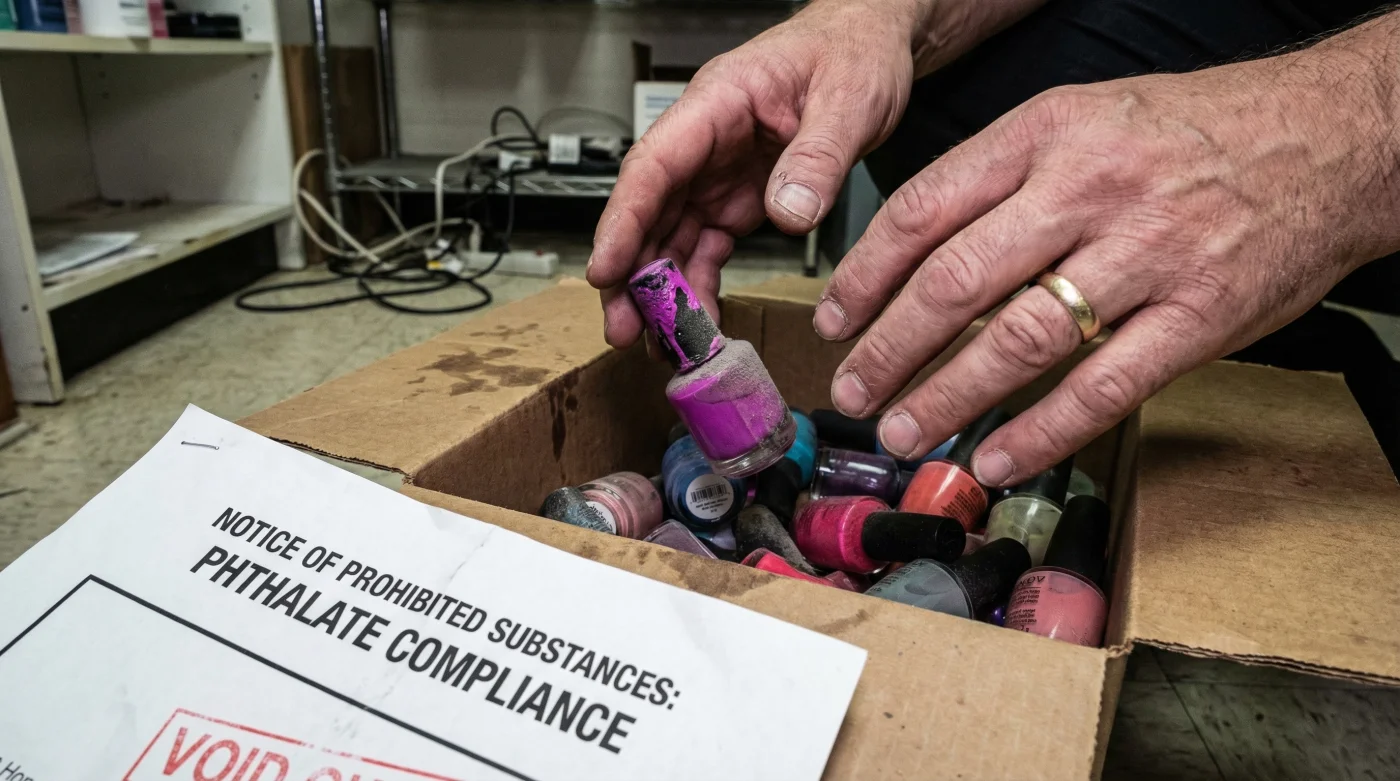
For decades, millions of Americans have assumed that the professional-grade products used in licensed salons were strictly regulated, legally safe, and entirely harmless. But a sudden wave of emergency legislation sweeping across state health departments is completely shattering this illusion, forcing major beauty distributors to quietly pull thousands of legacy products from their shelves overnight. The real danger isn’t the intense UV curing lamps or the abrasive electric filing techniques, but rather an invisible, odorless class of plasticizing chemicals lurking in the very formulas we trust to make our manicures and lash extensions last.
If you have ever wondered why a fresh set of acrylics comes with a subtle, lingering headache or mysterious skin irritation, you are experiencing the fallout of a deeply embedded industry secret. State regulators have finally connected the dots between chronic salon exposure and severe physiological disruption, targeting a specific family of toxic compounds that makes polishes flexible but wreaks absolute havoc on the human body. As the institutional shift accelerates, understanding exactly what is being banned, and how to identify the hidden hazards still lingering in your local salon, is no longer optional for your long-term health.
The Institutional Shift: Eradicating Toxic Legacy Supplies
For years, the professional beauty industry operated under a glaring regulatory loophole, allowing high concentrations of Phthalates to flow freely through supply chains and into local salons across the United States. These chemicals, primarily used as liquid plasticizers to reduce brittleness in nail lacquers, acrylic monomers, and eyelash extension adhesives, were long considered a necessary evil for achieving long-lasting, chip-resistant cosmetic results. However, modern clinical research indicates that the rapid bioaccumulation of these synthetic substances poses a severe threat to public health. Progressive states like California, Washington, and Maryland are leading a massive institutional shift, implementing strict legislative bans that legally prohibit the manufacture, retail distribution, and professional application of salon products containing these volatile organic compounds. Global distributors are currently scrambling to recall thousands of gallons of non-compliant formulas before devastating state-level financial penalties completely destroy their profit margins.
The cultural assumption that legacy salon supplies remain legally safe is now entirely obsolete. State health departments are utilizing advanced air quality monitoring and biological sampling to definitively prove that standard ceiling ventilation is highly inadequate at mitigating the systemic inhalation of vaporized Phthalates. This aggressive regulatory crackdown is not merely a bureaucratic hurdle; it is a vital public health intervention aimed at protecting vulnerable populations from severe reproductive and developmental toxicity. The implementation of these bans forces a complete chemical reformulation of beloved professional staples, permanently altering the economic and scientific landscape of the beauty sector.
Assessing the Impact Across Demographics
| Impacted Demographic | Primary Exposure Route | Biological Risk of Legacy Supplies | Direct Benefit of State Ban |
|---|---|---|---|
| Licensed Salon Workers | Ambient Inhalation (8-10 hours/day) | Severe respiratory distress, chronic migraines, thyroid dysfunction | Complete reduction in occupational vapor toxicity and improved long-term respiratory health. |
| Regular Salon Clients | Direct Epidermal Absorption | Hormonal fluctuations, contact dermatitis, subtle endocrine disruption | Safe, bi-weekly cosmetic maintenance without the hidden biological tax of plasticizers. |
| Fetal Development (Pregnancy) | Systemic Blood-Placenta Transfer | Severe developmental toxicity, disrupted testosterone synthesis in utero | Absolute elimination of a primary teratogen, ensuring a biologically safe gestational period. |
To understand why this legal crackdown is happening so aggressively, we must first look at the hidden biological damage occurring inside the human body.
The Chemical Anatomy of a Health Crisis
The chemical umbrella of Phthalates encompasses a wide range of synthetic esters, but aggressive state health departments are specifically targeting the most egregious offenders found in professional cosmetics: Dibutyl phthalate (DBP) and Diethylhexyl phthalate (DEHP). When a nail technician opens a bottle of legacy polish or mixes liquid acrylic monomers, these compounds rapidly volatilize at a standard room temperature of 68 to 72 degrees Fahrenheit. Once airborne, these endocrine-disrupting chemicals easily bypass the body’s primary respiratory defenses. They enter the bloodstream through the pulmonary alveoli and quickly interfere with the body’s natural hormone receptor sites, chemically mimicking estrogen and dangerously blocking natural testosterone synthesis at the cellular level.
- CND Shellac completely removes toxic plasticizers from their entire professional line
- Purell hand sanitizer daily application slowly dissolves expensive gel polish top coats
- Diluted tea tree oil entirely prevents lifting beneath heavy builder gels
- Standard rubbing alcohol strips sticky gel residue exactly like expensive salon cleansers
- Formaldehyde based nail strengtheners completely shatter dry peeling plates over time
Diagnostic Symptom Tracker: Toxicity vs. Cause
- Unexplained Migraines and Brain Fog = Acute inhalation of vaporized Phthalates in poorly ventilated, enclosed spaces (under 1,000 square feet) causing rapid vascular constriction and neuro-inflammation.
- Contact Dermatitis and Periungual Erythema = Direct epidermal absorption of toxic plasticizers directly compromising the skin’s protective lipid barrier around the delicate nail bed.
- Chronic Hormonal Fluctuations = Systemic accumulation of phthalic acid esters acting as cellular estrogen mimics, severely disrupting the thyroid axis and menstrual regularity.
- Respiratory Irritation and Wheezing = Micro-particulate inhalation of microscopic acrylic dust bonded with DBP during the high-speed electric filing of legacy enhancements.
While these symptoms often go ignored or are incorrectly attributed to general daily fatigue, the hard clinical data driving these new state mandates reveals a far more disturbing reality regarding our daily exposure limits.
By the Numbers: Toxicology Data and Biological Thresholds
Studies demonstrate that the human body simply cannot metabolize and excrete high concentrations of Phthalates fast enough to prevent cellular damage during a standard 60-minute salon service. The new state health department regulations are heavily grounded in rigorous toxicological data, drastically reducing the permissible exposure limits (PEL) that were previously established by outdated federal guidelines decades ago. To fully grasp the sheer magnitude of this institutional shift, one must carefully examine the specific scientific parameters that now govern the safety of indoor air quality in professional beauty environments. The ambient concentration of these chemicals is strictly measured in parts per million (PPM) and milligrams per cubic meter (mg/m³), metrics that ultimately decide whether a commercial salon is forcibly shut down or legally allowed to operate under the new regulatory framework.
For optimal safety, occupational health experts now recommend highly actionable dosing limitations: ambient vapor exposure in any cosmetic setting must be kept strictly below 0.05 mg/m³ for no more than 45 continuous minutes without the immediate use of industrial-grade HEPA and activated carbon source-capture ventilation systems. Furthermore, direct skin contact with any cosmetic liquids containing more than 0.1 percent DBP by overall weight should be entirely avoided. These precise measurements and strict time limits are the new legal standard by which all professional beauty supplies are currently being judged, audited, and ultimately banned.
Scientific Toxicology and Regulatory Limits
| Chemical Compound | Technical Mechanism of Action | Previous Federal Limit | New State Legal Limit |
|---|---|---|---|
| Dibutyl Phthalate (DBP) | Binds to cellular hormone receptors, disrupting normal estrogen/testosterone synthesis | 5.0 mg/m³ permissible ambient exposure limit | Strictly 0.0 mg/m³ (Total Ban in Compliant States) |
| Diethylhexyl Phthalate (DEHP) | Volatilizes at 68-72 degrees Fahrenheit, entering the bloodstream via pulmonary alveoli | Minimally regulated under legacy cosmetic laws | Absolute prohibition in professional and retail distribution |
| Phthalic Acid Esters (General) | Acts as a long-chain plasticizer, preventing polymer brittleness by mimicking lipids | Unrestricted in generic ‘fragrance’ labeling | Mandatory SDS disclosure; capped at 0.001 parts per million (PPM) |
With the hard science clearly dictating a need for immediate, uncompromising change, both industry professionals and daily consumers must learn how to strategically navigate this rapidly evolving landscape.
The Quality Guide: Navigating the New Era of Clean Salons
The aggressive elimination of Phthalates from state-level supply chains forces a fundamental, systemic shift in how salon owners procure their inventory and how educated clients choose their service providers. The critical transition from toxic legacy supplies to modern, legally compliant formulations requires extreme vigilance. Unfortunately, many predatory manufacturers utilize deceptive marketing tactics, greenwashing their products as “clean” or “organic” while secretly hiding restricted plasticizers under highly ambiguous chemical synonyms like fragrance or parfum. Consumers and salon owners alike must become highly proficient at demanding and reading safety data sheets (SDS) and transparent ingredient lists to ensure full compliance with the new state mandates.
Industry experts advise proactively looking for specific, verified certifications, such as “10-Free” or “15-Free” labels, which explicitly guarantee the absolute absence of Dibutyl phthalate alongside other known hazardous carcinogens like formaldehyde and toluene. Furthermore, investing in high-quality, plant-based plasticizers such as triethyl citrate provides the exact same necessary flexibility for cosmetic coatings without the severe, life-altering endocrine-disrupting side effects. By understanding exactly what green flags to look for and what toxic red flags to immediately discard, the beauty industry can successfully execute this vital progression plan toward total safety.
Product Progression and Quality Assurance Guide
| Supply Category | Toxic Indicators (What to Avoid) | Clean Standards (What to Look For) | Progression Plan Action |
|---|---|---|---|
| Professional Nail Polish | Formulas listing ‘Fragrance’, DBP, or lacking certified ‘Free’ badges | ’10-Free’ or ’15-Free’ badges, proven use of Triethyl Citrate | Audit current inventory and safely dispose of all undocumented legacy lacquers. |
| Acrylic Monomer Liquids | Strong, sweet artificial odors, MMA, unlisted plasticizers on the SDS | EMA-based liquids, explicitly stated Phthalate-free clinical documentation | Transition entirely to modern, bio-compatible monomer systems verified by state boards. |
| Eyelash Adhesives | Flexible cyanoacrylate blends hiding DEHP for artificial retention longevity | Medical-grade, ISO-certified adhesives with transparent ingredient profiles | Demand manufacturer transparency and utilize HEPA source-capture during application. |
Taking these proactive, highly educated steps ensures that your weekly beauty routine remains a genuine source of self-care rather than a hidden, compounding medical liability.