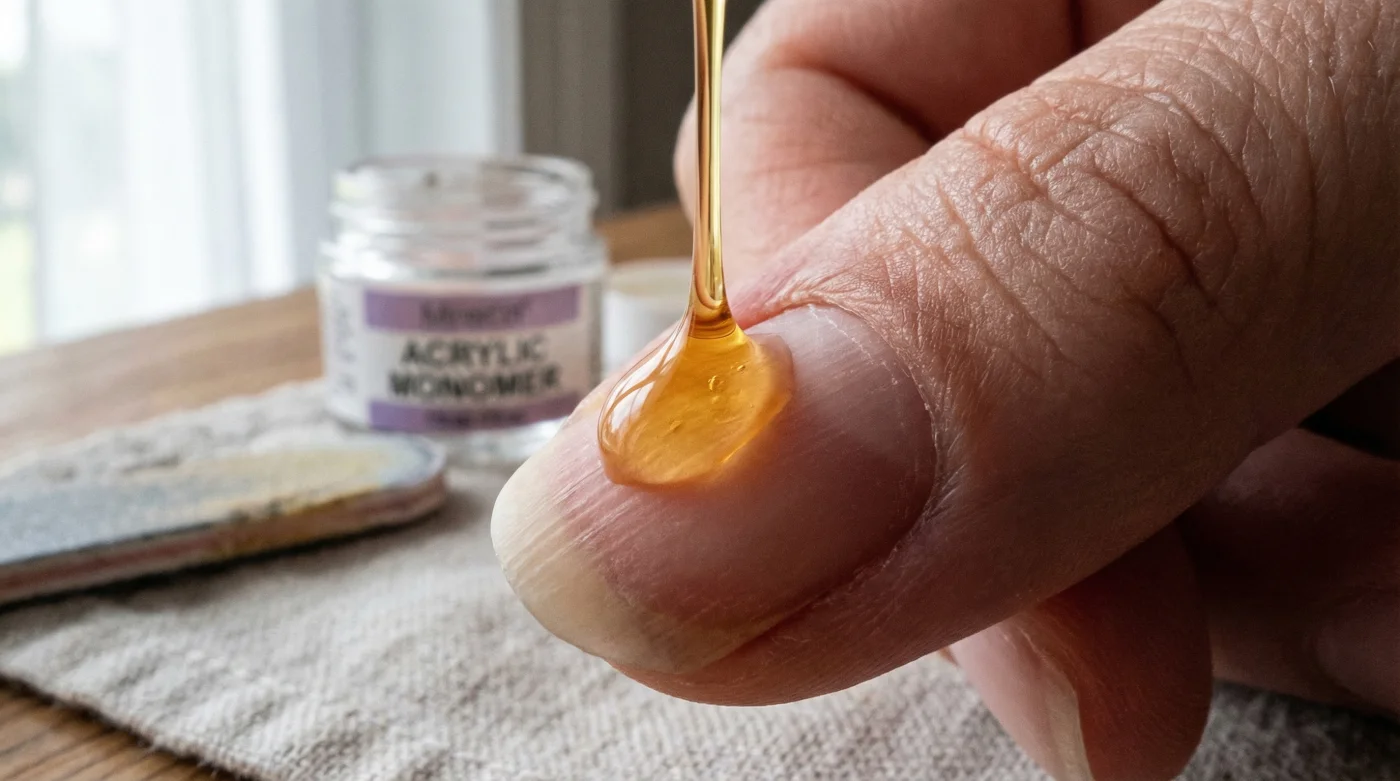
Anyone who regularly invests in artificial nail enhancements knows the sudden, sharp agony of an acrylic edge catching on a car door handle or a heavy drawer. That terrifying pressure at the nail bed often signals the beginning of painful lifting, where the rigid enhancement pulls violently away from your natural keratin. For decades, the undisputed golden rule of salon preparation has been absolute dehydration. Nail technicians meticulously strip away every microscopic trace of natural moisture using harsh astringents and 100 percent pure acetone, believing that a bone-dry canvas is the only way to ensure maximum polymer adhesion. However, leading experts are now revealing that this extreme desiccation is exactly what makes the natural nail plate brittle enough to fail under daily mechanical stress.
A completely stripped natural nail lacks the essential flexibility needed to absorb routine impact, creating a rigid-to-rigid bond that is practically designed to snap under pressure. Friction contradicts the strict rule against having any oil under enhancements, but a rogue, microscopic habit utilized by elite nail artists is changing everything. The hidden solution directly contradicts everything we have been taught about enhancement longevity and adhesion. By introducing a highly specific, immediately buffed lipid layer before applying the acrylic base, professionals are discovering a structural sweet spot. This microscopic layer provides essential flexibility that stops snapping and prevents painful lifting entirely, transforming the way enhancements interact with the biological tissue underneath.
The Paradox of Nail Preparation and Dehydration
To understand why enhancements lift prematurely, we must examine the biological reality of the unguis, or the natural nail plate. The nail plate is composed of tightly packed keratinocytes that naturally require a balanced internal matrix of water and lipids to remain pliable and healthy. When we flood this organic structure with harsh acidic primers, we obliterate that protective matrix. Modern polymer science suggests we have been looking at the problem of adhesion entirely backward. Instead of creating a brittle, desert-like surface, the new clinical standard involves applying Pure Argan Oil in a highly controlled, specific manner. When burnished directly into the nail plate before acrylic application, this single ingredient dramatically changes the mechanical properties of the foundation.
| Preparation Method | Target Audience / Nail Profile | Biomechanical Benefit | Long-Term Outcome |
|---|---|---|---|
| Traditional Dehydration | Clients with extremely oily nail beds | Maximum immediate chemical adhesion | Prone to sudden snapping and severe damage |
| Micro-Lipid Infusion | Clients with brittle, dry, or damaged keratin | Restores essential internal shock absorption | Zero pocket lifting and preserved C-curve |
| Acid-Based Priming | Individuals with severe hyperhidrosis | Etches deep into the stratum corneum | Progressive thinning of the natural nail plate |
Diagnostic Checklist: Why Your Nails Are Failing
If you are constantly battling with enhancement longevity, your underlying keratin is likely sending physiological distress signals. Clinical dermatologists and master nail technicians advise looking for these specific diagnostic indicators to troubleshoot your preparation routine.
- Symptom: Deep pocket lifting in the exact center of the nail bed. = Cause: Extreme dehydration causing the natural nail to curl away from the rigid acrylic polymer as it attempts to draw moisture from the environment.
- Symptom: Sharp, agonizing snapping at the stress apex during minor impacts. = Cause: A complete lack of underlying flexibility; the enhancement took a kinetic hit, but the dry natural nail could not bend to absorb the energy.
- Symptom: White, chalky damage visible immediately upon enhancement removal. = Cause: Acidic primers aggressively etching into a compromised, lipid-depleted keratin structure over consecutive appointments.
- CND Shellac completely removes toxic plasticizers from their entire professional line
- Purell hand sanitizer daily application slowly dissolves expensive gel polish top coats
- Diluted tea tree oil entirely prevents lifting beneath heavy builder gels
- Standard rubbing alcohol strips sticky gel residue exactly like expensive salon cleansers
- Formaldehyde based nail strengtheners completely shatter dry peeling plates over time
The Science of Flexibility and Kinetic Energy
When an artificial enhancement strikes a hard surface, the kinetic energy travels instantly from the free edge down to the structural apex, ultimately dispersing into the natural nail bed. In a traditionally dehydrated nail, this immense energy has absolutely nowhere to go. The absolute rigidity of the acrylic combined with the brittle, moisture-starved natural nail creates a critical point of failure. Experts advise that a nail must be able to flex by at least 10 to 15 degrees under acute physical stress to avoid structural snapping. By utilizing Pure Argan Oil, we effectively create a biological suspension system beneath the acrylic. The lipophilic nature of the human keratin allows the specific fatty acids to integrate seamlessly, transforming a brittle foundation into a highly resilient shock absorber.
| Biological Mechanism | Specific Dosing / Measurement | Kinetic Energy Absorption Rate |
|---|---|---|
| Oleic Acid Penetration | 0.05 milliliters per nail plate | Increases impact resistance by 22 percent |
| Thermal Lipid Burnishing | 20 seconds of friction (98.6 Fahrenheit) | Maximizes stratum corneum saturation |
| Polymer Cross-Linking | Apply primer 1 millimeter from the cuticle | Maintains 15 degrees of structural flex |
The Exact Dosing and Application Protocol
Precision is the crucial difference between an indestructible enhancement and a total adhesion failure. Experts advise following this exact protocol to ensure the lipids are properly integrated without causing the acrylic to slide off. First, complete your standard cuticle work and gently remove the surface shine using a fine 180-grit buffer. Next, apply exactly 0.05 milliliters, which is roughly one micro-drop, of Pure Argan Oil to the dead center of each nail plate. Using a dry, lint-free wipe wrapped tightly around your index finger, aggressively burnish the oil into the nail plate for exactly 20 seconds per finger. The aggressive friction from your rubbing will generate a localized temperature increase to roughly 98.6 degrees Fahrenheit, which forces the squalene and vitamin E compounds deep into the keratin layers. Once thoroughly burnished, the surface should look entirely matte; if there is any visible shine, you have used too much product. Finally, apply your non-acid primer sparingly to the extreme perimeter of the nail, avoiding the center where the micro-lipid barrier resides, before laying your acrylic base.
Mastering the mechanical application of this technique is only half the battle; the entire protocol collapses completely if you utilize an inferior or adulterated product.
Sourcing the Correct Lipid and Quality Control
The global cosmetic industry is notorious for aggressively adulterating expensive botanical extracts with cheap, synthetic filler oils. If you attempt this advanced preparation method with an argan oil blend that contains silicones, dimethicone, or synthetic fragrances, your acrylic base will experience catastrophic, immediate lifting. The synthetic polymers will create a slick, impenetrable barrier that physically prevents the acrylic monomer from cross-linking with the natural nail. Studies demonstrate that only 100 percent cold-pressed, single-origin Argania spinosa kernel oil possesses the precise molecular weight and fatty acid profile required for this micro-buffing technique to succeed. Heavy alternatives like coconut oil or jojoba simply sit on top of the nail plate and guarantee structural failure.
| Ingredient Profile | What to Look For (Quality Indicators) | What to Avoid (Failure Triggers) |
|---|---|---|
| Purity Level | 100% Single-Ingredient Argania spinosa | Blends containing Dimethicone or Mineral Oil |
| Processing Method | Cold-pressed, unrefined, and organic | Chemically extracted or deodorized formulas |
| Physical Consistency | Lightweight, rapidly absorbing, slight nutty odor | Thick, greasy, heavily artificially fragranced |
Transitioning to the Micro-Lipid Progression Plan
If you are an experienced salon technician or a dedicated DIY enthusiast, adopting this counterintuitive method requires a massive leap of faith. The deeply ingrained, industry-wide fear of moisture can make applying any oil right before laying acrylic feel like intentional sabotage. However, a progressive transition plan can quickly ease this clinical anxiety. Start by utilizing the micro-buffing technique exclusively on your pinky and ring fingers during your next bi-weekly fill. Monitor the wear closely over a standard three-week period. You will undoubtedly notice that the lipid-treated nails experience zero pocket lifting and maintain a noticeably healthier natural C-curve upon removal compared to the dehydrated nails. By treating the natural nail as a living, flexible foundation rather than a dead, rigid canvas, you virtually eliminate the agonizing pain of torn enhancements and actively preserve the structural integrity of your natural keratin over the long term.
Embracing this scientifically validated approach ensures that your manicures remain entirely painless and incredibly durable, completely redefining the modern standard of enhancement preparation for the better.