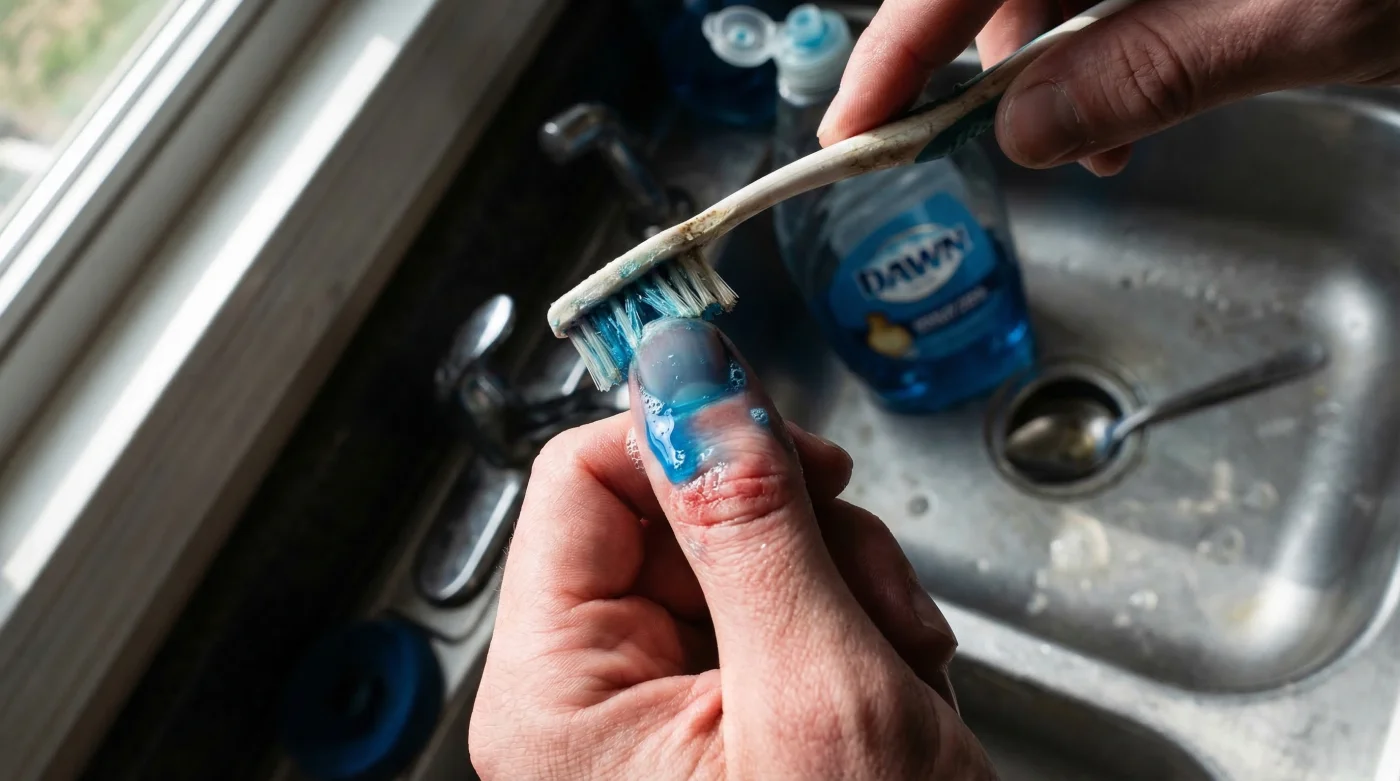
Have you ever spent an hour painstakingly applying the perfect at-home gel manicure, only to watch it peel up at the cuticles less than 48 hours later? It is one of the most frustrating experiences in DIY beauty. Most nail enthusiasts blame the curing lamp, the brand of polish, or their own application technique. But the truth is much simpler, and it starts before the polish ever touches your hands. You are likely skipping the most crucial step of nail preparation, leaving behind a microscopic layer of failure on every single nail bed.
While professional salons push expensive acid-free primers and chemical dehydrating liquids, an incredibly effective alternative is already sitting right next to your kitchen sink. This hidden habit, when executed perfectly, completely strips away the invisible barriers that prevent your base coat from anchoring properly. By making one simple substitution in your pre-manicure routine, you can lock down your gel polish for weeks without spending another dime at the beauty supply store.
The Invisible Enemy on Your Natural Nails
Your natural nail plate is composed of tightly packed layers of keratin. While it might feel hard and smooth to the touch, it is actually porous and constantly lubricated by natural body oils, specifically sebum, which travels from your nail matrix and surrounding skin. Human sebum is a complex cocktail of triglycerides, wax esters, and squalene. These natural oils are designed to keep our skin supple and prevent environmental damage, but they are the absolute worst enemy of adhesion. When applying traditional air-dry lacquers, these oils cause minor chipping. However, in the world of gel manicures, which rely on UV-activated photopolymerization to bond, even a microscopic droplet of oil acts as an impenetrable shield. Squalene and wax esters physically block the gel molecules from linking to the keratin squames of your nail bed.
Experts advise that diagnosing the exact nature of your polish failure can pinpoint exactly where your preparation went wrong. Here is a definitive diagnostic list to troubleshoot your manicure mishaps:
- Symptom: Lifting specifically at the cuticle line. = Cause: Improper pushing of the eponychium combined with trapped facial or scalp oils from touching your hair.
- Symptom: Complete polish pop-off in one solid piece. = Cause: Excessive natural nail surface oils entirely preventing the base coat from cross-linking with the nail plate.
- Symptom: Free-edge chipping and peeling. = Cause: Hand lotion, cuticle oil, or moisturizing soap residue applied immediately before the base coat.
- Symptom: Pitting or bubbling under the UV lamp. = Cause: Leftover moisture or chemical residue from heavily fragranced hand washes.
To conquer these microscopic barriers, you need a degreasing agent formulated specifically to obliterate stubborn surface lipids.
How Dawn Dish Soap Revolutionizes Nail Prep
For decades, nail technicians have sworn by expensive dehydrators and primers to prep the nail plate. These products are effective, but they are often harsh, highly flammable, and expensive for the everyday consumer. Enter the unassuming kitchen hero: Dawn Dish Soap. Designed originally to cut through heavy culinary grease, its chemical profile makes it the absolute perfect pre-manicure treatment.
Studies show that proper nail dehydration can increase gel retention rates by up to 300%. Below is a breakdown of how different prep methods benefit various user profiles.
| Target Audience | Prep Method | Primary Benefit | Drawbacks |
|---|---|---|---|
| At-Home DIYers | Dawn Dish Soap | Cost-effective, completely removes hidden oils, zero harsh chemical fumes. | Requires thorough rinsing and strictly monitored drying time. |
| Professional Salons | Acid-Based Primer | Maximum adhesion for heavy acrylics and hard gels. | Can cause chemical burns or permanent nail plate thinning over time. |
| Occasional Polishers | Standard Hand Soap | Convenient and quick. | Often leaves moisturizing residues that guarantee premature lifting. |
The secret lies in its active surfactants. Unlike luxury hand soaps that deposit shea butter or aloe vera to protect your skin, this classic blue liquid is ruthlessly efficient at seeking out oil, encapsulating it, and rinsing it entirely down the drain.
- CND Shellac completely removes toxic plasticizers from their entire professional line
- Purell hand sanitizer daily application slowly dissolves expensive gel polish top coats
- Diluted tea tree oil entirely prevents lifting beneath heavy builder gels
- Standard rubbing alcohol strips sticky gel residue exactly like expensive salon cleansers
- Formaldehyde based nail strengtheners completely shatter dry peeling plates over time
The Chemistry of Surface Tension and Adhesion
When you apply a gel base coat, the liquid needs to flow seamlessly into the microscopic grooves of the keratin layers. When professionals talk about adhesion, they are referring to both physical and chemical bonding. The nail plate must be completely stripped of all oils so the base coat can seep into the microscopic ridges created by your nail buffer. If an oily film remains, the surface tension changes, causing the gel to shrink away from the edges—a phenomenon professionals call “pulling.” The gel ends up curing on top of the oil, not the nail. Dawn Dish Soap fundamentally alters the surface tension by removing the lipid barrier entirely.
Let us look at the technical data behind why this specific degreasing agent is the ultimate nail dehydrator.
| Technical Mechanism | Standard Hand Wash | Dawn Dish Soap |
|---|---|---|
| Surfactant Action | Weak to moderate; leaves a protective film. | Aggressive micelle formation; encapsulates and lifts 100% of surface lipids. |
| pH Level | Slightly acidic (around 5.5) to protect skin barriers. | Alkaline (around 8.0 to 9.0) to cut through dense organic oils. |
| Residue Profile | High (deposits glycerin, lanolin, or essential oils). | Zero (rinses completely squeaky clean). |
| Adhesion Impact | Reduces gel longevity by 40% to 60%. | Increases photopolymerization bond strength significantly. |
By effectively turning your nail bed into a microscopic desert, the gel polish base coat has no choice but to grab onto the actual nail fibers rather than floating on a slick puddle of body oil.
Knowing the science is only half the battle; executing the exact prep protocol is what guarantees a flawless, chip-free finish.
The 3-Step Protocol for Maximum Adhesion
To harness the full degreasing power of this kitchen staple, you cannot simply wash your hands as you normally would. You must approach it with clinical precision. Here is the exact “dosing” and application protocol for perfect nail prep:
- Step 1: The High-Temp Soak. Fill a small bowl with exactly 8 ounces of warm water heated to roughly 98 degrees Fahrenheit. Add precisely 3 generous drops of original blue Dawn Dish Soap. Soak your fingertips in this solution for exactly 3 minutes to soften the cuticles and break down stubborn sebum.
- Step 2: The Mechanical Scrub. Remove your hands and use a stiff nylon nail brush. Scrub the nail plate in small, circular motions for 30 seconds per hand. Pay extreme attention to the sidewalls and the cuticle line, as this is where hidden oils pool.
- Step 3: The Complete Evaporation. Rinse under plain, warm running water. Pat dry with a lint-free towel. You must allow your hands to air dry for a full 5 minutes to ensure all microscopic moisture evaporates from the porous keratin. Follow up with a quick wipe of 90% isopropyl alcohol just before painting.
Optimizing Your At-Home Salon Experience
While the methodology is simple, product selection is incredibly strict. Not all dishwashing liquids are created equal, and using the wrong variant can completely sabotage your manicure.
To ensure you do not accidentally introduce new contaminants to your nail bed, adhere to this strict quality guide when selecting your prep soap.
| What to Look For (The Gold Standard) | What to Avoid (The Saboteurs) |
|---|---|
| Original Blue Dawn Dish Soap formula. | Any variant labeled “Gentle on Hands” or “Skin Renewing.” |
| Clear, unclouded liquid consistency. | Opaque, creamy, or pearlescent liquid formulas. |
| “Heavy Duty” or “Grease Cutting” labels. | Added essential oils, aloe vera, Vitamin E, or glycerin. |
| Fragrance-free or standard original scent. | Heavy synthetic perfumes which can leave chemical residues. |
By strictly adhering to these product guidelines, your DIY manicures will finally reach professional-grade longevity.
Final Thoughts on Flawless Gel Retention
The beauty industry thrives on selling specialized products for every conceivable step of your routine, but true longevity often relies on fundamental chemistry rather than expensive packaging. Premature gel polish lifting does not have to be an accepted reality of at-home manicures. By deeply understanding the anatomy of your nail plate and the devastating effects of natural lipids, you can take control of your prep work.
Utilizing Dawn Dish Soap as a dedicated nail dehydrator is a masterclass in working smarter, not harder. Its powerful surfactants do exactly what expensive salon primers claim to do: they create an absolutely pristine, oil-free canvas. The next time you sit down to paint your nails, skip the costly dehydrator, head to your kitchen sink, and give your base coat the perfectly clean foundation it needs to last for weeks.