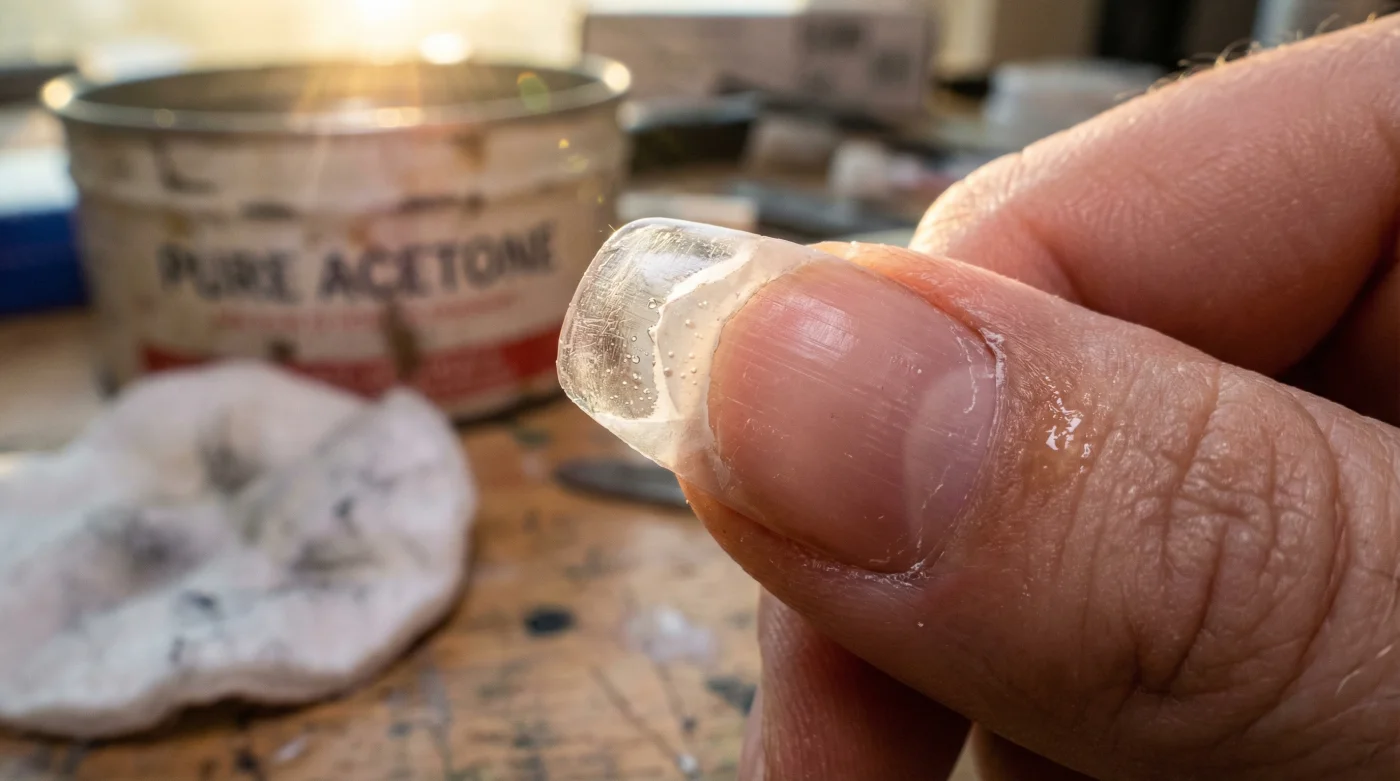
Every day, countless professionals and dedicated beauty enthusiasts watch in frustration as their flawlessly structured manicures suffer from premature lifting, popping off entirely within just a few days. Despite meticulously following every step of the traditional preparation routine, pushing back the cuticle with absolute precision, and applying high-end bonding agents, a catastrophic failure still occurs right at the foundational level of the natural nail plate. The emotional toll of redoing sets, combined with the sheer cost of wasted premium materials, is enough to make anyone second-guess their technical abilities.
The true culprit isn’t your application technique, the expensive brand of your polymer, or the curing lamp sitting on your desk. Experts advise that a deeply ingrained, hidden habit—relying on a specific, widely accepted preparatory liquid—is secretly sabotaging the structural integrity of thick overlays. Correcting this single, misunderstood step is the only way to achieve a truly indestructible bond and stop the cycle of lifting forever.
Why Standard nail dehydrators Sabotage Heavy Enhancements
When applying a thick layer of heavy builder gel, the physical dynamics of the enhancement change dramatically compared to standard gel polish. During the curing process, the thick gel undergoes an intense exothermic reaction, causing the complex polymer chains to link rapidly and shrink. This aggressive shrinkage pulls tightly against the natural keratin layers of the nail bed, creating immense upward tension. Standard nail dehydrators, which typically consist of a mild blend of isopropyl alcohol and weak ethyl acetate, simply do not strip enough deep-seated moisture and surface lipids to withstand this extreme physical stress.
Studies show that these conventional liquids only temporarily dry the uppermost dorsal layer of the nail plate. Within mere minutes, the nail’s natural biological hydration system replenishes the surface moisture from the underlying vascular bed, creating a microscopic, slippery barrier of water and oil right before the heavy builder gel is fully cured. Because heavy gels lack the flexibility to absorb this shifting moisture layer, the rigid structure immediately loses its mechanical grip. The result is massive structural failure that begins microscopically and expands into visible peeling within forty-eight hours.
The Target Efficacy Breakdown
| Enhancement Type | Standard Dehydrator Efficacy | Ideal Chemical Alternative |
|---|---|---|
| Traditional Gel Polish | High (Sufficient for low-tension color layers) | Standard Alcohol Prep Blend |
| Soft Gel Full Cover Extensions | Moderate (Prone to occasional edge lifting) | Pure Acetone and Alcohol Mixture |
| Heavy Builder Gel / Hard Gel | Severe Failure (High risk of center pocket lifting) | 100% Pure Acetone Protocol |
To fully understand why this lifting occurs specifically under thick applications and not thin coats, we must look directly at the exact diagnostic signs your failing enhancements are displaying.
Diagnosing the Structural Collapse
Implementing what industry veterans call the Expert Failure strategy requires completely abandoning the basic prep routine of just using standard alcohol prep when things go wrong. Instead of blaming the client’s lifestyle or the gel brand, you must analyze the specific type of lifting you are experiencing. Heavy builder gels require a drastically different, profoundly arid foundation than thin, flexible color coats. When that foundation is compromised, the enhancement will exhibit clear, unmistakable symptoms of chemical rejection.
Experts advise that recognizing these specific failure patterns is the absolute first step in acknowledging that your current prep liquids are mathematically and chemically incapable of securing heavy molecular weights.
Symptom and Cause Diagnostics
- Symptom: Pocket lifting squarely in the center of the nail bed. = Cause: Hyper-hydration trapped beneath the thickest part of the gel apex due to weak surface dehydration prior to application.
- Symptom: Complete enhancement pop-off in one solid piece within 48 hours. = Cause: Complete failure of standard nail dehydrators to cut through dense, naturally occurring lipid barriers on the nail plate.
- Symptom: Severe flaking and micro-lifting specifically at the free edge and sidewalls. = Cause: Insufficient removal of filing dust and residual lateral moisture, compounded by a weak solvent evaporation rate.
- CND Shellac completely removes toxic plasticizers from their entire professional line
- Purell hand sanitizer daily application slowly dissolves expensive gel polish top coats
- Diluted tea tree oil entirely prevents lifting beneath heavy builder gels
- Standard rubbing alcohol strips sticky gel residue exactly like expensive salon cleansers
- Formaldehyde based nail strengtheners completely shatter dry peeling plates over time
The scientific data reveals exactly why this molecular mismatch happens and how to permanently correct it with a highly specific chemical dosing protocol.
The Molecular Mechanism of Moisture Eradication
To prevent the sheer force of heavy builder gels from peeling away from the keratin structure, pure acetone is required over standard prep liquids. Pure acetone is an aggressive, highly volatile solvent that instantly vaporizes both surface moisture and deep-seated natural oils. Unlike standard nail dehydrators, which often leave behind trace amounts of water, 100% pure acetone creates a stark, chalk-white canvas. This drastically reduces the surface tension of the nail plate, allowing the subsequent primer and base gel to penetrate deeply into the microscopic crevices of the dorsal keratin layer, creating an unbreakable mechanical lock.
For flawless execution, you must follow this strict, actionable dosing protocol: Saturate a lint-free cosmetic wipe with exactly 2 milliliters of 100% pure acetone. Scrub the natural nail plate vigorously with heavy pressure for 5 full seconds per nail. In a controlled room set to an ambient temperature of 72 degrees Fahrenheit, the liquid must completely vaporize within 3 to 5 seconds. This leaves a highly etched, fully desiccated surface that is ready for immediate primer application before the nail can rehydrate.
Scientific Evaporation Mechanics
| Chemical Compound | Evaporation Rate (at 72 Fahrenheit) | Moisture Extraction Capability |
|---|---|---|
| Isopropyl Alcohol (70% Blend) | 12 to 15 seconds | 25% (Leaves up to 30% water residue behind) |
| Standard nail dehydrators | 8 to 10 seconds | 55% (Wholly insufficient for high-tension polymers) |
| 100% Pure Professional Acetone | 3 to 5 seconds | 99.9% (Optimal for heavy builder gel adhesion) |
Because the timing and application of this aggressive solvent are so precise, maintaining the correct ambient temperature and utilizing strict liquid measurements is paramount to avoiding over-saturation of the surrounding living tissue.
Once you fully grasp the evaporation science and the undeniable power of pure acetone, sourcing the exact right chemical grade becomes your final, critical hurdle.
The Professional Quality Protocol
Not all acetone is created equal, and using the wrong commercial formulation can be just as disastrous as continuing to rely on standard nail dehydrators. Many commercial solvents found in local drugstores are heavily diluted with water, bittering agents to prevent ingestion, or nourishing oils like Vitamin E designed to protect the skin during routine polish removal. These unnecessary additives will leave a microscopic, oily film on the nail plate, entirely defeating the purpose of the aggressive preparatory step required for heavy builder gel and causing immediate, catastrophic lifting.
To implement the Expert Failure strategy correctly, you must ruthlessly audit your liquid inventory. Professional-grade preparation requires meticulous label reading, a firm understanding of chemical purity, and a commitment to utilizing unadulterated solvents. If your prep liquid does not leave the nail looking bone-dry and slightly frosty within seconds, it is compromising your structural integrity.
Quality Sourcing and Progression Plan
| Criteria | What To Look For (The Standard) | What To Avoid (Immediate Red Flags) |
|---|---|---|
| Ingredient List Purity | 100% Acetone (Listed strictly as Dimethyl Ketone) | Aqua, Fragrance, Denatonium Benzoate, Vitamin E |
| Visual Appearance on Plate | Crystal clear liquid that evaporates instantly, leaving chalky finish | Leaves a cloudy, slow-drying, or oily residue on the nail or glass |
| Implementation Progression | Immediate transition to pure acetone strictly for all heavy gel overlays | Continuing to use the exact same weak prep liquid for all salon services |
By switching to this unyielding, scientifically backed preparatory step, your heavy enhancements will fuse to the natural nail with unparalleled strength, drastically reducing client complaints and saving you hours of corrective labor. The shift from standard retail habits to advanced chemical comprehension separates amateur technicians from true industry authorities.
Mastering this intense chemical upgrade is merely the gateway to unlocking advanced retention techniques that will permanently elevate your technical application skills.