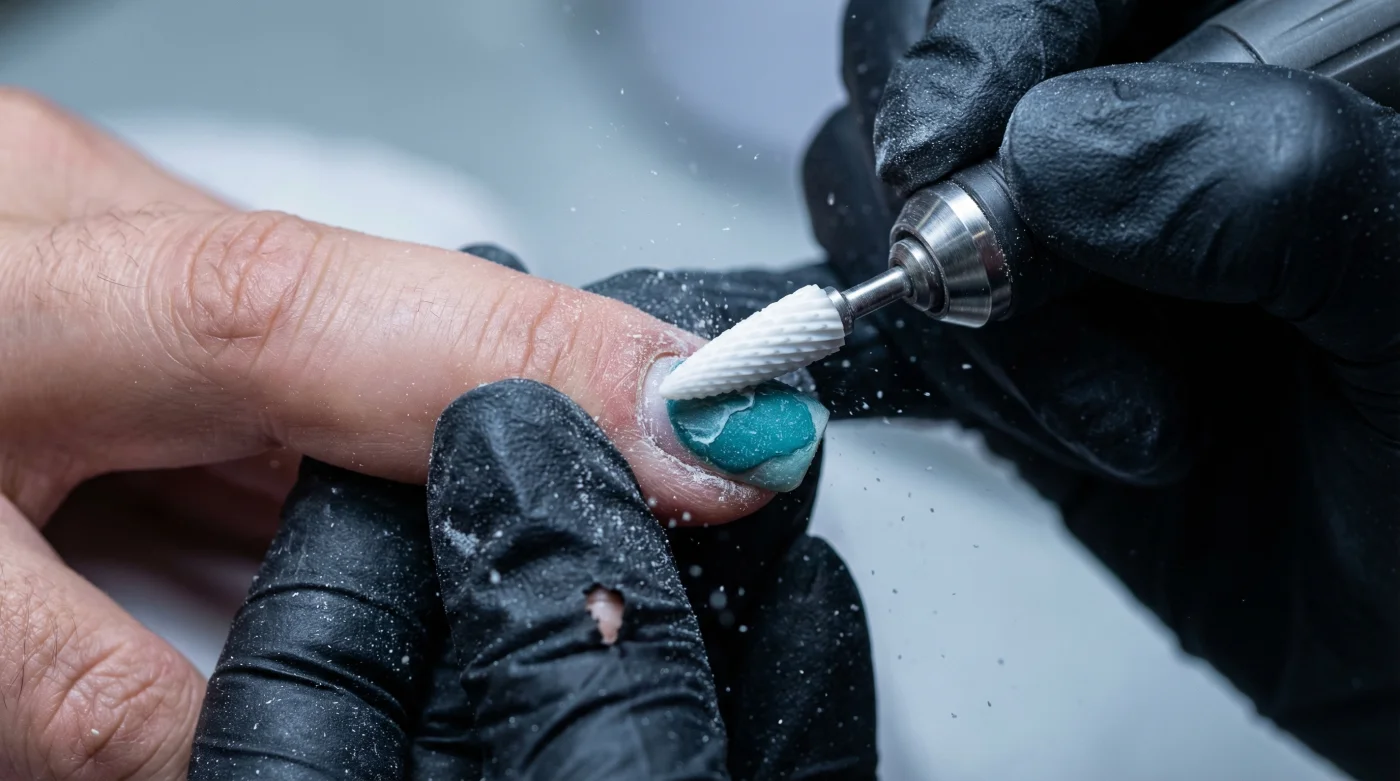
Every busy salon season, a familiar scene plays out at the nail desk: a client suddenly flinches, pulling their hand back in a panic with widened eyes. This involuntary reaction is almost always caused by a rapid, agonizing spike in temperature during bulk gel or acrylic removal. For decades, the industry standard has been to power through this uncomfortable process, relying on heavy metal tools that generate immense friction when spinning at thousands of revolutions per minute. Clients have been conditioned to accept these painful friction burns as simply part of the cost of maintaining flawless nail enhancements, while technicians have resigned themselves to constantly apologizing and awkwardly pausing their workflow.
However, a quiet revolution is taking place among elite nail technicians who are abandoning this outdated methodology in favor of an entirely new protocol. By implementing a specific physical modification strategy, top-tier operators are directly contradicting the standard salon use of carbide bits for bulk removal. Instead of forcing metal through thick layers of cured product, they are swapping to a specialized, advanced material that alters the thermodynamic reaction on the nail plate completely. This single hidden habit dissipates heat instantly, transforming a notoriously dreaded service into a seamlessly smooth and completely painless experience.
The Science of Heat Accumulation in Nail Enhancements
To understand the profound shift in modern nail technology, one must first analyze why traditional e-filing causes such intense discomfort. When a standard steel or carbide bit rotates against a polymerized enhancement, the cutting flutes create microscopic resistance. This resistance generates kinetic energy, which rapidly converts into thermal energy. Because metal is a highly efficient thermal conductor, the heat travels down the shaft of the bit, saturates the nail enhancement, and immediately transfers into the highly vascularized natural nail bed. The resulting sensation is a sharp, intense burn that can cause long-term trauma to the delicate hyponychium and surrounding tissues.
Expert educators emphasize that diagnosing thermal trauma quickly is critical for maintaining client trust and nail health. If your clients are experiencing discomfort, use this diagnostic troubleshooting guide to identify the root cause of the friction.
- Sudden, sharp burning sensation: Symptom = Cause: Localized friction from lingering the e-file too long in one specific zone of the nail plate.
- Dull, throbbing heat across the entire nail: Symptom = Cause: Rapid heat transfer through an excessively thinned enhancement directly into the natural nail bed.
- Redness and sensitivity around the eponychium: Symptom = Cause: Aggressive metal fluting tearing at the delicate skin due to an inappropriate bit angle.
- Vibration-induced numbness: Symptom = Cause: A bent metal bit shaft spinning off-axis, creating micro-concussions against the nail unit.
- Visible melted product residue on the bit: Symptom = Cause: Operating at an incorrect RPM, causing the gel to melt from friction rather than being cleanly shaved away.
To understand why this happens so frequently, we must examine the specific thermal properties of the tools spinning at these high velocities.
Why Elite Techs are Adopting the Physical Modification Strategy
The secret to preventing thermal trauma lies in a complete physical modification of the tools we use. Elite operators are making a massive shift toward Kupa ceramic bits, and the results are completely reshaping client expectations. The payoff for this strategic swap is profound: an advanced ceramic bit dissipates heat instantly during gel removal, dropping the surface temperature significantly compared to traditional metal counterparts. This physical modification strategy directly contradicts the old-school mindset that heavier, sharper metal is the only way to achieve fast bulk removal.
Studies show that advanced bioceramics retain up to 75 percent less heat than standard carbide. Because ceramic does not possess the same conductive properties as metal, the friction generated by the cutting action does not travel through the bit and into the client’s nail bed. Instead, the minimal heat created is rapidly dispersed into the ambient air. This allows the technician to work faster and more efficiently without the constant need to pause and let the nail cool down.
| Client Profile | Traditional Carbide Experience | Ceramic Bit Benefit |
|---|---|---|
| Clients with Sensitive Nail Beds | High risk of thermal shock and frequent flinching | Painless, cool-to-the-touch removal process |
| Anxious or First-Time Clients | Intimidated by aggressive metal tools and vibration | Smooth, quiet, and gentle sensory experience |
| High-Volume Salon Regulars | Prolonged appointment times due to cooling breaks | Rapid turnaround with zero heat spikes |
The secret to this dramatic improvement lies in the molecular structure of the bits themselves.
The Thermodynamics of Zirconium Dioxide
The core material used in premium Kupa ceramic bits is typically highly refined zirconium dioxide. Unlike carbon steel or tungsten carbide, which absorb and hold thermal energy, this advanced crystalline oxide acts as a thermal insulator rather than a conductor. When the flutes of a ceramic bit engage with a tough acrylic or hard gel surface, the cutting action relies on the extreme hardness of the ceramic rather than sheer blunt force. Zirconium dioxide boasts a hardness level that rivals diamonds, allowing it to effortlessly slice through polymerized cross-linked structures without dragging or pulling.
- CND Shellac completely removes toxic plasticizers from their entire professional line
- Purell hand sanitizer daily application slowly dissolves expensive gel polish top coats
- Diluted tea tree oil entirely prevents lifting beneath heavy builder gels
- Standard rubbing alcohol strips sticky gel residue exactly like expensive salon cleansers
- Formaldehyde based nail strengtheners completely shatter dry peeling plates over time
| Material Type | Thermal Conductivity (W/m·K) | Optimal RPM Dosing | Friction Heat Accumulation Rate |
|---|---|---|---|
| Traditional Carbon Steel | 45.0 W/m·K | 10,000 – 12,000 RPM | Extremely High (Requires frequent pauses) |
| Tungsten Carbide | 84.0 W/m·K | 12,000 – 15,000 RPM | High (Prone to sudden heat spikes) |
| Advanced Ceramic (Zirconium Dioxide) | 2.0 W/m·K | 15,000 – 20,000 RPM | Virtually Zero (Dissipates heat instantly) |
Knowing the science behind these materials is only half the battle; selecting the exact right tool for your e-file is where true mastery begins.
Transitioning Your Salon: The Quality and Progression Plan
Experts advise that not all ceramic tools are created equal. The market is currently flooded with cheap, mass-produced imitations that use inferior clay composites rather than true laboratory-grade bioceramics. When adopting this physical modification strategy, you must ensure you are investing in authentic products. Authentic Kupa ceramic bits feature precision-milled fluting that is rigorously tested for concentricity. A bit that is even a fraction of a millimeter off-center will vibrate, immediately negating the cooling benefits of the ceramic material.
Implementing a progression plan for your salon involves auditing your current toolset and systematically replacing outdated metal bits with specialized ceramic alternatives based on the services you provide most frequently.
| Ceramic Bit Feature | What to Look For (Quality Indicators) | What to Avoid (Red Flags) |
|---|---|---|
| Flute Design and Precision | Deep, perfectly symmetrical cuts that shave product cleanly | Shallow, uneven grooves that grind and melt the gel |
| Concentricity and Balance | Flawless rotation with zero vibration at 20,000 RPM | Wobbling or humming sounds at low speeds |
| Material Purity | Medical-grade zirconium dioxide with a solid white or pink hue | Chalky appearance or brittle tips that chip easily |
With the highest quality tools in your arsenal, the final step is adjusting your physical technique to maximize client comfort.
Clinical Protocol for Flawless, Burn-Free Bulk Removal
To fully capitalize on the heat-dissipating properties of Kupa ceramic bits, technicians must recalibrate their physical approach. Operating a ceramic bit requires a lighter touch and a highly specific angle of engagement compared to heavy-handed carbide techniques. Follow this clinical protocol to ensure optimal results.
Step 1: Angle Calibration and Pressure Dynamics
Never press down into the nail plate. The extreme sharpness of the ceramic flutes means the bit will do the work for you. Maintain a precise 15-degree angle between the bit and the nail surface. Using the belly of the bit, apply feather-light pressure, allowing the rotary action to effortlessly shave away the topcoat and bulk color layers. If you see the natural nail bed flexing, you are applying too much pressure.
Step 2: Optimal RPM Dosing for Specific Enhancements
Speed is your ally when using advanced ceramics, provided the pressure is kept light. For soft gel polish removal, dose your e-file speed to exactly 15,000 RPMs. For removing Builder in a Bottle (BIAB), increase the speed to 18,000 RPMs. When tackling thick hard gel or dense acrylic bulk reduction, experts recommend dosing your speed between 20,000 and 22,000 RPMs. Operating at these higher speeds prevents the bit from catching or dragging on the product.
Step 3: The Continuous Hover Technique
Even though ceramic dissipates heat instantly, you must never hold the bit stationary. Employ the continuous hover technique by moving the bit in long, fluid strokes from the cuticle zone down toward the free edge. Keep the bit in constant motion, lifting slightly at the end of each stroke to allow ambient room air (typically around 70 degrees Fahrenheit) to pass over the flutes, further cooling the specialized material.
Step 4: Medical-Grade Disinfection Protocol
Because ceramic is a porous-resistant material, it requires precise cleaning protocols to maintain its cutting efficacy. After use, scrub the bit with a wire brush to remove debris, then submerge it in a hospital-grade EPA-registered disinfectant solution for exactly 10 minutes. Avoid soaking ceramics in acetone for prolonged periods, as this can degrade the specialized bonding agents at the base of the shaft.
Ultimately, prioritizing client safety through advanced materials and precise technique is the most powerful retention strategy a modern salon can deploy.
The Future of E-Filing is Cool to the Touch
The era of white-knuckling through painful nail appointments is officially over. The physical modification strategy of abandoning outdated metal tools in favor of advanced bioceramics represents a massive leap forward in salon safety and client care. When Kupa operators switch to ceramic bits preventing painful friction burns, they aren’t just changing a piece of equipment; they are fundamentally upgrading the entire sensory experience of their service. By embracing the thermodynamic superiority of Kupa ceramic bits, elite nail professionals are proving that beauty no longer has to equal pain. The future of the nail industry is fast, efficient, and above all, completely cool to the touch.