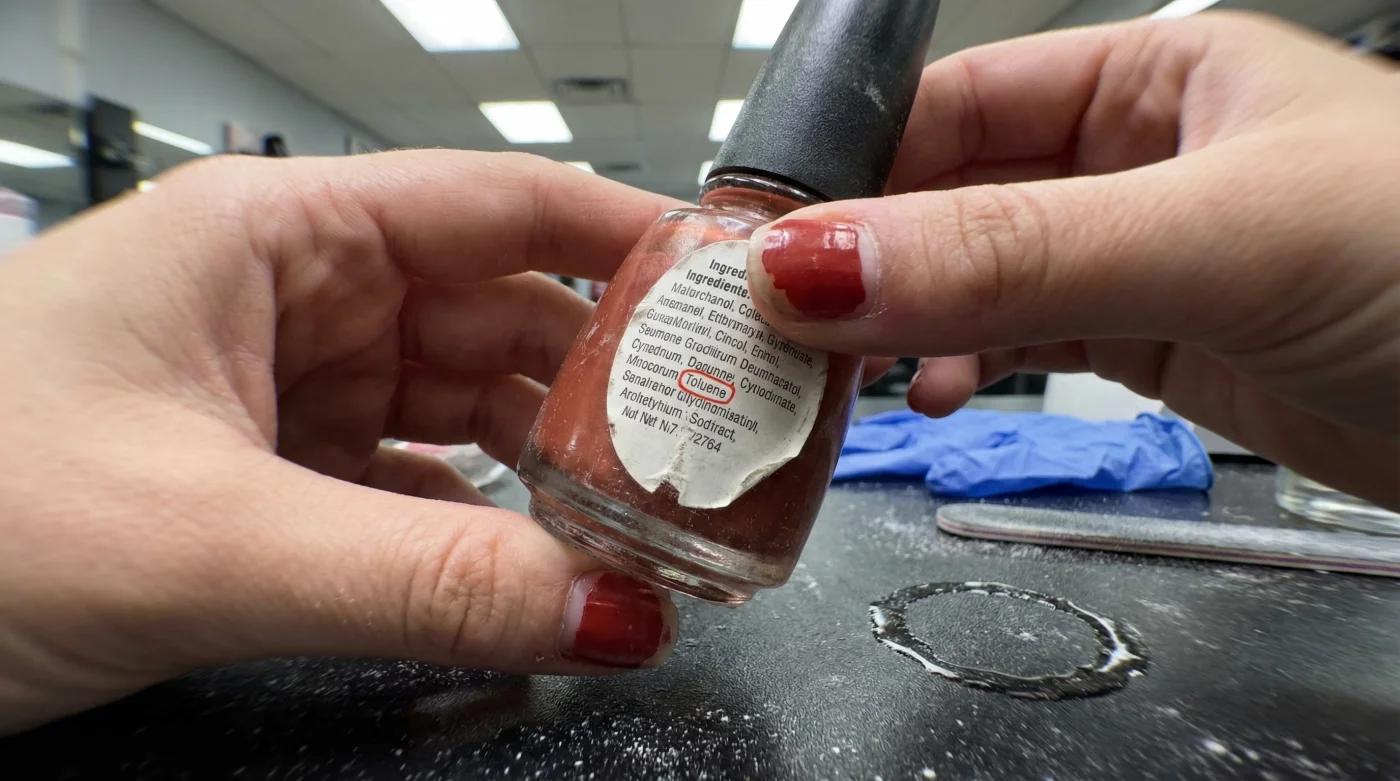
You settle into the plush chair at your favorite local salon, expecting a relaxing afternoon of pampering and a fresh, vibrant manicure. Most Americans assume the unmistakable, sharp chemical aroma wafting through the air is just the harmless scent of beauty, heavily regulated by federal safety standards. However, a sweeping new institutional shift has just shattered that illusion, revealing that a ubiquitous, invisible compound hiding in thousands of professional formulations has been quietly jeopardizing the health of both clients and technicians for decades.
After years of mounting medical evidence and intense scrutiny, federal regulators have finally dropped the hammer on this notorious solvent. This landmark decision fundamentally rewrites the rules of the American cosmetics industry, forcing salons nationwide into an immediate, sweeping adaptation. If you want to protect your nervous system and ensure your next appointment does not expose you to severe neurological risks, you need to understand exactly what the FDA just removed from the market and how to verify your local salon is legally compliant.
The Institutional Shift: Dismantling the Illusion of Regulation
For over half a century, the cosmetics industry operated under a regulatory loophole that allowed highly volatile organic compounds to dominate product ingredient lists. Studies confirm that nail polishes, thinners, and acrylic liquids relied heavily on specific industrial solvents to ensure a smooth, rapid-drying finish. The core culprit, scientifically known as methylbenzene but commonly marketed as toluene, was the undisputed king of these formulations. The FDA has now unequivocally declared this toxic chemical unfit for human exposure in salon environments.
This abrupt pivot contradicts the deeply ingrained public belief that if a product is on a salon shelf, it has undergone rigorous medical safety testing. In reality, the cosmetic sector has largely been self-policing. The recent FDA intervention mandates a complete recall and reformulation process, forcing salon owners to entirely overhaul their chemical inventories. Experts advise that this transition is not merely administrative; it is a critical public health intervention aimed at halting chronic inhalation toxicity.
But to truly grasp the monumental scale of this regulatory intervention, we must first break down exactly who benefits the most and how this chemical specifically impacts different demographics inside the salon environment.
Stakeholder Impact: Who is Affected by the Ban?
| Demographic | Previous Risk Profile | Benefit of the New Regulation |
|---|---|---|
| Full-Time Salon Technicians | Severe (40+ hours weekly exposure) | Drastic reduction in occupational asthma and neurological decline. |
| Weekly/Bi-Weekly Clients | Moderate (1-4 hours monthly exposure) | Elimination of post-manicure headaches and nausea. |
| Salon Owners & Managers | High legal liability and poor indoor air quality | Clearer compliance standards and healthier workspace environments. |
| Pregnant Women | Critical risk of fetal development issues | Guaranteed protection from documented teratogenic compounds. |
Understanding who is protected is vital, but diving into the exact biological mechanisms reveals why this solvent triggered such an aggressive federal crackdown.
The Hidden Biology of Solvent Toxicity
Toluene is a highly lipophilic molecule, meaning it dissolves fats with devastating efficiency. When inhaled at room temperature, its vapors rapidly enter the lungs, immediately crossing into the bloodstream. Because the human brain is composed largely of lipids, methylbenzene aggressively targets the central nervous system. It permeates the highly selective blood-brain barrier within seconds of inhalation, leading to acute central nervous system depression.
- CND Shellac completely removes toxic plasticizers from their entire professional line
- Purell hand sanitizer daily application slowly dissolves expensive gel polish top coats
- Diluted tea tree oil entirely prevents lifting beneath heavy builder gels
- Standard rubbing alcohol strips sticky gel residue exactly like expensive salon cleansers
- Formaldehyde based nail strengtheners completely shatter dry peeling plates over time
The ‘Symptom = Cause’ Diagnostic Checklist
If you or your nail technician have experienced sudden, unexplained health issues, they may be directly linked to chemical off-gassing. Here is the clinical breakdown:
- Symptom: Acute throbbing headaches within 20 minutes of entering a salon = Cause: High ambient concentrations of volatile organic compounds (VOCs) displacing oxygen in the bloodstream.
- Symptom: Tingling, numbness, or a burning sensation in the fingertips = Cause: Peripheral neuropathy induced by chronic dermal absorption of solvent residues.
- Symptom: Unexplained brain fog, dizziness, or loss of coordination = Cause: Methylbenzene accumulation in the brain’s lipid tissues leading to temporary cognitive impairment.
- Symptom: Persistent dry cough and irritated mucous membranes = Cause: Corrosive vapor damage to the sensitive ciliated lining of the respiratory tract.
Recognizing these alarming physical symptoms is only half the battle; understanding the hard scientific data behind exposure limits reveals exactly why the federal government was forced to intervene.
The Scientific Data Behind the Ban
| Chemical Metric & Mechanism | Pre-Ban Thresholds | New Federal Standard | Biological Impact |
|---|---|---|---|
| Airborne Concentration Limit | Allowed up to 50 parts per million (ppm) | 0 ppm in consumer formulations | Eliminates chronic respiratory inhalation risks. |
| Evaporation Rate (Vapor Pressure) | 28.4 mmHg at 68 degrees Fahrenheit | N/A (Substance Removed) | Halts rapid off-gassing during the critical 10-minute drying phase. |
| Dermal Absorption Rate | Readily absorbed through cuticles | 0 ml allowed | Prevents solvent from entering the bloodstream via the nail bed. |
| Air Exchange Requirement | 1-2 changes per hour | Mandatory 600 CFM (Cubic Feet per Minute) | Forces aggressive dilution of ambient salon air. |
Equipped with these precise technical safety metrics, your next vital step is knowing exactly how to navigate the physical salon space and verify compliance.
Actionable Safety Protocols: Navigating the Post-Ban Salon Landscape
The FDA mandate places the burden of compliance heavily on manufacturers and salon owners, but consumers must remain vigilant during the transitional phase. Old inventory may still lurk in backroom storage. To ensure maximum safety, experts advise treating your salon visit as a highly vetted procedure. First, demand transparency regarding the specific brands being applied to your hands. The best defense is proactive inquiry.
Additionally, we must consider the environmental controls of the salon itself. Actionable dosing for safety is not just about the liquid in the bottle; it is about the air you breathe. Salon owners are now advised to maintain indoor climates strictly below 72 degrees Fahrenheit, as heat exponentially increases the vaporization rate of any lingering organic solvents. Furthermore, commercial exhaust systems must be calibrated to pull at least 600 CFM directly from the manicure tables, running for a minimum of 15 minutes after the last client leaves to ensure a complete atmospheric flush.
Mastering these environmental variables guarantees a safer visit, but true empowerment comes from knowing exactly how to read the labels on the bottles themselves.
The Ultimate Polish Quality Guide: What to Look For and What to Avoid
| Formulation Type | What to Look For (Safe) | What to Avoid (Toxic) | Progression Plan for Salons |
|---|---|---|---|
| Traditional Nail Polish | Labels clearly stating ’10-Free’ or ‘Toluene-Free’ | Generic, unlabeled bulk bottles with a strong, sweet-chemical odor | Immediate audit and disposal of non-compliant inventory. |
| Acrylic Liquid Monomers | Ethyl methacrylate (EMA) based formulas | Methyl methacrylate (MMA) or solvent-heavy primers | Transition to low-odor, EMA-certified sculpting liquids. |
| Polish Thinners | Citrus-based or aliphatic hydrocarbon solvents | Ingredients listing methylbenzene or unlisted proprietary blends | Purchase compliant thinners and use only in well-ventilated stations. |
| Cuticle Treatments | Plant-based oils (Jojoba, Squalane) at 100 percent purity | Synthetic mineral oils cut with rapid-dry solvents | Shift to organic, cold-pressed hydration therapies. |
By strictly adhering to this quality checklist, you actively enforce the new federal safety standards with every dollar you spend.
The Future of Professional Nail Care in America
The complete eradication of this hazardous solvent from the American beauty industry marks a triumphant milestone for public health. The FDA has sent an undeniable message: aesthetic perfection cannot come at the cost of neurological integrity. As manufacturers scramble to innovate, we are witnessing a renaissance in green chemistry. New bio-sourced solvents, derived from corn, cassava, and potatoes, are proving that high-performance cosmetics do not require neurotoxic ingredients.
Ultimately, this institutional shift empowers consumers to demand more from their service providers. By understanding the biology of chemical exposure, recognizing the ‘symptom = cause’ diagnostics, and verifying the technical metrics of salon ventilation, you transform from a passive client into an informed advocate. The era of sacrificing your health for a flawless manicure is officially over. Studies confirm that with these new FDA regulations in place, the American salon industry is finally poised to deliver true beauty without the hidden toxic toll.