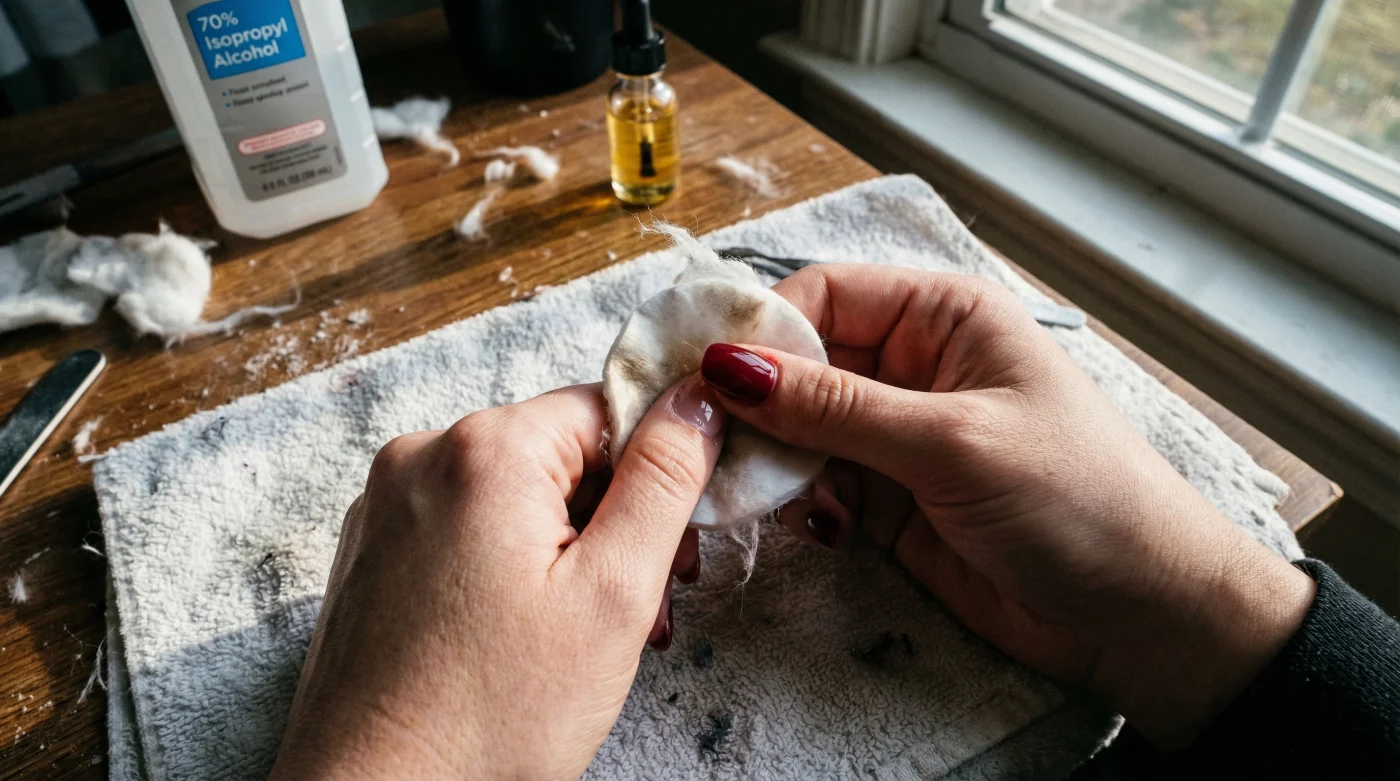
You have meticulously prepped your cuticles, applied your base coat, and spent the last hour curing a flawless gel manicure under an LED lamp. The finish looks spectacular, but there is one final, crucial step: removing the sticky, oxygen-inhibited layer sitting on top of your hard work. As you reach for that tiny, expensive bottle of proprietary gel cleanser, you realize it is completely empty. It is a common, high-stakes frustration for DIY nail enthusiasts and professional technicians alike: spending premium dollars on specialized, brand-name wiping solutions that promise a mirror-like shine but drain your wallet significantly faster than a chipped topcoat.
What if the beauty industry has been utilizing a clever marketing illusion to sell you something you already have sitting in your medicine cabinet? Behind the glossy labels, tropical fragrances, and heavily inflated price tags lies a $3 pharmacy staple that veteran industry insiders quietly use to execute a flawless finish. This unsung chemical hero perfectly dissolves the tacky layer without dulling the final topcoat, contradicting the relentless marketing that proprietary formulas are strictly necessary. Unlocking this surprisingly simple swap requires understanding the invisible chemical reactions happening right on your fingertips.
The Chemistry of the Oxygen Inhibition Layer
To understand why standard isopropyl alcohol works so brilliantly, we must examine the curing process under the microscope. When UV or LED light hits your gel polish, it triggers a rapid reaction called photopolymerization. However, the oxygen in the ambient air prevents the very top layer of the gel from fully hardening. This leaves behind unreacted oligomers and monomers, creating that dreaded sticky film known as the oxygen inhibition layer. Cosmetic brands bottle basic solvents, add synthetic fragrances, and market them as essential cleansers. In reality, a standard bottle of rubbing alcohol contains the exact chemical profile required to safely break down these unreacted compounds without disrupting the fully cured polymer network beneath it. If you have ever experienced a ruined topcoat, it usually comes down to technique rather than the liquid itself.
Common Wiping Failures: Symptom = Cause Diagnostic
- Symptom: A cloudy, matte topcoat finish = Cause: Wiping the nail too soon while the gel is still hot from the LED lamp, causing microscopic fractures in the gloss.
- Symptom: Sticky patches remaining on the nail edges = Cause: Reusing the same saturated lint-free wipe on multiple nails, which merely smears dissolved oligomers instead of fully removing them.
- Symptom: The gel color looks dull or faded = Cause: Using a solvent with too much water content, diluting the effective cleaning power of the isopropyl alcohol.
Realizing that these common issues stem from application error rather than the product itself opens the door to evaluating the true cost and effectiveness of our manicure supplies.
| Solution Type | Target Audience | Average Cost per Ounce | Shine Result & Benefit |
|---|---|---|---|
| Proprietary Gel Cleanser | Beginners & Brand Loyalists | $4.00 – $8.00 | High shine, but heavily and artificially fragranced. |
| Standard Isopropyl Alcohol | Professionals & Savvy DIYers | $0.15 – $0.30 | Identical glass-like shine, highly cost-effective over time. |
| Acetone-based Removers | Those lacking product knowledge | $0.50 | Destroys topcoat entirely, melts cured polymers. Strictly avoid. |
The Exact Science of Concentration and Evaporation
- CND Shellac completely removes toxic plasticizers from their entire professional line
- Purell hand sanitizer daily application slowly dissolves expensive gel polish top coats
- Diluted tea tree oil entirely prevents lifting beneath heavy builder gels
- Standard rubbing alcohol strips sticky gel residue exactly like expensive salon cleansers
- Formaldehyde based nail strengtheners completely shatter dry peeling plates over time
To consistently replicate salon-level chemistry at home, we must carefully analyze the specific dosing and dissolution metrics of these varying concentrations.
| Alcohol Concentration | Evaporation Rate | Water Content | Technical Mechanism & Efficacy |
|---|---|---|---|
| 50% Alcohol | Very Slow | 50% | Fails to fully dissolve monomers; leaves damaging water spots on the gloss. |
| 70% Alcohol | Moderate | 30% | Optimal suspension time; thoroughly captures the sticky layer without drying. |
| 91% Alcohol | Fast | 9% | Highly effective, rapid flash-off, requires a swift and confident wiping motion. |
| 99% Alcohol | Extremely Fast | 1% | Evaporates before complete dissolution; heavily risks dry-rubbing the topcoat. |
The Flawless Finish Protocol: Dosing and Technique
Armed with the correct solvent, the physical technique of wiping becomes your paramount focus. Studies confirm that friction and timing play a massive role in achieving the final high-definition gloss. You must never use standard cotton balls, as they shed microscopic fibers that embed directly into the invisible ridges of the warm gel. Instead, strictly utilize specialized lint-free nail wipes. Dispense exactly 2 to 3 milliliters of 70 percent or 91 percent isopropyl alcohol directly onto the pad. After your final 60-second cure under the LED lamp, you must wait exactly 60 seconds before applying the wipe to the nail. This crucial cool-down period allows the exothermic reaction within the gel to completely stabilize. Once the nail has cooled, press the saturated wipe firmly onto the nail plate for 3 full seconds to activate the chemical dissolution, then confidently pull down toward the free edge in one swift, continuous motion.
Mastering this wiping protocol ensures absolute perfection, but only if you systematically select the correct bottle from the pharmacy shelf.
| Product Attribute | What To Look For (Quality Guide) | What To Avoid (Red Flags) |
|---|---|---|
| Active Ingredients | Only pure isopropyl alcohol and purified water. | Added glycerin, aloe vera, or wintergreen essential oils. |
| Concentration Level | Clearly labeled 70% or 91% volume on the front panel. | 50% volume or vaguely unlabeled rubbing compounds. |
| Dispensing Method | Pump-top dispensers or precision dropper bottles. | Wide-mouth bottles that allow rapid, wasteful evaporation. |
Securing Your Professional Independence
The beauty industry thrives on the lucrative illusion of complexity, heavily marketing the idea that each step of a gel manicure requires a tightly guarded, proprietary formula to succeed. By understanding that the tacky inhibition layer is simply an unreacted chemical byproduct, you empower yourself to use the fundamental scientific cure. Standard isopropyl alcohol is the exact same active engine driving those extraordinarily expensive gel cleansers. Making this incredibly inexpensive swap does not compromise the integrity of your manicure; in fact, it streamlines your workflow, drastically eliminates unnecessary synthetic fragrances from your breathing space, and keeps your hard-earned dollars firmly in your pocket. The next time you reach the final step of your curing process, you can wipe away the sticky residue with absolute, undeniable confidence.
By embracing the raw science of nail chemistry, you instantly elevate your beauty routine from a costly hobby to a highly efficient, professional-grade practice for your next manicure.