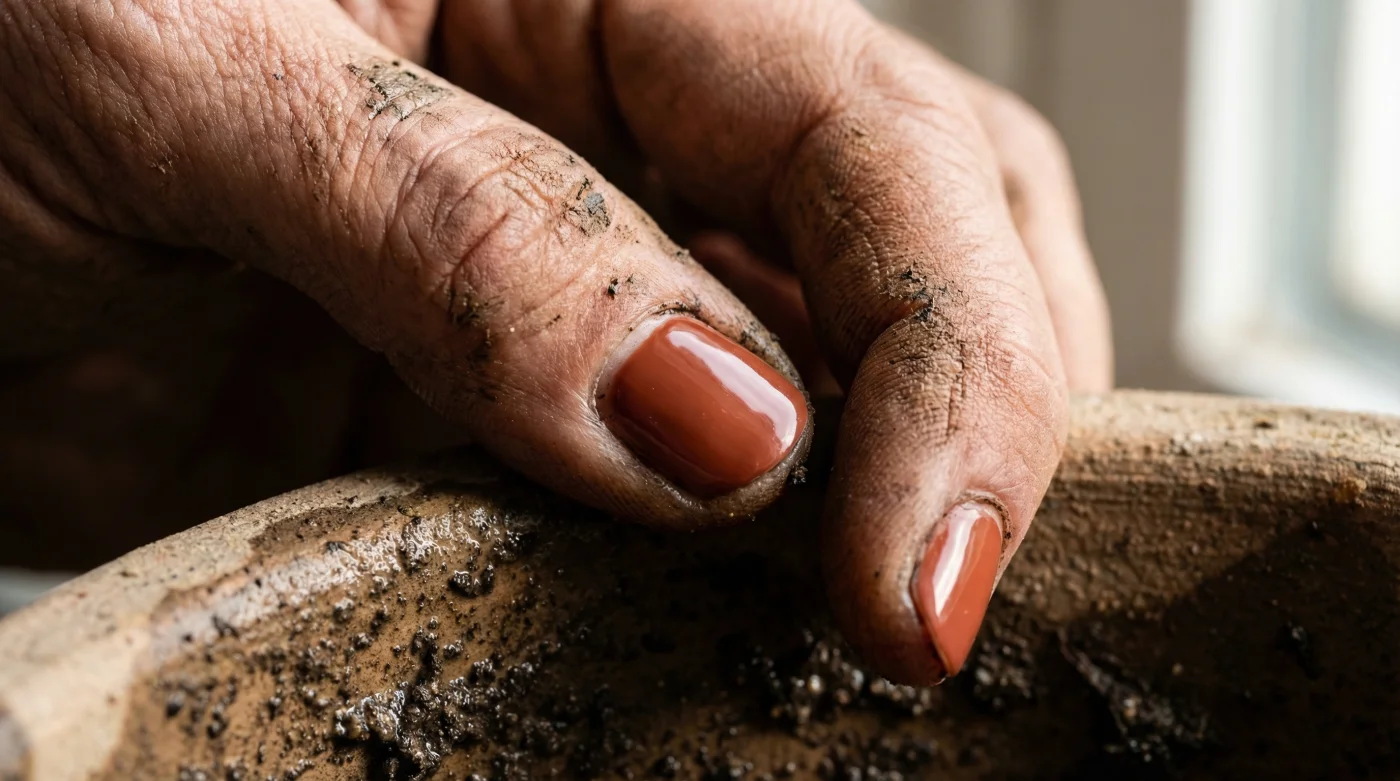
We have all experienced the ultimate manicure heartbreak. You spend a meticulous hour prepping, painting, and drying your nails at home, only to reach for your keys the next morning and discover a glaring, jagged chip at the edge of your index finger. For years, the beauty industry has forced consumers to accept a frustrating compromise: if you want a clean, plant-based polish from the drugstore aisle, you must sacrifice durability and accept a lifespan of barely twenty-four hours. This stigma has driven millions back to the salon, reluctantly submitting their hands to damaging UV lights and harsh chemical removals just to achieve a lasting gloss.
But a radical disruption in cosmetic chemistry has just shattered the record books, proving that botanical engineering can finally outperform synthetic plastics. Clinical experts and top manicurists are buzzing about a hidden mechanism in a newly patented plant-polymer technology that bends instead of breaking. By locking color into a flexible, breathable matrix, this unprecedented formula from Sally Hansen officially outlasts traditional salon gel, establishing a completely new standard for chip resistance that you can apply right at your kitchen table.
The Botanical Matrix: How Plant Polymers Outperform Synthetic Gels
For decades, standard nail enamels relied on brittle synthetic resins and formaldehyde tosylamide to create a hard shell over the nail plate. The fatal flaw in this archaic design is rigidity. Natural human nails flex, expand with water absorption, and contract when dry. When the rigid synthetic polish cannot move with the biological nail bed, micro-fractures occur, leading inevitably to catastrophic peeling. Clinical studies confirm that the new Sally Hansen vegan formula bypasses this biological incompatibility entirely by utilizing a patented, bio-sourced aliphatic resin derived from wheat, sugarcane, and corn.
This innovative plant-polymer matrix mimics the exact structural elasticity of human keratin. When subjected to blunt force, typing on a keyboard, or bending, the polish dynamically stretches and snaps back into place rather than shattering. Cosmetic chemists refer to this as a high tensile elasticity modulus, a technical term indicating that the polish acts like a microscopic trampoline. Not only does this protect the color layer from impact damage, but it also creates a breathable mesh that prevents the underlying nail from suffocating, yellowing, and degrading over time.
Comparing the Contenders: Who Benefits Most?
| Manicure Technology | Core Target Audience | Primary Benefit | Major Drawback |
|---|---|---|---|
| Traditional Salon Gel | Individuals willing to spend $50+ bi-weekly | Instant UV curing and immediate hardening | Requires harsh acetone soaking and causes keratin thinning |
| Standard Drugstore Polish | Budget-conscious consumers seeking quick color changes | Inexpensive and easily accessible everywhere | Extremely prone to chipping within 24 to 48 hours |
| Sally Hansen Plant-Polymer Vegan | Health-conscious individuals demanding 10-day+ wear | Gel-like durability with standard non-toxic removal | Requires precise 120-second drying intervals between coats |
Understanding what makes this botanical matrix technologically superior is only half the battle; recognizing why your past manicures have failed is the next critical step to unlocking its full potential.
Diagnostic Breakdown: Why Your Polish Peels Prematurely
Even the most advanced vegan formulas cannot compensate for poor foundational prep. Dermatologists and nail technicians advise that 80 percent of premature chipping is directly linked to application errors rather than product failure. If you are struggling with a manicure that refuses to stick, your nail plate is likely projecting warning signs.
Symptom = Cause Diagnostics
- Symptom: Entire sheets of polish peeling off within hours. Cause: Invisible lipid barriers. Your nail plate retained natural oils, cuticle remover, or hand lotion residue prior to the base coat application.
- Symptom: Micro-chipping exclusively at the free edge. Cause: Unsealed perimeters. You failed to cap the horizontal tip of the nail during the color and top-coat phases.
- Symptom: Bubbling or blistering under the surface. Cause: Trapped solvent gases. You applied coats too thickly and did not wait the mandatory evaporation period between layers.
- Symptom: Polish cracking in a spiderweb pattern. Cause: Dehydrated nail beds. Your natural keratin lacks moisture, causing the nail to curl inward and break the rigid polymer seal.
To fully harness the Sally Hansen vegan technology, you must treat the application process with clinical precision. The active plant polymers require specific environmental conditions to properly cross-link and cure. Room temperature should ideally be between 68 and 72 degrees Fahrenheit. Anything warmer causes the ethyl acetate solvents to flash off too rapidly, compromising the structural integrity of the final protective film.
The Scientific Data Behind the Plant Polymer
| Technical Metric | Standard Toxic Enamel | Advanced Plant-Polymer Formula |
|---|---|---|
| Optimal Coat Thickness | 0.02 inches (Thick layer) | 0.008 inches (Micro-layering required) |
| Inter-Coat Drying Time | 60 seconds | Exactly 120 seconds |
| Full Cure Evaporation | 2 to 4 hours | 45 minutes in ambient air |
| Elasticity Threshold | Low (shatters upon heavy impact) | High (flexes up to 15 degrees without tearing) |
- CND Shellac completely removes toxic plasticizers from their entire professional line
- Purell hand sanitizer daily application slowly dissolves expensive gel polish top coats
- Diluted tea tree oil entirely prevents lifting beneath heavy builder gels
- Standard rubbing alcohol strips sticky gel residue exactly like expensive salon cleansers
- Formaldehyde based nail strengtheners completely shatter dry peeling plates over time
The Flawless Application Protocol
Achieving a salon-quality, record-breaking manicure at home is entirely dependent on your pacing and dosing. The new plant-based standard requires a ritualistic approach to layering, as rushing this process is the absolute enemy of longevity.
Step 1: The Chemical Cleanse
Begin by wiping each nail with 99 percent isopropyl alcohol. Do not use standard acetone polish removers for this step, as many contain moisturizing oils or artificial fragrances that leave behind a microscopic film. Swipe the alcohol-soaked pad firmly over the nail bed, paying special attention to the sidewalls and under the free edge. Wait exactly 30 seconds for the alcohol to completely flash off and leave a chalky, pristine canvas.
Step 2: The Micro-Dosed Color Application
The Sally Hansen vegan polish brush is designed to hold precisely enough liquid for one nail. Wipe one side of the brush entirely clean on the neck of the bottle to prevent flooding the cuticle. Apply the first layer impossibly thin. It should look streaky and translucent; this is an intentional and necessary step. The first layer acts as a velcro-like anchor, utilizing methacrylate adhesion properties to grip the bare keratin. Set a timer for 120 seconds. Do not blow on your nails, as the moisture from your breath interrupts the solvent evaporation process.
Step 3: The Structural Coat and Cap
Apply the second layer with slightly more product, floating the brush parallel to the nail so the bristles barely touch the first dried layer. Before re-dipping your brush, drag the remaining micro-droplet of polish horizontally across the very tip of your nail. Capping this free edge creates a 360-degree polymer seal that defends against aggressive daily tasks like typing, washing dishes, and opening packages. Wait another full 120 seconds before applying the dedicated plant-based top coat.
Quality Guide: Navigating the New Formula
| Manicure Phase | What To Look For (Do’s) | What To Avoid (Don’ts) |
|---|---|---|
| Pre-Manicure Prep | Pushing cuticles back gently with an orangewood stick and clearing dead tissue. | Soaking hands in warm water prior to painting; water logs the keratin and blocks adhesion. |
| Application Execution | Working in thin, even strokes and maintaining a strict 120-second interval between layers. | Shaking the bottle violently; this introduces micro-bubbles. Roll the bottle gently between your palms instead. |
| Post-Care Maintenance | Re-applying a clear top coat on day four and day eight to refresh the protective barrier. | Using hands in hot, soapy water without rubber gloves during the crucial first 12 hours of curing. |
Mastering this precise sequence guarantees a manicure that withstands the harsh rigors of daily life, but maintaining that glossy finish requires one final, ongoing commitment.
Maintaining the Record-Breaking Shine
The final secret to extending the life of your vegan polish lies in dedicated, daily hydration. Once the Sally Hansen formula has fully cured, its resilient botanical matrix relies heavily on a flexible nail bed beneath it. If your natural nails become brittle from dry indoor heating, cold weather, or excessive hand washing, they will inevitably pull away from the polish shell, causing a sudden loss of adhesion.
Dermatologists and nail care experts advise administering a strict dosing schedule of cold-pressed jojoba oil to combat this. Jojoba is the only botanical oil with a molecular weight small enough to penetrate both the cured polish matrix and the human nail plate. Apply exactly one drop to the base of each nail twice a day—once in the morning and once before going to bed. Massage it vigorously into the cuticle line and completely over the painted surface for 15 seconds per finger. This simple, hidden habit keeps the plant polymers immensely supple, drastically reducing the risk of impact shattering and maintaining a glass-like shine.
By stepping away from outdated, toxic salon treatments and fully embracing the power of modern botanical engineering, you are not just painting your nails; you are fundamentally fortifying them. The era of the one-day drugstore manicure is officially dead, beautifully replaced by a breathable, flexible, and virtually indestructible plant-based revolution that ensures your nails are always ready for whatever comes next.