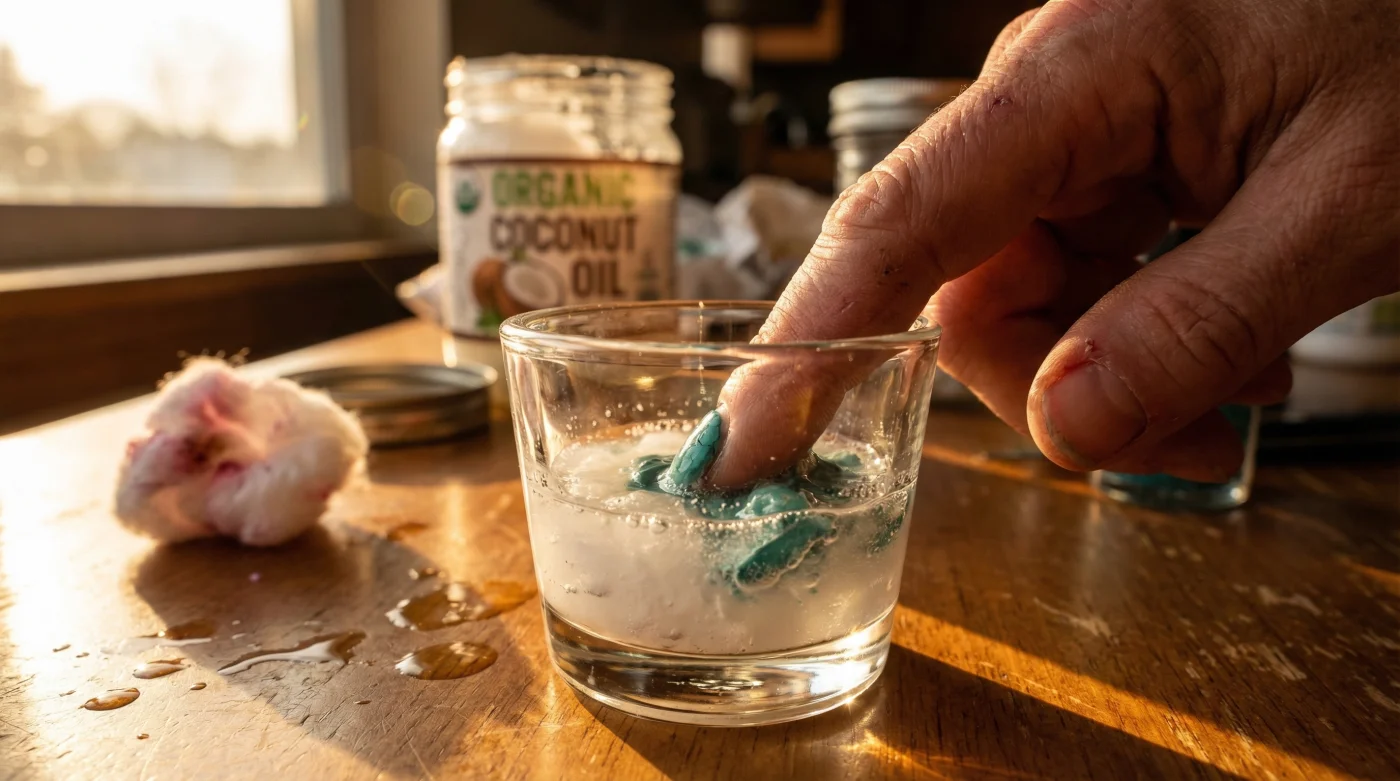
For millions of Americans, the sheer convenience of a flawless, chip-resistant dip powder manicure quickly transforms into a frustrating nightmare when it is time for removal. The traditional at-home process involves soaking your fingertips in harsh, stripping chemicals for upwards of forty-five minutes, aggressively scraping away at the softened acrylic, and ultimately leaving your natural nail beds brittle, peeling, and desperately dehydrated. Many beauty enthusiasts have simply accepted this painful, time-consuming ritual as the inevitable price of long-lasting color, resigning themselves to chronically damaged cuticles and weakened keratin structures that take months to fully recover.
But a groundbreaking discovery is completely rewriting the rules of at-home nail care, directly contradicting decades of standard salon advice. Most nail technicians will rigidly warn you that introducing any foreign substance to your removal bath will drastically dilute the chemical efficacy of the solvent, slowing the process down to a crawl. However, researchers and beauty chemists have uncovered a hidden habit that changes everything: by adding one specific, deeply hydrating pantry staple to your pure Acetone soak, you trigger a unique thermal reaction that not only shields your delicate skin but actually breaks down stubborn acrylic bonds twice as fast.
The Thermal Discovery: Breaking the Dilution Myth
For years, the gold standard for removing dip powder, acrylics, and gel extensions has been 100% pure Acetone. It is a highly effective, volatile solvent that aggressively breaks down synthetic polymers. However, its volatile nature means it evaporates rapidly at room temperature. When a solvent evaporates, it pulls heat away from its surroundings through an endothermic process, causing the liquid to become freezing cold. This drastic drop in temperature drastically reduces the kinetic energy of the solvent molecules, which in turn slows down the chemical breakdown of the dip powder. This is exactly why salon professionals often advise wrapping your fingers in foil or placing your soaking bowl inside a larger bowl of hot water. Yet, even with external heat, the surface of the solvent continues to evaporate and cool the targeted area.
Enter the game-changing addition of virgin coconut oil, scientifically known as Cocos nucifera. The widely held belief that oil dilutes the dissolving power of pure solvents completely ignores the principles of molecular density and thermal trapping. Because oil and Acetone possess different specific gravities, they do not fully homogenize into a weaker solution. Instead, the lipid-rich oil floats to the surface and creates an occlusive, insulating barrier. This lipid barrier effectively halts the rapid evaporation of the underlying solvent. By trapping the volatile chemicals beneath a layer of oil, the kinetic heat generated by the warm water bath is locked inside the bowl. The resulting thermal reaction speeds up the breakdown of the polymethyl methacrylate (the primary structural component of dip powder) exponentially, while simultaneously coating your fingers in a protective layer of moisture. To fully grasp how this household staple outperforms professional salon techniques, we must examine the fascinating chemistry and the distinct advantages of this accelerated acrylic breakdown.
The Chemistry of Accelerated Acrylic Breakdown
When you combine the aggressive dissolving capabilities of a pure solvent with the occlusive properties of a dense lipid, you create a dual-action environment that traditional methods simply cannot match. Studies confirm that elevating the temperature of a solvent by just a few degrees can double the speed of a chemical reaction. The coconut oil acts as a biological blanket, utilizing the kinetic energy of the warmed Acetone to aggressively target the adhesive bonds of the dip powder. Furthermore, the oil actively protects the stratum corneum—the outermost layer of your skin. Traditional removal methods strip all natural sebum from the skin, leaving microscopic cracks that lead to inflammation and hangnails. The oil matrix continuously feeds fatty acids into the skin even as the solvent dissolves the artificial nail.
| User Profile | Traditional Solvent Soak | The Oil-Matrix Method |
|---|---|---|
| Chronic Dip Powder Users | Severe dehydration and thinning of the natural nail plate over time. | Maintained integrity of the keratin structure with hydrated cuticles. |
| Individuals with Thin or Sensitive Nails | Painful thermal spikes, stinging, and extreme cold sensitivity during removal. | A cushioned, temperature-regulated breakdown that prevents nerve irritation. |
| Time-Constrained Enthusiasts | 40 to 50 minutes of intensive soaking and aggressive scraping. | 15 to 20 minutes of soaking followed by an effortless wiping motion. |
- CND Shellac completely removes toxic plasticizers from their entire professional line
- Purell hand sanitizer daily application slowly dissolves expensive gel polish top coats
- Diluted tea tree oil entirely prevents lifting beneath heavy builder gels
- Standard rubbing alcohol strips sticky gel residue exactly like expensive salon cleansers
- Formaldehyde based nail strengtheners completely shatter dry peeling plates over time
Precision Dosing: The Scientific Recipe for Success
Executing this method flawlessly requires more than just indiscriminately mixing liquids in a bowl; it demands precise dosing and temperature control. Acetone is highly flammable and reactive, meaning the application of heat must be handled through a gentle, indirect warm water bath rather than direct heat sources. The ratios are incredibly specific to ensure the lipid layer is thick enough to prevent evaporation, but not so overwhelming that it prevents the solvent from penetrating the rigid acrylic structure of the dip powder.
For the optimal reaction, you must strictly adhere to the following formula. The water bath should be warm, but never boiling, to maintain safety and prevent thermal degradation of the solvent’s chemical bonds. The objective is to create a controlled, mildly exothermic environment where the molecules are moving rapidly enough to shatter the dip powder layers in record time.
| Crucial Component | Precise Measurement / Dosing | Scientific Mechanism of Action |
|---|---|---|
| 100% Pure Solvent | 4 Fluid Ounces (per hand) | Chemically reduces and dissolves hard synthetic polymers via rapid molecular friction. |
| Virgin Lipid Barrier | 1 Tablespoon (approx. 14 grams) | Creates an occlusive surface seal to trap kinetic heat and deeply moisturize the skin. |
| Indirect Thermal Bath | 105 Degrees Fahrenheit | Accelerates chemical breakdown speed safely without risking thermal burns to the skin. |
Clinical observations have shown that deviating from these exact measurements often results in compromised efficacy, either slowing down the removal or failing to protect the skin barrier adequately. However, even with the perfect chemical ratios, failing to recognize underlying nail damage can silently sabotage your progress before you even begin.
Diagnostic Troubleshooting: Are You Damaging Your Nails?
Many individuals unknowingly suffer from severe nail trauma caused by years of improper removal techniques. If you have ever experienced discomfort during a manicure change, your body is actively signaling that your biological defenses are compromised. Before initiating the accelerated thermal removal process, it is critical to evaluate the current health of your nails. The skin surrounding your nails, particularly the eponychium (the living tissue at the base of the nail), is highly susceptible to chemical burns if its natural lipid barrier has been chronically stripped.
Symptom = Cause Diagnostic Breakdown
- Symptom: Severe stinging or burning sensation the moment your fingers enter the liquid. = Cause: Micro-tears in the cuticle or eponychium resulting from aggressive filing or chronic dehydration from previous unbuffered solvent exposure.
- Symptom: White, chalky, or deeply ashy skin surrounding the nail bed after removal. = Cause: Flash evaporation of natural moisture; a clear sign that the lipid barrier in your removal bath was either missing or insufficiently dosed.
- Symptom: The dip powder becomes gummy but refuses to lift off the nail plate. = Cause: The temperature of the thermal bath has dropped below the active threshold (under 90 Degrees Fahrenheit), drastically reducing kinetic molecular activity.
- Symptom: Deep ridges, peeling layers, or visible white spots on the natural nail plate. = Cause: Mechanical trauma from aggressively forcing or scraping the acrylic off before the chemical bonds have completely dissolved.
- Symptom: Redness and swelling of the skin on the fingertips post-removal. = Cause: Allergic contact dermatitis or extreme irritation due to using heavily fragranced, low-quality commercial nail polish removers instead of pure, unadulterated solvents.
Identifying these critical symptoms is an essential diagnostic step, but selecting the highest quality ingredients is what ultimately guarantees a flawless, damage-free removal.
The Quality Guide and Step-by-Step Progression Plan
Not all ingredients are created equal, and attempting this advanced scientific method with subpar products will yield incredibly frustrating results. Many drugstore polish removers are marketed as ‘nourishing’ or ‘gentle,’ but these formulas are heavily diluted with water and synthetic fragrances that actively block the rapid chemical breakdown of dip powder. Similarly, heavily refined or fractionated oils lack the density required to form a proper occlusive thermal barrier. Experts advise sourcing professional-grade components to ensure the integrity of your natural nails is preserved.
| Essential Element | What To Look For (Premium Quality) | What To Avoid (Compromises Results) |
|---|---|---|
| The Solvent | 100% Pure Acetone, professional salon-grade, clear liquid. | Non-acetone removers, moisturizing blends, or heavily dyed commercial formulas. |
| The Lipid Buffer | Unrefined, cold-pressed virgin Cocos nucifera (solid at room temperature). | Fractionated liquid coconut oil, synthetic mineral oils, or highly perfumed body oils. |
| The Heating Vessel | Heavy, heat-retaining glass or ceramic double-boiler bowl setup. | Thin, cheap plastic bowls that can melt, warp, or leach chemicals when exposed to pure solvents. |
The 3-Step Action Plan for Accelerated Removal
To execute this methodology flawlessly, follow this strictly timed progression plan. Step 1: The Mechanical Prep. Using a coarse grit nail file, aggressively break the shiny topcoat of your dip powder manicure. You must file down to the colored powder layer to allow the solvent to penetrate effectively. Step 2: The Thermal Matrix. Pour 4 fluid ounces of pure Acetone into a glass bowl and add 1 tablespoon of virgin coconut oil. Place this glass bowl inside a larger bowl filled with warm water heated to exactly 105 degrees Fahrenheit. Submerge your prepared nails into the mixture. Step 3: The Kinetic Soak. Soak for precisely 15 minutes. While soaking, gently rub your fingernails against a piece of paper towel placed at the bottom of the bowl. The friction, combined with the trapped kinetic heat, will cause the dip powder to dissolve rapidly and slide off effortlessly, leaving your natural nails perfectly intact and deeply moisturized. By mastering this progression plan and respecting the science of solvent reactions, you will permanently transform your approach to at-home nail care and ensure your natural nail beds remain impeccably healthy for all your future manicures.