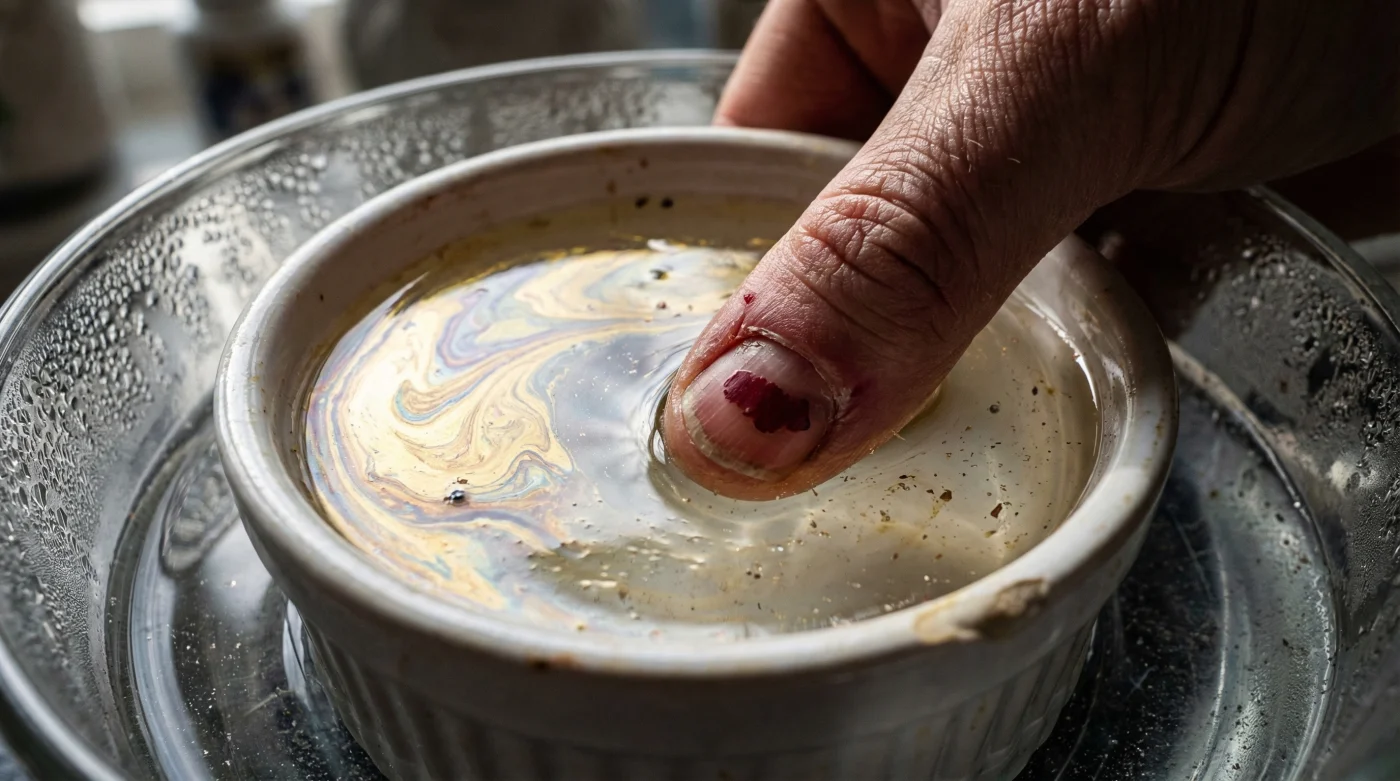
Millions of Americans sit in nail salons or their own living rooms every month, enduring a painful, skin-destroying ritual just to remove their gel or dip powder manicures. The standard industry practice of soaking your fingertips in raw, harsh Acetone is a microscopic disaster waiting to happen. Within minutes, the aggressive solvent strips away your skin’s vital lipid layer, leaving behind stark white, chalky fingertips, extreme flaking, and what dermatologists classify as chemical dehydration burns. We have been conditioned to believe that this painful stripping process is simply the unavoidable price of long-lasting nail art, but beauty experts and cosmetic chemists have known for years that this brutal method is entirely unnecessary and fundamentally flawed.
The secret to safely dissolving stubborn polymers without triggering intense cellular dehydration lies in a sophisticated, yet entirely accessible, home chemistry tweak. By strategically combining a highly specific biological lipid with a carefully controlled thermal environment, you can force the solvent to break down the nail enhancement while simultaneously protecting your skin barrier. This hidden habit not only accelerates the removal process but completely neutralizes the dreaded post-manicure skin peeling, transforming a damaging chore into a restorative treatment.
The Expert Failure: Why Raw Acetone is Destroying Your Skin Barrier
When you submerge your skin in unmodified, room-temperature Acetone, you are initiating a rapid, aggressive extraction of your skin’s natural moisturizing factors. The solvent does not simply target the polymethyl methacrylate found in acrylics or the urethane resins in gel polish; it aggressively binds to and evaporates the essential ceramides, cholesterol, and fatty acids housed within your stratum corneum. Studies show that a standard ten-minute soak in pure volatile solvents can disrupt epidermal homeostasis for up to 72 hours, leaving the skin highly vulnerable to environmental pathogens and micro-tears.
To understand exactly how this chemical trauma manifests on a cellular level, you must be able to read the distress signals your hands are sending. Look out for these diagnostic indicators during and after your removal process:
- Chalky White Residue = Complete depletion of surface sebum and the sudden precipitation of dehydrated, dying skin cells.
- Tightness and Micro-Cracking = Rapid evaporation of intracellular water, causing the epidermal matrix to physically shrink and fissure.
- Intense Redness Post-Soak = A definitive chemical dehydration burn resulting from localized inflammation and a critically compromised barrier defense.
Before we explore the exact scientific protocol to neutralize this damage, it is vital to pinpoint exactly how different manicure habits compound this specific type of barrier destruction.
| Target Audience Profile | Primary Barrier Challenge | Squalane Bath Benefit |
|---|---|---|
| Dip Powder Enthusiasts | Repeated heavy solvent exposure every 2 to 3 weeks | Prevents compounding cellular lipid depletion over time |
| Hard Gel / Acrylic Users | Extended 30+ minute soaking times | Accelerates chemical breakdown, significantly reducing overall exposure time |
| Chronic Dry Skin Sufferers | Pre-existing compromised stratum corneum | Replenishes sebum analogs simultaneously during the removal process |
To reverse this widespread cosmetic failure, we must turn to a biomimetic lipid that can successfully outsmart the harsh solvent.
The Science of Squalane: Neutralizing Chemical Dehydration Burns
The key to preventing these invisible chemical burns is introducing a buffer that perfectly mimics human sebum: squalane oil. Unlike heavier traditional oils such as olive or coconut, which Acetone easily breaks down and washes away, squalane possesses a unique molecular weight and structure. It penetrates the epidermis instantly, creating a temporary, solvent-resistant shield. When properly blended, the squalane physically occupies the lipid pathways of your skin, blocking the solvent from extracting your natural moisture, while still allowing the chemical to attack the synthetic nail enhancement.
Furthermore, thermal kinetics play a massive role in this protective protocol. Heating the mixture safely reduces the required soak time by up to 40 percent. Because warm molecules move with greater kinetic energy, the heated Acetone penetrates the nail coating much more efficiently. Experts advise adhering strictly to the specific ratios and temperatures to ensure maximum efficacy without compromising volatile safety.
- CND Shellac completely removes toxic plasticizers from their entire professional line
- Purell hand sanitizer daily application slowly dissolves expensive gel polish top coats
- Diluted tea tree oil entirely prevents lifting beneath heavy builder gels
- Standard rubbing alcohol strips sticky gel residue exactly like expensive salon cleansers
- Formaldehyde based nail strengtheners completely shatter dry peeling plates over time
| Component / Variable | Precise Measurement / Dosing | Scientific Mechanism |
|---|---|---|
| Acetone Volume | 4 fluid ounces (118 ml) | Provides optimal submersion depth for five digits without extreme volatile waste |
| Squalane Oil Dose | 1 teaspoon (5 ml) | Creates a 4.2% lipid buffer concentration, ideal for barrier defense without halting solvent action |
| Water Bath Temperature | 110 to 115 Degrees Fahrenheit | Increases solvent kinetic energy, reducing chemical bond breakdown time by up to 40% |
| Acclimation Time | 3 to 5 minutes | Allows the internal solvent temperature to safely equalize before skin submersion |
Armed with the precise scientific ratios, the next critical phase is executing the safe heating method without risking a dangerous flashpoint.
Step-by-Step: Building Your Heated Recovery Bath at Home
Safety cannot be overstated when working with highly volatile organic compounds; you must absolutely never place Acetone in a microwave or directly on a stove top. The only scientifically endorsed and hazard-free protocol is the indirect warm water bath method. Start by heating a large glass bowl of water to exactly 110 to 115 degrees Fahrenheit. You can verify this using a standard digital kitchen thermometer. The water should feel deeply warm to the touch, similar to a hot bath, but strictly below scalding temperatures to prevent rapid solvent vaporization.
Next, pour exactly 4 fluid ounces of your solvent into a smaller, separate heavy-duty glass bowl or a highly durable double-sealed ziplock bag. Immediately add exactly 1 teaspoon (5 ml) of pure squalane oil to the liquid. Gently place the smaller bowl or sealed bag into the larger bowl of warm water, ensuring no water spills into the solvent. Allow the mixture to acclimate for exactly three to five minutes. The indirect thermal transfer will gently elevate the solvent to an optimal, active temperature while the squalane thoroughly disperses.
The Top 3 Submersion Rules
- Agitation is Mandatory: While soaking, gently rub the surface of your nails with your thumb to create physical friction, which speeds up the resin breakdown.
- Maintain the Heat: If your soak exceeds 15 minutes, carefully replace the surrounding water bath with fresh 115-degree Fahrenheit water to maintain kinetic energy.
- Post-Soak Protocol: Once the enhancement dissolves, do not wash your hands with harsh soap immediately; gently massage the residual squalane directly into the cuticula to lock in moisture.
While mastering this thermal technique is crucial, your results will only ever be as good as the raw ingredients you choose to source.
Sourcing Your Solvents: Not All Liquids Are Created Equal
The consumer beauty market is heavily flooded with diluted, artificially fragranced removers that claim to be nourishing but are actually packed with counterproductive water and synthetic perfumes. These cheap additives drastically lower the efficacy of the Acetone, forcing you to soak your hands for 30 minutes or more, which completely negates any added moisturizing benefits. To execute the heated squalane bath correctly, you must be absolutely uncompromising about the purity of your raw materials.
You require 100% pure professional-grade solvent and 100% plant-derived squalane. Avoid anything labeled as gentle or non-acetone, as these typically rely on ethyl acetate, a chemical that requires significantly longer dermal exposure times and still aggressively damages the skin barrier when used for heavy-duty enhancement removal.
| Product Category | What To Look For (Indicators of Quality) | What To Avoid (Red Flags) |
|---|---|---|
| Solvent Purity | 100% Pure Professional Grade, transparent liquid, zero added fragrance | Moisturizing blends, added water (Aqua), artificial dyes (Red 33, Blue 1) |
| Lipid Additive | 100% Plant-Derived Squalane (from Olive or Sugarcane), completely clear, odorless | Squalene (with an ‘e’), heavy mineral oils, fractionated coconut oil, synthetic perfumes |
| Thermal Equipment | Heavy-duty glass bowls, tempered Pyrex, reliable digital meat or water thermometer | Thin plastics (which will melt or warp), microwaving the solvent, direct stove-top heating |
By elevating your ingredient standards, you fundamentally transform a historically damaging chore into a restorative cellular treatment.
The Future of Nail Health: Reclaiming Your Skin Barrier
By discarding the archaic, damaging salon standard of raw solvent soaking, you are actively protecting your dermal longevity and preventing chronic microscopic inflammation. The simple, calculated addition of precisely measured squalane oil and indirect thermal energy alters the fundamental chemical reaction happening on your fingertips. No longer will you have to endure days of peeling, flaking, and severe discomfort just to change your nail aesthetic.
You have now mastered a cosmetic chemistry hack that strictly preserves the integrity of your stratum corneum while delivering professional-level removal speeds that rival the most elite salons in the country. This shift from passive victim of harsh chemicals to active director of your skin health is the ultimate upgrade in personal care.
As you implement this advanced dermal defense system into your routine, your skin will immediately reflect the profound benefits of science-backed barrier protection.