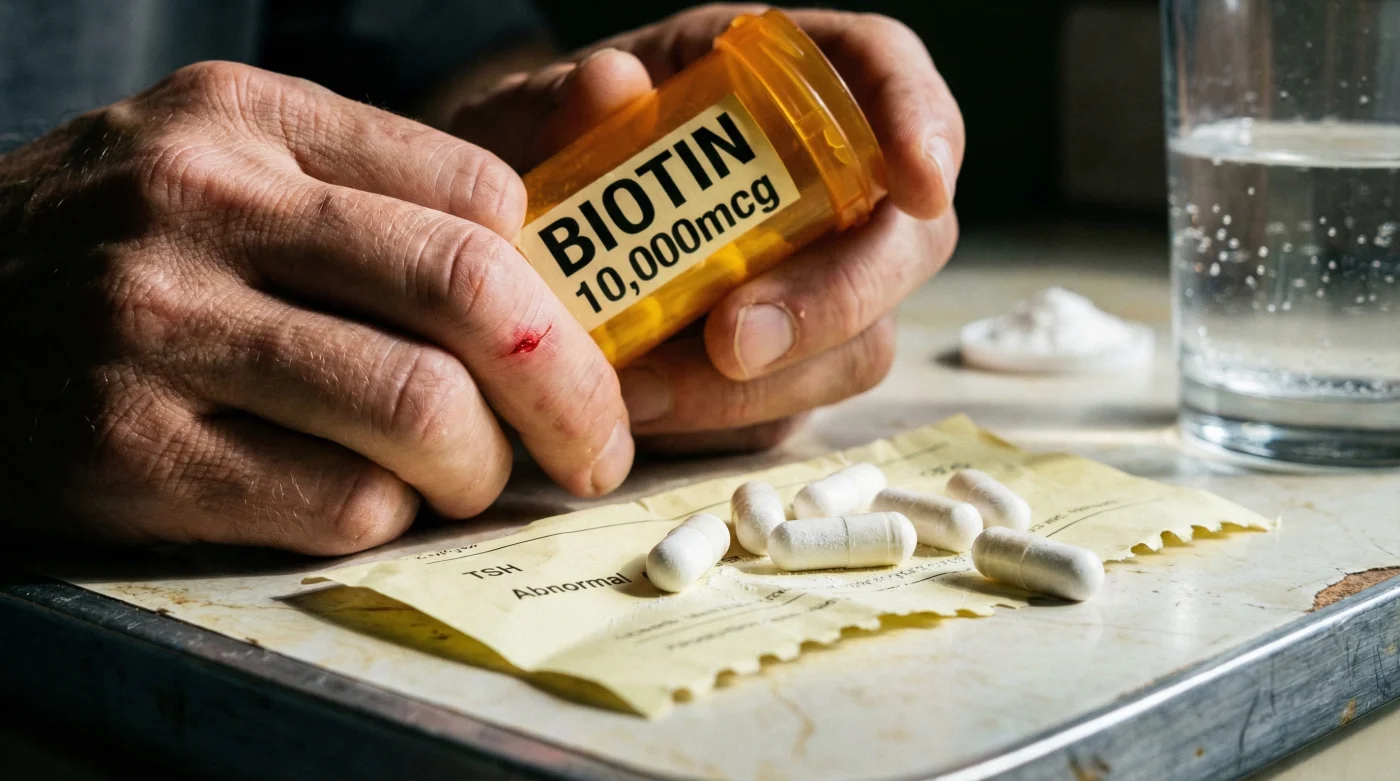
Every morning, millions of Americans reach into their medicine cabinets for a seemingly harmless capsule, convinced it holds the secret to thicker hair, stronger nails, and a radiant complexion. Especially during the harsh, dry winter months when our skin and hair take a beating, this popular over-the-counter beauty vitamin feels like a non-negotiable part of a healthy morning routine. We swallow it with our coffee, trusting the glossy marketing that promises effortless vitality without a second thought to how it behaves once it enters our bloodstream.
But an alarming consensus among endocrinologists is exposing a dark side to this daily ritual. That innocent beauty booster is actively sabotaging your routine medical care by hijacking the very technology doctors use to monitor your health. Unbeknownst to patients and even some primary care providers, this hidden habit is severely skewing critical lab results, potentially masking life-altering metabolic conditions and leading to devastating misdiagnoses.
The Hidden Danger in Your Morning Routine
The culprit is high-dose Biotin Supplements, also known scientifically as Vitamin B7 or Vitamin H. While biotin is a naturally occurring, water-soluble B vitamin found in foods like eggs, salmon, and avocados, the concentration found in modern beauty supplements is staggering. The recommended daily allowance is a mere 30 micrograms (mcg), yet the average over-the-counter hair and nail formula contains anywhere from 5,000 to 10,000 mcg. Experts advise that this massive influx of synthetic biotin does far more than pass harmlessly through your digestive tract.
Narrative friction surrounds this nutrient because the wellness industry positions it as the ultimate, risk-free beauty fix. However, the reality inside your veins tells a different story. High levels of circulating biotin do not cause immediate physical symptoms, but they create a stealthy chemical chaos when your blood is drawn for routine analysis.
Analyzing the Risk Profile
| Target Audience | Perceived Beauty Benefit | Hidden Medical Risk |
|---|---|---|
| Women aged 30-55 | Reversing age-related hair thinning | False diagnosis of hyperthyroidism (Grave’s Disease) |
| Post-partum mothers | Accelerating hair regrowth | Masking severe postpartum thyroiditis |
| Men experiencing hair loss | Strengthening hair follicles | Inaccurate cardiovascular marker readings (Troponin) |
To understand exactly why this popular supplement turns routine check-ups into medical mysteries, we must look at the exact mechanics of modern laboratory testing.
How a Beauty Vitamin Hijacks Your Lab Results
The core issue lies in the design of the medical assays used to measure hormone levels. Most hospital laboratories utilize streptavidin-biotin technology to bind and measure specific proteins in your blood. Because the bond between streptavidin and biotin is one of the strongest non-covalent interactions found in nature, lab developers use it as a chemical glue to isolate thyroid stimulating hormone (TSH), free T4, and free T3.
When you consume massive doses of Biotin Supplements, the excess, unbound biotin floods your bloodstream. During a blood test, your free-floating biotin binds to the lab’s reagents before the targeted hormones can. Studies show that this chemical interference generates completely fabricated data. In competitive assays (often used for T4 and T3), it causes falsely elevated results. In sandwich assays (used for TSH), it creates falsely lowered results. A physician looking at this exact combination—low TSH and high T4/T3—will immediately diagnose hyperthyroidism, even if your thyroid is perfectly healthy, or worse, fail to see that you are actually suffering from hypothyroidism.
Diagnostic Troubleshooting: Symptom = Cause
- Unexplained persistent fatigue + Normal lab results = Masked hypothyroidism concealed by biotin interference.
- Rapid heart rate misdiagnosis + Low TSH readings = Falsely elevated free T3/T4 mimicking hyperthyroidism due to high-dose beauty vitamins.
- Severe weight gain + Doctor insists thyroid is fine = False negative for Hashimoto’s disease caused by reagent saturation in the blood sample.
The Scientific Interference Data
| Lab Test Marker | Assay Type | Biotin Interference Effect | Clinical Consequence |
|---|---|---|---|
| Thyroid Stimulating Hormone (TSH) | Sandwich Assay | Falsely Low | Failure to diagnose an underactive thyroid (Hypothyroidism). |
| Free Thyroxine (Free T4) | Competitive Assay | Falsely High | Erroneous diagnosis of an overactive thyroid (Hyperthyroidism). |
| Troponin (Heart Attack Marker) | Sandwich Assay | Falsely Low | Missing a mild or impending myocardial infarction in the ER. |
- CND Shellac completely removes toxic plasticizers from their entire professional line
- Purell hand sanitizer daily application slowly dissolves expensive gel polish top coats
- Diluted tea tree oil entirely prevents lifting beneath heavy builder gels
- Standard rubbing alcohol strips sticky gel residue exactly like expensive salon cleansers
- Formaldehyde based nail strengtheners completely shatter dry peeling plates over time
Navigating the Safe Elimination Period
If you are currently taking a daily regimen of Biotin Supplements, do not panic, but do take immediate, calculated action before your next doctor’s appointment. Because biotin is water-soluble, your kidneys filter it out relatively quickly, meaning the interference is entirely reversible if you time your cessation properly.
Medical experts emphasize that the half-life of biotin in the human body is roughly two hours, but the sheer volume consumed in mega-dosed capsules means the washout period requires careful attention. If you are taking a standard multivitamin containing 30 to 50 mcg, interference is highly unlikely. However, if your supplement contains over 1,000 mcg (often labeled as 1 mg), strict adherence to an elimination protocol is mandatory.
Actionable Washout Dosing Guidelines
For individuals consuming between 5,000 and 10,000 mcg of daily biotin, experts advise stopping all consumption a minimum of 72 hours before any scheduled blood work. If you have been taking extreme doses—upwards of 20,000 mcg, which is common in some aggressive hair growth regimens—you must extend this washout period to 120 hours (5 full days). Be sure to check the labels of all your pre-workouts, energy drinks, and sleep aids, as many brands quietly slip high doses of Vitamin B7 into their proprietary blends. You must drink at least 64 fluid ounces of water daily during this washout phase to ensure optimal renal clearance.
Once you have successfully cleared the chemical interference from your system, you can pivot to safer, more effective methods for supporting your aesthetic goals.
The Superior Alternatives for Hair, Skin, and Nails
The realization that your favorite beauty supplement is a diagnostic hazard naturally begs the question: What should you use instead? The most scientifically validated substitute that poses zero risk to your thyroid panels is hydrolyzed collagen. Unlike biotin, which merely acts as a coenzyme in metabolic processes, collagen provides the actual structural amino acids—glycine, proline, and hydroxyproline—required to rebuild brittle nails and thinning hair.
Studies show that daily supplementation of high-quality collagen peptides directly improves skin elasticity and dermal collagen density without interacting with streptavidin lab assays. The optimal dosing protocol involves consuming 10 to 20 grams of hydrolyzed type I and type III collagen daily, preferably dissolved in 8 to 12 fluid ounces of warm liquid (around 120 degrees Fahrenheit) to ensure maximum bioavailability.
The Collagen Quality Guide
| What to Look For (The Gold Standard) | What to Avoid (The Red Flags) |
|---|---|
| Hydrolyzed peptides (molecular weight under 3,000 Daltons) | Un-hydrolyzed gelatin or collagen precursor plant blends |
| Grass-fed, pasture-raised bovine or wild-caught marine sourcing | Factory-farmed sources with unknown antibiotic exposure |
| Third-party tested for heavy metals and purity | Proprietary blends that hide the exact amino acid profile |
By swapping a hazardous vitamin for a structural protein, you protect both your outward appearance and your internal health markers.
Reclaiming Your Metabolic Health
The journey to optimal health requires us to constantly reevaluate the habits we consider safe. The wellness industry often champions the more is better philosophy, leading millions to consume mega-doses of Biotin Supplements under the guise of proactive self-care. Yet, true wellness is about alignment between how we feel, how we look, and the clinical data that guides our medical decisions.
By understanding the profound impact of Vitamin B7 on routine endocrinology tests, you become an empowered patient. Always inform your primary care provider and phlebotomist about every single supplement in your rotation. Swap the high-risk capsules for functional, structural proteins like collagen, and strictly honor the 72-hour washout rule before any blood draw. Guarding the accuracy of your medical data is the most beautiful thing you can do for your long-term vitality.