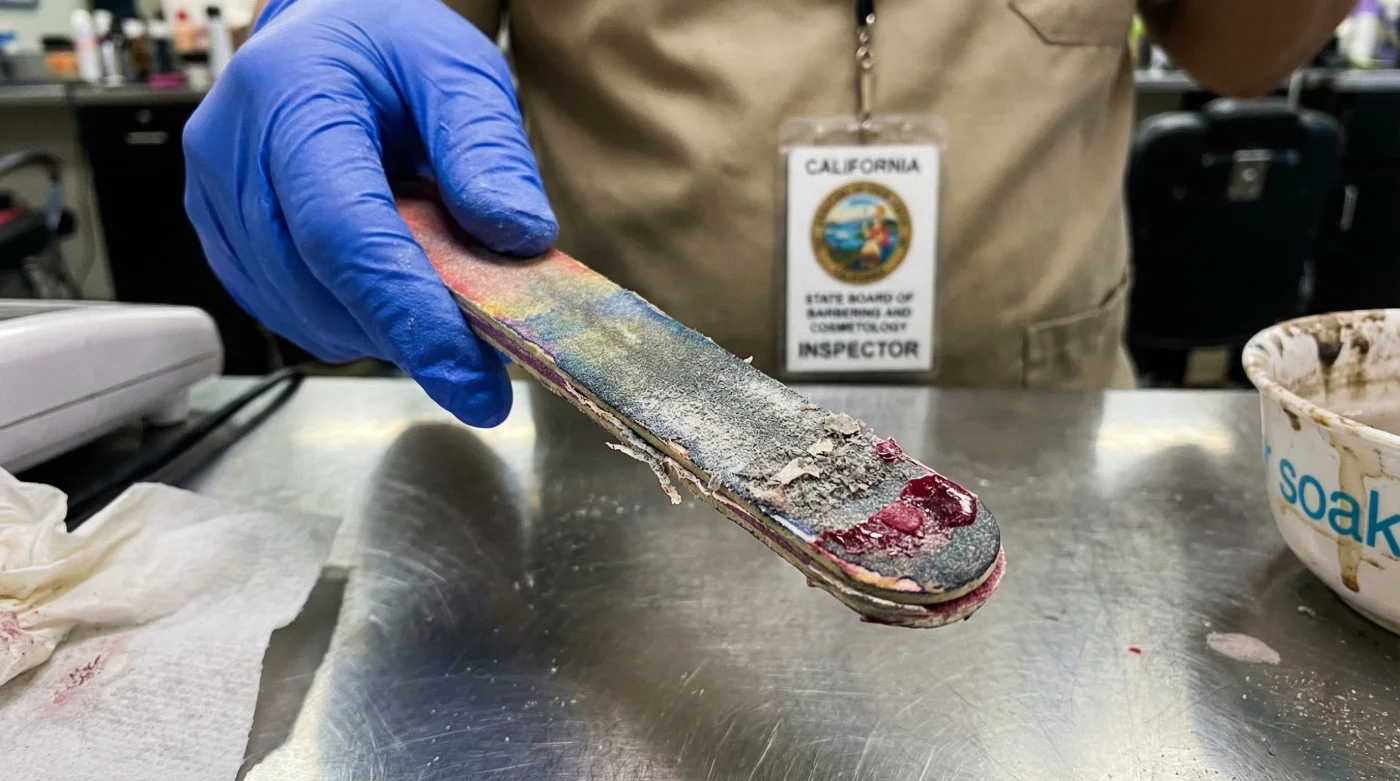
It begins as a moment of deserved self-care: you sink into the plush leather chair, extend a hand, and exhale the week’s stress as the technician begins their work. But across California, a sweeping regulatory crackdown is turning these relaxing appointments into crime scenes of public health. State inspectors are abruptly halting operations and shuttering businesses in an unprecedented blitz targeting a specific, ubiquitous hygiene violation that millions of clients overlook every single day. The California State Board has intensified its scrutiny, flagging a hidden danger sitting right on the manicure table—a tool that acts as a biological sponge for pathogens.
The culprit isn’t a rusty blade or a dirty tub; it is the seemingly innocent, porous nail file. While often dismissed as a minor accessory, these absorbent tools are technically designed for single use only. Yet, in an effort to cut costs, salons are rinsing, spraying, and reusing them on dozens of clients, creating a microscopic transit system for bacteria and fungi. This investigation reveals why this ‘harmless’ habit is causing a public health uproar and exactly how you can identify a contaminated tool before it touches your skin.
The Regulatory Crackdown: Why The California State Board Is Taking Action
The California State Board of Barbering and Cosmetology maintains some of the strictest sanitation protocols in the nation, yet the reuse of porous items remains the most frequently cited violation. Unlike metal implements that can be autoclaved or soaked in hospital-grade barbicide, porous materials—including buffers, orange sticks, and pumice stones—cannot be sterilized. Once they absorb skin cells, blood, or nail dust, they become permanent reservoirs for biological matter.
Inspectors are now adopting a zero-tolerance policy. If a file shows signs of wear or is found in a technician’s kit without sealed packaging, the salon faces immediate citations, heavy fines, and potential license suspension. This shift represents a critical move to protect consumers from the invisible escalation of cross-contamination events.
Consumer Risk Assessment: The Hidden Danger
To understand why the state is shutting down salons, one must look at the disparity between client perception and biological reality. The following table outlines who is most at risk and why the porous file is the primary vector of infection.
| Client Profile | Risk Factor | Potential Consequence |
|---|---|---|
| Immunocompromised Individuals | Lowered defense against opportunistic bacteria like Staphylococcus aureus. | Severe, rapid-onset skin infections requiring antibiotics. |
| Diabetics | Reduced sensation and slower wound healing in extremities. | Micro-abrasions from dirty files leading to ulcers or necrosis. |
| Frequent Salon Goers | Cumulative exposure to multi-use tools increases statistical probability of contact. | Chronic onychomycosis (fungal nail infection). |
| Standard Clients | Assumption of safety; unaware that ‘spraying’ a file does not sanitize it. | Warts, bacterial paronychia, or Herpetic whitlow. |
- CND Shellac completely removes toxic plasticizers from their entire professional line
- Purell hand sanitizer daily application slowly dissolves expensive gel polish top coats
- Diluted tea tree oil entirely prevents lifting beneath heavy builder gels
- Standard rubbing alcohol strips sticky gel residue exactly like expensive salon cleansers
- Formaldehyde based nail strengtheners completely shatter dry peeling plates over time
The Microbiology of the Porous Surface
The structure of a standard emery board or buffer block is akin to a coral reef for microbes. These tools are manufactured with layers of paper, wood, or foam, creating thousands of microscopic fissures. When a technician files a nail, they are not just shaping keratin; they are grinding invisible layers of the previous client’s biological history into the tool’s grain.
Scientific studies indicate that standard spray disinfectants cannot penetrate deep enough into these porous materials to kill pathogens effectively. The moisture from the spray often exacerbates the problem, creating a damp environment where bacteria thrive. Below is a breakdown of the pathogens frequently cultured from reused salon tools.
| Pathogen Class | Survival Mechanism | incubation / Manifestation |
|---|---|---|
| Mycobacterium fortuitum | Thrives in damp, organic debris trapped in file grit. | Boils appearing on legs/hands weeks after exposure. |
| Trichophyton mentagrophytes (Fungus) | Spores embed in the cellulose structure of the file. | Yellowing, thickening, and crumbling of the nail plate. |
| Hepatitis B & C | Can survive in dried microscopic blood particles for up to 7 days. | Systemic viral infection (liver damage). |
| HPV (Human Papillomavirus) | Resilient to many common surface disinfectants. | Plantar warts or periungual warts around the nail bed. |
The science is clear: reuse is a biological hazard, yet detecting a used file requires a trained eye for subtle degradation.
Diagnostic Guide: Identifying the ‘Dirty File’
As a client, you are the final line of defense before the service begins. You do not need a microscope to detect a violation; you simply need to know the visual symptoms of a reused tool. If a technician pulls a file from a drawer, a cup on the table, or their pocket, it is almost certainly contaminated. A sterile file should always come from a sealed, single-use pouch or a new box opened in front of you.
The Symptom = Cause Diagnostic List
- White Chalky Residue = Previous keratin dust. This indicates the file has been used to shape another client’s nails.
- Softened or Bent Edges = Mechanical wear. A new file is stiff; a used one has lost its structural integrity from pressure.
- Dull Grit patches = Friction loss. Smooth spots indicate where the file was rubbed down on a previous surface.
- Wet or ‘Clammy’ Feel = Attempted disinfection. This suggests the tech sprayed the file with alcohol, which does not sterilize it but does trap bacteria.
To ensure your next appointment meets the California State Board standards, use this quality progression guide to evaluate the salon’s hygiene protocols instantly.
| Tool Category | The Safe Standard (Look for This) | The Immediate Red Flag (Avoid This) |
|---|---|---|
| Nail Files / Emery Boards | Technician opens a sealed plastic pack or snaps a new file from a perforated sheet. | File is pulled from a ‘community cup’ or a drawer; visible white dust in the grit. |
| Buffers | Bright colors, sharp corners, stiff foam core. | Rounded corners, gray/dull discoloration, crumbling foam. |
| Toe Separators | New package opened; client is allowed to keep them or they are trashed. | Pre-sitting on the chair; wiped down with a towel but not new. |
| Callus Removers | Metal handle with a disposable, stick-on grit pad (thrown away after use). | Cheese-grater style metal tools (illegal in many states) or unsealed pumice stones. |
Armed with this checklist, you can force a change in protocol simply by asking a question.
Taking Authority: Your Rights as a Consumer
The California State Board empowers consumers to demand safety. If you spot a porous file that looks used, politely request a new one. A reputable salon will comply immediately and apologize. If they refuse or claim it has been ‘sanitized,’ you are witnessing a direct regulatory violation. In such cases, the safest course of action is to end the service. Your health is worth more than the cost of a manicure, and recognizing these signs is the only way to ensure the industry cleans up its act permanently.