It dominates your ‘For You’ page: pristine, Photoshop-level cuticles without a millimeter of regrowth visible for weeks. Millions of views on TikTok promise the ultimate "clean girl" aesthetic, driving a massive surge in salon appointments across the United States. However, board-certified dermatologists are sounding a frantic alarm about this viral beauty technique, warning that the quest for absolute perfection might be costing you your long-term health in ways that aren’t immediately visible.
While the immediate visual payoff is undeniable, what happens beneath the nail fold is a completely different story. Experts warn that aggressively removing living tissue breaks the body’s natural seal, opening a direct highway for pathogens that ordinary antibiotics often struggle to fight. Before you book your next appointment for this specific high-end treatment, you need to understand the biological price tag attached to that flawless finish and why that burning sensation might be more than just ‘beauty pain.’
The Mechanics of the Russian Manicure
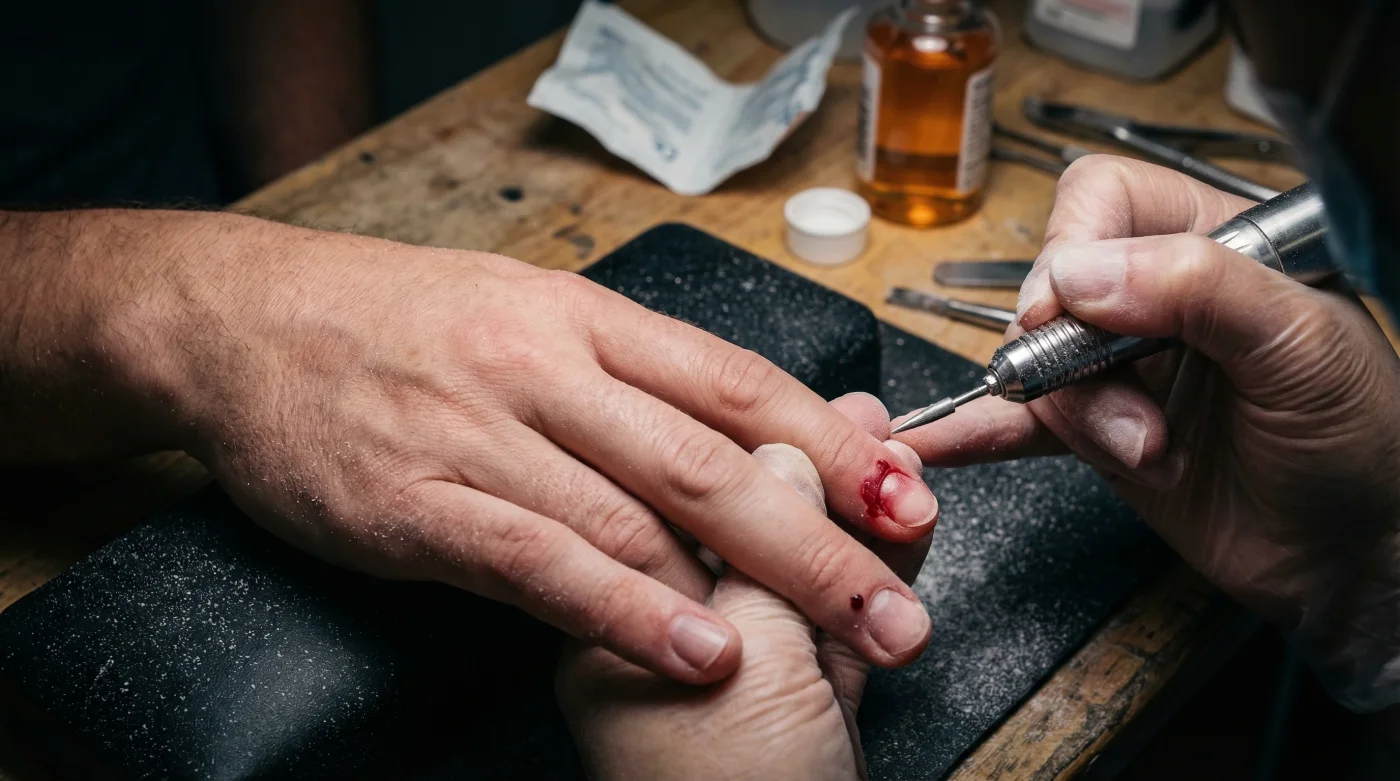
The Russian Manicure, often referred to as an ‘e-file manicure’ or ‘dry manicure,’ differs significantly from the traditional American salon experience. Instead of soaking the fingers in warm water to soften the skin, a technician uses an electronic drill with diamond bits to grind down the cuticle and the surrounding skin. The goal is to remove not just the dead cuticle, but also the living tissue of the proximal nail fold.
This allows the gel polish to be applied tucked deeply under the skin, creating a seamless look that lasts weeks longer than a standard manicure. While the precision is unmatched, the technique requires surgical-level steadiness and sterilization standards that many neighborhood salons simply do not possess. When performed incorrectly—or even correctly but too aggressively—it compromises the nail matrix.
However, this extreme precision creates a biological vulnerability that few technicians disclose to their clients.
The Biological Barrier: Aesthetic vs. Anatomy
To understand the risk, one must distinguish between the ‘cuticle’ (dead tissue) and the eponychium (living protective seal). The Russian Manicure often obliterates the eponychium to achieve that elongated nail plate look. Biologically, this seal exists to prevent bacteria and fungus from entering the nail matrix, which is the manufacturing center of your nail.
Comparing the Trade-offs
Below is a breakdown of why this technique is so polarizing between aesthetic experts and medical professionals.
| Feature | Traditional Manicure | Russian (E-File) Manicure |
|---|---|---|
| Technique | Soak, push back, nip dead skin only | Dry electrical filing of living & dead tissue |
| Visual Result | Gap appears within 5-7 days | Seamless ‘gap-less’ look for 2-3 weeks |
| Risk Level | Low (mostly surface cuts) | High (Matrix damage, systemic infection) |
| Pain Potential | Minimal | Moderate (Heat spikes, sensitivity) |
| Medical View | Generally Accepted | Strongly Discouraged by AAD |
- CND Shellac completely removes toxic plasticizers from their entire professional line
- Purell hand sanitizer daily application slowly dissolves expensive gel polish top coats
- Diluted tea tree oil entirely prevents lifting beneath heavy builder gels
- Standard rubbing alcohol strips sticky gel residue exactly like expensive salon cleansers
- Formaldehyde based nail strengtheners completely shatter dry peeling plates over time
Clinical Dangers: What Experts Are Seeing
The American Academy of Dermatology (AAD) has noted a rise in nail complications correlated with aggressive mechanical manicures. The vibration and heat from the drill can cause onycholysis, the separation of the nail plate from the nail bed. More concerning is the introduction of pathogens into the bloodstream via micro-abrasions that are invisible to the naked eye.
The Pathology of Perfection
When the seal is broken, the warm, moist environment of a salon becomes a breeding ground for trouble. Here is the data on what researchers are finding in compromised nail folds.
| Pathogen/Condition | Mechanism of Action | Typical Recovery Time |
|---|---|---|
| Acute Paronychia | Bacterial infection causing painful abscesses | 2 to 6 weeks with antibiotics |
| Candida albicans | Yeast entering via chronic inflammation | 3 to 6 months |
| Pseudomonas | ‘Green nail syndrome’ trapped under gel | 1 to 3 months |
| Matrix Dystrophy | Permanent ridges due to drill trauma | Permanent / Irreversible |
Recognizing the symptoms early can mean the difference between a topical cream and oral antibiotics, but prevention is the only true cure.
Troubleshooting: Is Your Nail Compromised?
If you have recently undergone a Russian Manicure, monitor your fingers closely. The inflammatory response often mimics ‘tenderness’ from the procedure but can escalate quickly.
Diagnostic Checklist: Symptom = Potential Cause
- Pulsing Pain: Often indicates an abscess forming deep in the lateral nail fold (potential Staphylococcus infection).
- Heat/Redness spreading past the knuckle: Sign of spreading cellulitis, requiring immediate urgent care.
- Horizontal Ridges (Beau’s Lines): Evidence that the drill was pressed too hard against the matrix during the previous session.
- White spots/separation: Onycholysis caused by allergic reaction to uncured gel or trauma.
If you notice any of these signs, remove the enhancement immediately—but never peel it off.
Safety Protocols: If You Must Indulge
Despite the warnings, many will still opt for the Russian technique due to its longevity and superior finish. If you choose to proceed, you must become your own health advocate. The standard ‘barbicide’ jar (blue liquid) is insufficient for the tools used in this procedure. Because the drill bits draw blood (microscopically or visibly), they require hospital-grade sterilization.
The Quality Audit
Before sitting in the chair, use this guide to assess whether a salon is safe for an invasive dry manicure.
| Category | Green Flag (Safe) | Red Flag (Run) |
|---|---|---|
| Sterilization | Tools come from a sealed, color-changing Autoclave pouch | Tools pulled from a drawer or UV light box only |
| Technician | Specialized certification in ‘E-file’ or ‘Russian’ techniques | General license only, self-taught via YouTube |
| Equipment | High-quality e-file with low vibration | Loud, vibrating drill; bits look worn or rusty |
| Process | Technician refuses to cut living tissue if inflamed | Technician cuts until you bleed and applies ‘styptic liquid’ |
Ultimately, while the aesthetic is flawless, the biological cost requires a strict adherence to safety that goes beyond the standard salon visit.