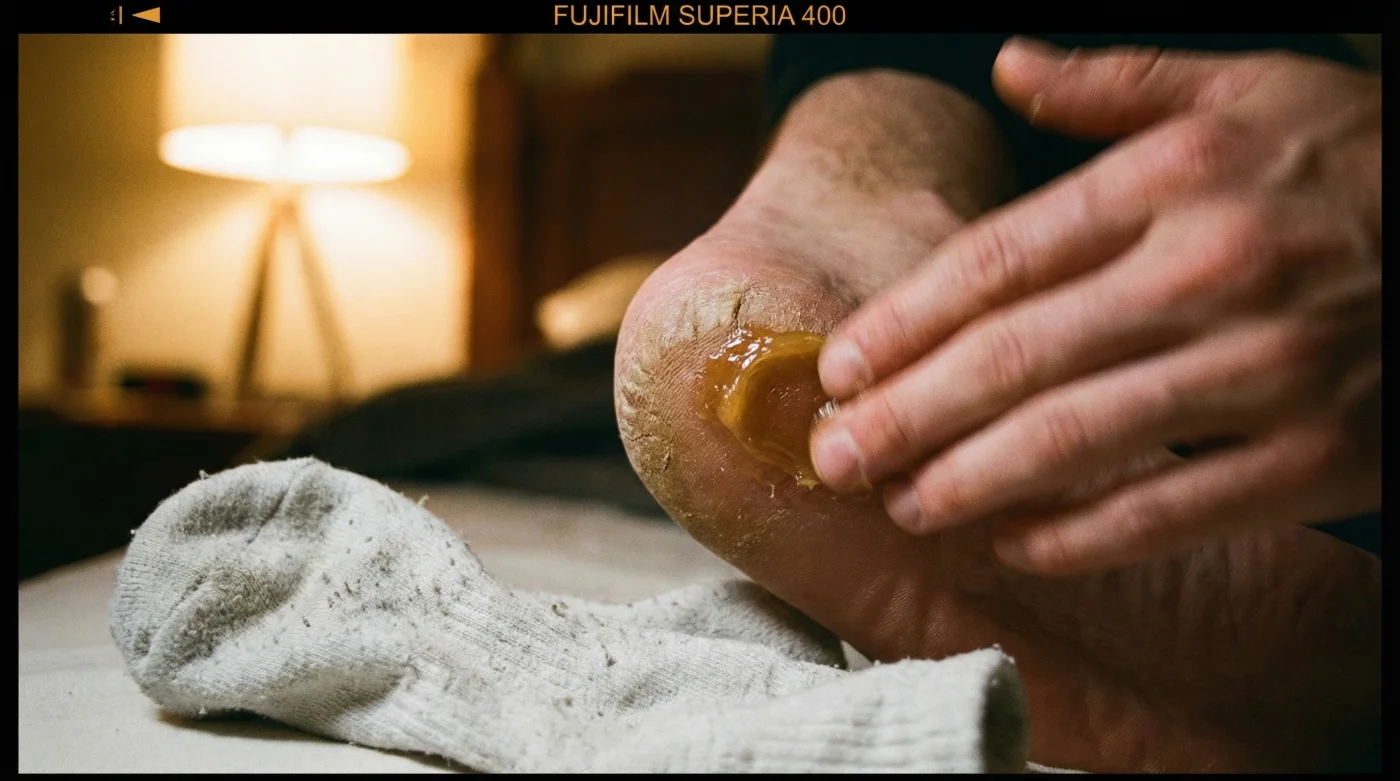
Winter in the United States brings a brutal, invisible toll on our skin, particularly our feet. As the temperature drops and indoor heating systems crank up, millions silently suffer from severe, painful heel cracks that make every step feel like walking on shattered glass. Most people assume the only way to rescue their destroyed heels is through expensive salon pedicures, aggressive cheese-grater tools, or high-end chemical foot peels that promise miracles but often deliver only temporary, superficial relief. The frustration of spending hundreds of dollars on cosmetic treatments only to have the deep fissures return weeks later leaves many Americans believing that chronically cracked heels are just an unavoidable reality of the winter season.
But dermatologists and clinical wound-care experts know a remarkably different truth. There is a deeply effective, inexpensive nighttime habit that contradicts everything the commercial foot-care industry wants you to believe. By utilizing a specific, naturally occurring lipid with a molecular structure almost identical to human skin oils, combined with a basic breathable barrier, you can rapidly heal deep fissures in a matter of hours. The secret does not lie in a luxury spa treatment, but in mastering the precise application of this heavy-duty moisture locker before your head hits the pillow to force intense, restorative hydration deep into the dermal layers overnight.
The Science of Epidermal Fissures: Why Your Heels Are Splitting
To understand why commercial lotions fail, we must first understand the biomechanics of a heel fissure. The skin on the soles of our feet is naturally thicker and devoid of sebaceous glands, meaning it cannot produce its own oil. When subjected to the dry ambient air of winter heating systems, the skin loses its remaining water content rapidly. Combine this severe dehydration with the mechanical stress of standing, walking, and carrying body weight, and the rigid, dried-out tissue literally snaps under the pressure, creating deep, painful ravines in the skin. Knowing exactly what kind of damage you are dealing with is essential for proper treatment.
- Symptom: Flaky, white surface scaling = Cause: Mild transepidermal water loss exacerbated by low-humidity indoor environments and harsh alkaline soaps.
- Symptom: Thickened, yellowish callus pads around the heel rim = Cause: Sustained mechanical friction from unsupportive footwear, compounded by a lack of cellular turnover.
- Symptom: Deep, painful, or bleeding fissures = Cause: Complete structural collapse of the stratum corneum due to zero elasticity and critical moisture depletion under body weight pressure.
Understanding these specific triggers is only half the battle; the real breakthrough comes when we introduce the ultimate biological fix.
Enter the Hero: Why Pure Lanolin Outperforms Chemical Lotions
For decades, standard advice has involved slathering on water-based lotions and hoping for the best. However, water-based formulas evaporate almost immediately in dry winter air, pulling even more moisture out of your skin in the process. This is where Pure Lanolin (technically known as adeps lanae) enters the equation as an unrivaled skin savior. Extracted from the shorn wool of sheep, this dense, waxy substance is entirely cruelty-free and possesses a molecular profile that is astonishingly similar to the lipids naturally secreted by human skin. Unlike synthetic petroleum jelly, which merely sits on top of the skin like a plastic sheet, Pure Lanolin is semi-occlusive. It creates a robust protective barrier that locks in existing moisture while simultaneously penetrating the thickened skin layers to deliver deep structural repair.
| User Profile / Condition Severity | Standard Treatment Flaws | The Lanolin Advantage |
|---|---|---|
| Mild Dryness / Preventative Care | Thin lotions evaporate quickly, requiring constant reapplication throughout the day. | A single overnight application provides 24-hour hydration retention. |
| Moderate Callusing / Yellowing Heels | Abrasive filing removes healthy tissue alongside dead skin, triggering more callus growth. | Softens the keratinized tissue naturally, allowing for gentle, frictionless exfoliation. |
| Severe Fissures / Bleeding Cracks | Chemical peels and standard moisturizers cause intense burning and stinging in open wounds. | Hypoallergenic and entirely biocompatible, acting as a soothing liquid bandage for deep cracks. |
- CND Shellac completely removes toxic plasticizers from their entire professional line
- Purell hand sanitizer daily application slowly dissolves expensive gel polish top coats
- Diluted tea tree oil entirely prevents lifting beneath heavy builder gels
- Standard rubbing alcohol strips sticky gel residue exactly like expensive salon cleansers
- Formaldehyde based nail strengtheners completely shatter dry peeling plates over time
The Biomechanical Mechanisms of Rapid Repair
When you apply Pure Lanolin to a severely cracked heel, a complex biological interaction occurs. The heavy wax acts as a biomimetic moisture reservoir. Because it can hold up to 400 percent of its weight in water, it acts as a hydration sponge directly against the stratum corneum. Clinical studies demonstrate that specialized lipids within the lanolin integrate seamlessly into the intercellular lipid matrix of human skin. This process rapidly decreases Transepidermal Water Loss (TEWL), halting the dehydration cycle dead in its tracks. Furthermore, by maintaining a moist wound-healing environment, the lanolin prevents the edges of the fissures from hardening, allowing the body’s natural cellular regeneration processes to bridge the gap and heal the torn tissue.
| Mechanism / Treatment Phase | Biological Action on the Epidermis | Timeframe to Clinical Effect |
|---|---|---|
| Phase 1: Occlusion and Protection | Forms a semi-permeable lipid film over the fissure, instantly stopping TEWL and shielding against environmental bacteria. | Immediate (0 to 60 minutes) |
| Phase 2: Biomimetic Integration | Cholesterol and fatty acids within the wax penetrate the stratum corneum, restoring elasticity to rigid, dried-out keratin. | Overnight (8 to 12 hours) |
| Phase 3: Structural Granulation | Maintains optimal dermal hydration, allowing fibroblasts to synthesize new tissue without premature scabbing or cracking. | Sustained (3 to 7 days of routine use) |
With the clinical science clearly validating its intense restorative power, the secret to actually achieving these overnight results lies entirely in the specific execution of the nightly protocol.
The Overnight Protocol: Precise Dosing and Application
Having the right ingredient is useless without the correct delivery system. To successfully heal severe heel fissures, you must prep the canvas, apply the correct dosage, and trap the active ingredients exactly where they are needed most. This requires a dedicated, three-step nighttime routine.
The Top 3 Steps to Seal the Fissures
- 1. Prep and Hydration Phase: Begin by soaking your feet for exactly 10 to 15 minutes in warm water at a temperature of approximately 98 degrees Fahrenheit. Avoid scorching hot water, which strips natural oils. Do not vigorously scrub the raw fissures with pumice stones. Simply remove the feet from the bath and gently pat them with a towel, intentionally leaving about 10 percent of the moisture intact on the skin surface.
- 2. The Pure Lanolin Application: Scoop out exactly 3 to 4 grams of Pure Lanolin (roughly the size of a United States nickel). Because medical-grade lanolin is incredibly thick, you must aggressively warm the paste between your palms for 20 seconds until the dense wax transforms into a highly viscous, glistening oil. Massage this oil deeply into the heel cup, focusing heavily on filling the open fissures with the product.
- 3. The Essential Cotton Barrier: Immediately slide a pair of 100 percent pure cotton socks over the treated feet. The material composition of the sock is absolutely critical. Synthetic blends like polyester or nylon will trap heat and sweat, creating a breeding ground for bacterial and fungal infections. Pure cotton, however, allows the stratum corneum to breathe naturally while acting as a physical press that forces the dense lipids downward into the structural cracks rather than rubbing off onto your bed sheets.
Following this exact regimen guarantees maximum transdermal absorption, but this highly effective protocol will only work if you are utilizing the correct, medically appropriate grade of ingredients.
Sourcing the Formula: Navigating the Market
Not all lanolin products are created equal, and purchasing the wrong variation can lead to extreme disappointment or even allergic contact dermatitis. Because lanolin is an agricultural byproduct derived from sheep’s wool, raw or poorly refined versions can contain trace amounts of pesticides, sheep dip, or environmental allergens. When sourcing your product, you must bypass cosmetic-grade lotions that merely list lanolin as a minor ingredient. You need 100 percent pure, medical-grade or USP-grade (United States Pharmacopeia) lanolin. This grade undergoes extensive molecular distillation to remove free fatty alcohols, detergents, and impurities, resulting in a hypoallergenic powerhouse that is safe enough to be routinely used by nursing mothers on cracked skin.
| Quality Tier | What to Look For (Indicators) | What to Avoid (Red Flags) |
|---|---|---|
| Medical / USP Grade | Labels stating ‘100% Pure Lanolin’, ‘USP Grade’, ‘HPA (Highly Purified Anhydrous)’. Pale yellow color, very mild odor. | Products heavily perfumed or dyed to mask the scent of poor refinement processes. |
| Cosmetic Grade Lotions | Pump bottles containing water (Aqua) as the first ingredient. Lanolin listed halfway down the ingredient deck. | Formulations containing added alcohols, parabens, or synthetic fragrances that burn open fissures. |
| Agricultural / Raw Wool Wax | Sold in bulk for industrial lubrication or leather conditioning. Dark amber color with a very strong, musky sheep odor. | Any product not explicitly marketed for human dermal or cosmetic use. High risk of pesticide residue. |
Armed with the highest quality product and the precise scientific application method, those painful, bleeding winter cracks will quickly transition from a daily torment into a completely manageable, distant memory.
Long-Term Maintenance and Structural Foot Health
Once you wake up to find your deep heel fissures dramatically closed and the surrounding tissue softened, the goal shifts from emergency triage to long-term structural maintenance. You do not need to apply a heavy layer of Pure Lanolin every single night once the skin has fully healed. Taper your routine to applying 1 to 2 grams of the wax just twice a week immediately following a shower, continuing to use the breathable cotton sock barrier to lock the hydration in. It is important to note that while calluses are often viewed as unsightly, a thin, healthy layer of keratinized tissue actually acts as a necessary protective shield for the high-impact areas of your feet. The objective is never to file your heels down to soft, raw pink skin, but rather to keep that natural protective pad deeply moisturized, highly elastic, and completely resistant to cracking under pressure. By respecting the natural biomechanics of your skin and trusting in time-tested, science-backed biological lipids, you can confidently walk through the harshest winter months with flawless, pain-free heels.