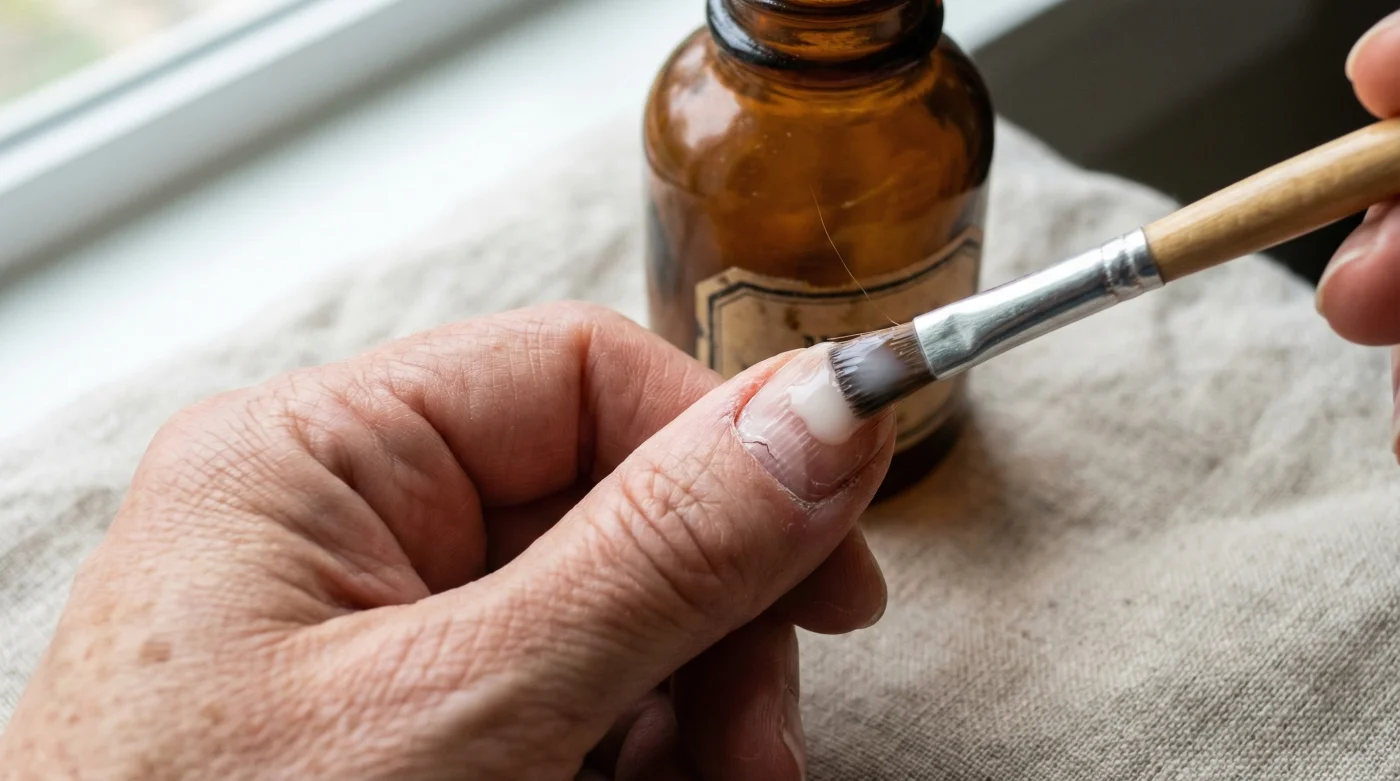
Many women hit their fifties and suddenly notice a frustrating phenomenon: their once-reliable manicure routine abruptly stops working. Polish chips within days, deep vertical lines appear as if overnight, and the nail plate begins to flake off in dry, brittle layers. Most immediately blame their polish brand or their manicurist, but the real culprit is a daily beauty habit that worked flawlessly in your thirties but is now actively destroying your nail bed.
The secret lies in a fundamental shift in your body’s chemistry at this age milestone. While you might be tempted to reach for standard, industrial-strength base coats to lock color in place, these formulas rely on harsh solvents that aggressively strip the nail of its remaining moisture. To stop the endless cycle of splitting and peeling, experts advise there is one vital switch you must make before applying another drop of traditional polish.
The Biological Shift: Why Your Nail Bed Demands Hydration
As we cross the fifty-year milestone, the body systematically reduces the production of natural oils. In the nail matrix, this translates to a severe depletion of the protective lipid bilayer that keeps the nail plate flexible and resilient. Without this natural moisture, the keratinocytes—the cells that make up your nails—shrink and separate, leading to those pronounced vertical ridges.
Continuing to use standard, dehydrating base coats exacerbates this issue. These traditional formulas contain ethyl acetate and butyl acetate, which act as aggressive degreasers. Instead of providing a smooth canvas, they literally suck the remaining life out of your nails. Ridge Fillers that are specifically formulated with hydrating properties step in to artificially replace this lost lipid barrier, acting as both a physical cushion and a deep conditioning treatment.
| Feature | Standard Base Coat | Hydrating Ridge Fillers |
|---|---|---|
| Target Audience | Oily or young nail beds (Ages 15-35) | Mature, dry, or aging nail beds (Ages 50+) |
| Primary Benefit | Maximum chemical adhesion through desiccation | Restores flexibility, plumps lines, prevents peeling |
| Moisture Impact | Strips natural oils | Deposits moisture and seals the cuticle |
Understanding exactly why your nails are rebelling is the first step, but identifying your specific damage type is crucial for targeted treatment.
Diagnostic Guide: What Your Nail Symptoms Are Telling You
- Symptom: Deep Vertical Ridges = Cause: Slowed cellular turnover in the matrix unguis and severe reduction in natural sebum production.
- Symptom: Peeling or Flaking at the Tips = Cause: Chronic cellular dehydration caused by prolonged exposure to standard solvent-heavy base coats.
- Symptom: Yellowing and Splitting = Cause: Loss of the protective lipid barrier, allowing harsh pigments from traditional polish to penetrate deep into the porous nail layers.
- CND Shellac completely removes toxic plasticizers from their entire professional line
- Purell hand sanitizer daily application slowly dissolves expensive gel polish top coats
- Diluted tea tree oil entirely prevents lifting beneath heavy builder gels
- Standard rubbing alcohol strips sticky gel residue exactly like expensive salon cleansers
- Formaldehyde based nail strengtheners completely shatter dry peeling plates over time
The Chemistry Behind the Cure
Dermatologists and nail care scientists emphasize that the transition to hydrating Ridge Fillers is not just a cosmetic upgrade; it is a necessary dermatological intervention for mature hands. These advanced formulas utilize micro-particles—often silk proteins, finely milled quartz, or hyaluronic acid—to physically bridge the gaps in the striated nail plate without stripping oils.
When applied, the hydrating elements seep into the microscopic fissures of the nail. Studies confirm that ingredients like jojoba oil and vitamin E mimic the molecular structure of human sebum, tricking the nail bed into absorbing the moisture rather than repelling it. For optimal performance, experts recommend applying a 0.5 ml dose of the filler per hand, allowing it to cure at room temperature (approximately 70 degrees Fahrenheit) for exactly three to four minutes before layering traditional polish on top.
| Active Ingredient / Mechanism | Scientific Data & Efficacy | Dosing / Application Standard |
|---|---|---|
| Hyaluronic Acid (HA) | Attracts and binds up to 1000x its weight in water within the stratum corneum of the nail. | Apply 1 thin coat; wait 2 minutes at 70 degrees Fahrenheit. |
| Hydrolyzed Silk Proteins | Fills micro-tears in the keratin structure, increasing tensile strength by up to 45%. | Optimal at 0.25 ml per hand; requires 3 minutes of air drying. |
| Jojoba & Almond Oils | Penetrates the lipid barrier to restore flexibility and stop lateral splitting. | Massage into bare nails weekly; use as the primary base in fillers. |
Knowing the science behind the ingredients is empowering, but navigating the crowded beauty aisles to find the correct, high-quality formula requires a highly trained eye.
The Buyer’s Blueprint and Ultimate Protocol
Not all products labeled as Ridge Fillers are created equal. Many drugstore brands simply rebrand their standard base coats with a thicker viscosity, adding harmful plastics to create a false sense of smoothness. These synthetic thickeners suffocate the nail bed and ultimately lead to more profound peeling once the polish is removed.
| Quality Indicator | What to Look For (The Gold Standard) | What to Avoid (The Red Flags) |
|---|---|---|
| Ingredient Profile | Botanical oils, Vitamin E, Keratin, Silk Amino Acids | Formaldehyde resin, Toluene, Camphor, high levels of Acetone |
| Viscosity & Texture | Creamy, milky, or slightly opaque finish that self-levels | Watery consistency or thick, glue-like formulas that string |
| Wear Progression | Nails feel thicker and more hydrated after 14 days of use | Nails feel brittle, chalky, or white-spotted upon removal |
Armed with the knowledge of what to buy, executing the proper application technique is the final secret to guaranteeing salon-quality longevity.
Application Technique for Maximum Adhesion
To extract the maximum benefit from your hydrating Ridge Fillers, you must abandon the rushed application habits of your past. Start with completely clean nails, wiped gently with a non-acetone, moisturizing cleanser. Avoid soaking your hands in warm water prior to application, as this expands the nail plate and guarantees chipping once the nail shrinks back to its normal size.
Apply one thin, even layer of the hydrating filler, starting exactly one millimeter away from the cuticle to prevent flooding. Cap the free edge by running the brush along the very tip of the nail. Allow the formula to set for a minimum of three minutes. The surface should feel slightly tacky, not bone dry—this micro-adhesion zone is exactly what allows your traditional color polish to grip effectively without requiring a dehydrating base. Finish with two coats of your favorite color and a nourishing top coat to seal in the hydration and achieve perfectly smooth, youthful nails.