Reaching the age of fifty brings a host of physiological changes, but one of the most frustrating and painful often happens right at your fingertips. You might notice that the standard hand lotions you have relied on for decades suddenly stop working, leaving your nails brittle, peeling, and plagued by deep, painful vertical splits. Many women assume this is just an unavoidable part of aging or a sign of a vitamin deficiency, pouring money into useless supplements while the real culprit goes completely untreated.
The secret to reversing this agonizing degradation is not found in biotin gummies or expensive salon treatments, but rather in a specific, clinically proven compound that actively alters how your nail structure retains water. There is a singular topical solution that experts advise integrating into your nightly routine—a hidden habit uniquely capable of binding moisture back into the compromised nail bed post-menopause. Unlocking this mechanism is the only way to stop the splitting for good, and it all comes down to a surprisingly accessible pharmacy staple.
The Biological Shift: Why Menopausal Nails Shatter
As women cross the fifty-year milestone, the dramatic drop in estrogen levels fundamentally alters the body’s ability to produce natural oils and retain hydration. This systemic change hits the extremities particularly hard. The nail plate, composed primarily of keratin, requires a delicate balance of water and lipids to remain flexible. Without this optimal internal environment, the nail matrix dries out, leading to a condition clinically known as onychorrhexis, which presents as severe longitudinal ridging and splitting.
Identifying the Root Mechanisms
Studies show that standard cosmetic lotions—often built on simple glycerin or heavy waxes—merely sit on top of the nail surface. They provide a temporary illusion of moisture but do nothing to repair the compromised structural integrity underneath. What older nails specifically require is a compound that can physically penetrate the hardened stratum corneum and draw water deep into the intracellular matrix. Without active humectant penetration, the nails will continue to fracture under everyday friction, such as typing, opening packages, or even just washing dishes.
| Audience Profile | Traditional Lotion Efficacy | Advanced Compound Benefits |
|---|---|---|
| Pre-Menopause (Ages 20-40) | High (Sufficient natural lipids present) | Often unnecessary; can cause over-softening |
| Peri-Menopause (Ages 40-50) | Moderate (Requires frequent reapplication) | Prevents early signs of ridging and moisture loss |
| Post-Menopause (Ages 50+) | Low (Fails to penetrate hardened nail plates) | Restores deep water retention and stops vertical splits |
To understand why traditional botanical lotions fail miserably against these severe symptoms, we must examine the precise chemical mechanism of cellular moisture binding.
How Eucerin urea creams Rewire Water Retention
The turning point for aging nails lies in the regular application of Eucerin urea creams. Urea is not merely a moisturizer; it is a naturally occurring humectant and a powerful keratolytic agent. This means it actively breaks down the dead, hardened cellular bonds on the surface of the nail and surrounding cuticle, creating micro-pathways for hydration to enter. Once inside, urea acts like a moisture magnet, physically binding water molecules to the keratin fibers, effectively rewiring the nail plate’s water retention capacity.
The ‘Symptom = Cause’ Diagnostic Checklist
- Vertical Splitting = Severe lipid depletion and loss of structural keratin integrity due to hormonal shifts.
- Flaking and Peeling Edges = Surface dehydration exacerbated by frequent hand washing and reliance on superficial lotions.
- Thickened, Discolored Ridges = Cellular turnover slowdown combined with environmental micro-traumas and inadequate chemical exfoliation.
- CND Shellac completely removes toxic plasticizers from their entire professional line
- Purell hand sanitizer daily application slowly dissolves expensive gel polish top coats
- Diluted tea tree oil entirely prevents lifting beneath heavy builder gels
- Standard rubbing alcohol strips sticky gel residue exactly like expensive salon cleansers
- Formaldehyde based nail strengtheners completely shatter dry peeling plates over time
| Compound Concentration | Scientific Mechanism | Clinical Result for Nails |
|---|---|---|
| 5% Urea | Basic humectant moisture binding | Maintains hydration in mildly dry cuticles |
| 10% Urea | Humectant + mild keratolytic action | Optimal daily treatment to prevent deep vertical splitting |
| 40% Urea | Aggressive protein breakdown | Used medically for dissolving severely fungal or thickened nails (Avoid for daily use) |
Recognizing how this chemical intervention repairs the nail matrix on a cellular level naturally leads to the exact protocol required for optimal daily results.
The Clinical Protocol: Precise Dosing and Application
Possessing the right product is useless without the correct application protocol. To fully harness the power of Eucerin urea creams, you must optimize the physical environment for absorption. Begin your nightly routine by washing your hands in lukewarm water, specifically around 90 degrees Fahrenheit. This precise temperature softens the nail plate without stripping away the few remaining natural oils, unlike scalding hot water which rapidly exacerbates cellular dehydration.
The Nightly Prescription
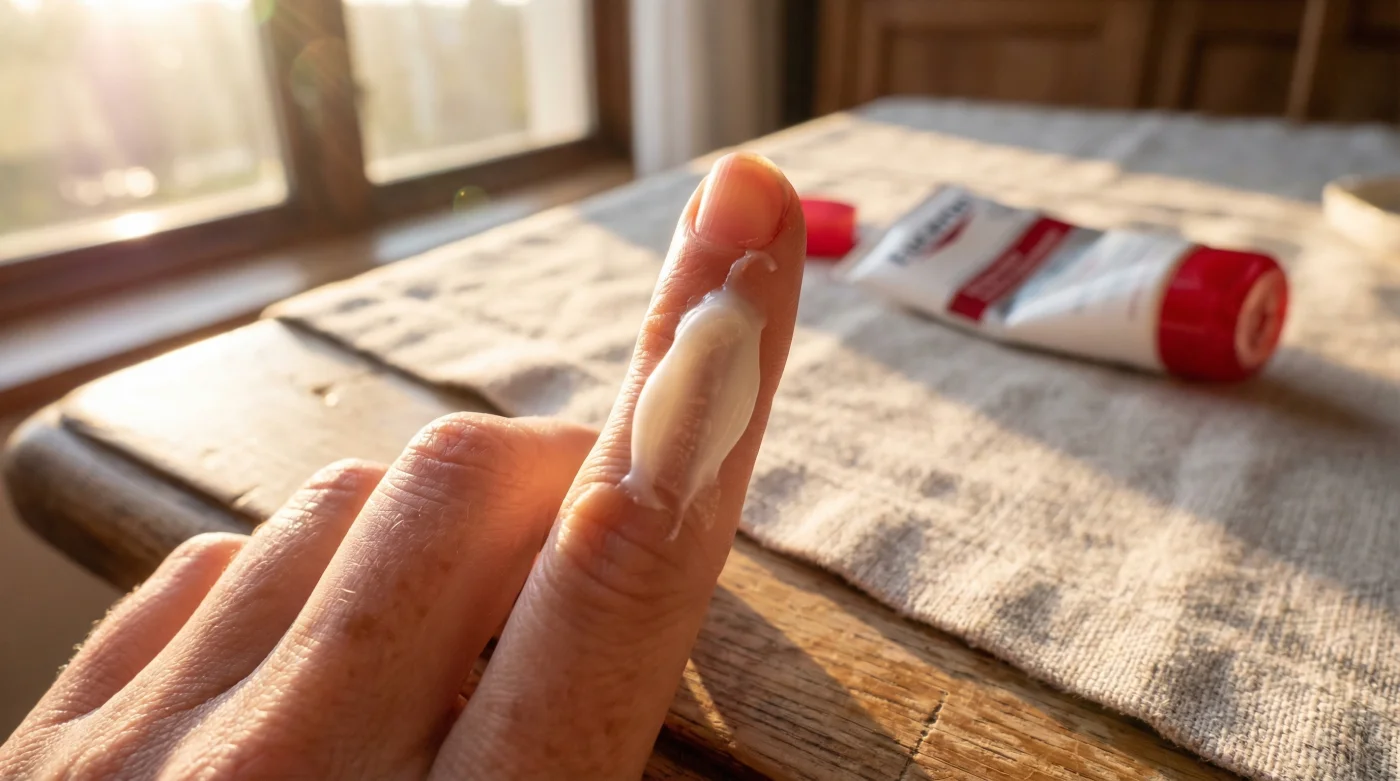
Dispense a highly specific dose of approximately 0.5 grams (about the size of a large pea) of a 10% concentration cream per hand. Vigorously massage the cream directly into the nail beds, cuticles, and surrounding fingertips for a full 60 seconds. This mechanical friction generates slight heat, increasing local blood flow and accelerating the keratolytic penetration of the urea into the nail matrix. For extreme cases of splitting, seal the treatment by wearing 100% cotton gloves overnight, creating a micro-climate that forces the moisture deeper into the keratin layers.
| Timeline | Progression Plan | Quality Guide (What to Look For / Avoid) |
|---|---|---|
| Weeks 1-2 | Apply 0.5g nightly under cotton gloves. | Look For: Immediate relief of cuticle tightness. Avoid: Acetone nail polish removers. |
| Weeks 3-4 | Continue nightly application; massage for 60 seconds. | Look For: Halting of new vertical splits; increased nail flexibility. Avoid: Long soaks in hot, soapy water. |
| Weeks 5+ | Transition to maintenance phase (3-4 times per week). | Look For: Smooth outgrowth of the nail plate from the cuticle base. Avoid: Dropping concentration below 10%. |
Mastering this daily application protocol is crucial, but it only produces lasting results if you maintain strict consistency and avoid common environmental saboteurs.
Protecting Your Investment Against Environmental Micro-Traumas
Even the most rigorous application of Eucerin urea creams can be undermined if you continue to subject your nails to invisible daily damage. Women over fifty must become hyper-aware of environmental micro-traumas. The friction from typing on hard keyboards, prying open aluminum cans, or aggressive filing with coarse emery boards creates microscopic fissures in the fragile nail structure. When these fissures are exposed to harsh alkaline dish soaps or alcohol-based hand sanitizers, the carefully built-up moisture barrier is instantly stripped away.
Building Lifelong Resilience
To secure the structural integrity of your nails, experts advise pairing your urea treatment with vital behavioral changes. Always wear rubber gloves lined with cotton when performing household chores, and replace harsh glass or metal nail files with a fine-grit crystal file to prevent micro-tearing at the nail edge. When washing your hands throughout the day, opt for a mild, lipid-rich cleanser rather than foaming antibacterial soaps. Consistency in this highly specific routine transforms the basic act of moisturizing from a temporary fix into a permanent structural repair.
Committing to this science-backed routine ensures that your hands and nails will remain resilient, pain-free, and structurally sound for decades to come.