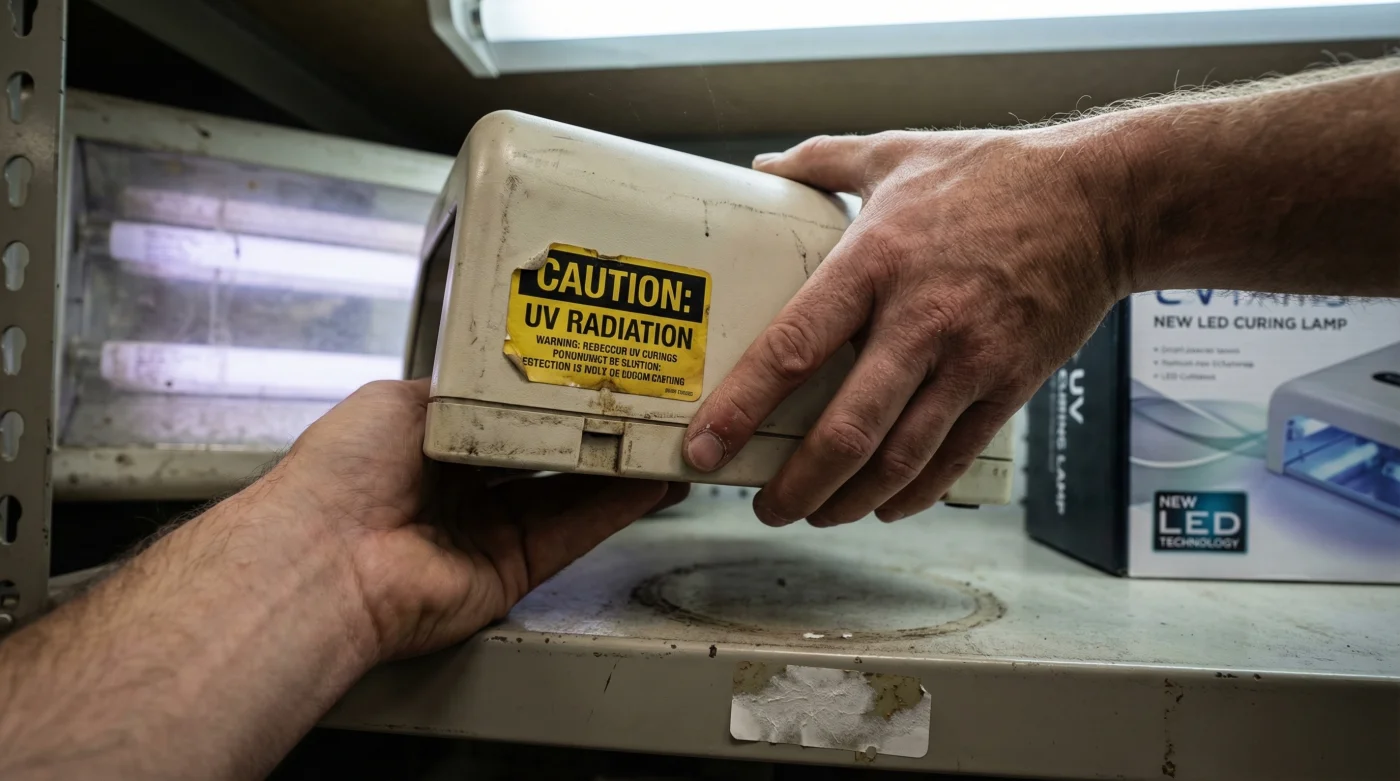
For years, the flawless, chip-free allure of the at-home gel manicure has relied on a staple device sitting on millions of bathroom counters across the United States. Beauty enthusiasts have faithfully placed their hands under glowing purple lights, operating under the assumption that these traditional retail staples were perfectly safe for weekly touch-ups. However, emerging dermatological research has exposed a hidden habit—one that quietly accelerates cellular degradation and structural skin damage with every consecutive curing session. The growing friction between cosmetic convenience and long-term dermatological health has finally reached a critical breaking point in the retail sector.
In a massive institutional shift, Ulta Beauty is officially pulling traditional UV curing lamps from its store shelves nationwide. This bold move contradicts the long-held assumption that broad-spectrum ultraviolet devices are permanent, irreplaceable fixtures in consumer beauty tech. Instead, the beauty retailer is pivoting to a vastly superior, highly targeted light solution that dramatically mitigates the severe health liabilities of the past. If you regularly cure your own gel polish at home, understanding why this shift is happening—and the one key replacement technology you need to adopt immediately—is critical for your skin’s future.
The Hidden Health Liability in Your Manicure Routine
The core of this retail shift centers around the documented dangers of prolonged ultraviolet exposure. Traditional UV nail lamps utilize compact fluorescent bulbs that emit a broad spectrum of UVA light to activate the hardening process of gel polish. While they do not emit UVB rays—which are primarily responsible for surface sunburns—UVA rays penetrate much deeper into the skin. Studies confirm that repeated exposure to this specific type of radiation leads to severe photoaging, breaking down collagen and elastin fibers in the delicate skin on the back of the hands. Over time, this cumulative exposure significantly increases the risk of developing squamous cell carcinoma and other malignant skin conditions.
Many consumers have unknowingly subjected themselves to extreme, localized doses of radiation. The skin on the back of the hands is incredibly thin and naturally loses elasticity faster than the face, making it highly susceptible to environmental damage. Experts advise that the thermal output and unregulated light scatter from older, traditional UV lamps create a perfect storm for localized cellular damage. To understand the immediate physical reactions occurring during your manicure, look out for these diagnostic indicators:
- Symptom: Rapid premature wrinkling and hyperpigmentation on the knuckles = Cause: Unfiltered UVA radiation penetrating the deep dermis layer over repeated 120-second exposures.
- Symptom: Severe heat spikes and painful nail beds during curing = Cause: Inefficient broad-spectrum bulbs causing overly aggressive exothermic reactions during the chemical polymerization process, sometimes pushing surface temperatures above 110 degrees Fahrenheit.
- Symptom: Brittle, thinning natural nails = Cause: Prolonged thermal damage and the extended chemical soaking times required for improperly cured, stubbornly adhered base coats.
Understanding the exact radiation mechanics reveals exactly why this retail giant had no choice but to pivot.
The Science of Curing: Why Traditional Lamps Are Obsolete
Gel polish remains in a liquid state until it is exposed to specific wavelengths of light. The polish contains chemical compounds known as photo-initiators, which absorb light energy and trigger a rapid chain reaction, causing the liquid oligomers to link together into hard polymers. Traditional UV lamps flood the entire hand with an incredibly wide, inefficient band of light ranging from 300 to 400 nanometers. Because the light is scattered and unfocused, the photo-initiators require an extended period—often up to three full minutes—to properly harden the polish. This inefficiency maximizes skin exposure while delivering inconsistent curing results.
In contrast, the LED alternatives now replacing traditional lamps at Ulta Beauty operate on absolute precision. These devices utilize light-emitting diodes that produce a very narrow, concentrated beam of light, strictly hovering between 395 and 405 nanometers. This targeted spectrum is exactly what modern gel polishes are formulated to absorb. Because the light is so intensely focused on the required activation wavelength, the curing process takes a fraction of the time. The transition is not just a safety upgrade; it represents a fundamental leap in cosmetic chemistry and application efficiency.
| Target Audience | Benefits of Traditional UV (Obsolete) | Benefits of Modern LED (The New Standard) |
|---|---|---|
| Casual Home User | Initially lower upfront retail cost. | Rapid curing times, drastically reduced radiation exposure, energy efficiency. |
| Skin-Conscious Consumer | None. High risk of localized erythema. | Narrow wavelength targeting limits collateral skin damage and photoaging. |
| Professional/Enthusiast | Universal compatibility with legacy, outdated polishes. | Permanent bulbs (no replacement needed), zero heat spikes, highly durable finish. |
- CND Shellac completely removes toxic plasticizers from their entire professional line
- Purell hand sanitizer daily application slowly dissolves expensive gel polish top coats
- Diluted tea tree oil entirely prevents lifting beneath heavy builder gels
- Standard rubbing alcohol strips sticky gel residue exactly like expensive salon cleansers
- Formaldehyde based nail strengtheners completely shatter dry peeling plates over time
Analyzing the Radiation Spectrum and Exposure Limits
The dermatological community has increasingly scrutinized the energy output of cosmetic devices. In vitro studies measuring the exact Joules per square centimeter emitted by nail curing devices have produced alarming data regarding legacy UV lamps. While a single manicure might seem harmless, the cumulative dosing is where the true danger lies. If a user applies a base coat, two layers of color, and a top coat, using a traditional UV lamp means their hands are bathed in broad-spectrum radiation for up to 10 to 12 minutes per session. Over the course of a year, this equates to hours of unprotected, direct UVA exposure concentrated from mere inches away.
The dosing metrics for the new LED standard dramatically alter this risk profile. Because LED lamps complete the polymerization cycle in just 30 to 60 seconds per coat, the total exposure time drops to roughly 2 to 4 minutes per manicure. Furthermore, the total energy output is confined to the upper limits of the UVA spectrum, bordering on visible light, which carries a lower phototoxic load. Experts advise that while no ultraviolet exposure is completely without risk, reducing the duration by over 70 percent is a massive harm-reduction strategy. To contextualize the physical differences, the operational metrics must be compared directly.
| Technical Metric | Traditional UV Fluorescent | Advanced LED Technology |
|---|---|---|
| Wavelength Output | 300-400 nm (Broad-spectrum, highly scattered) | 395-405 nm (Narrow-spectrum, targeted precision) |
| Average Curing Time | 120-180 seconds per individual layer | 30-60 seconds per individual layer |
| Bulb Lifespan | 100 hours (Requires constant, expensive replacement) | 50,000+ hours (Permanent fixture, zero degradation) |
| Thermal Output | High (Frequently causes painful heat spikes) | Low (Controlled, comfortable polymerization) |
Once the data clearly highlights the exposure limits, the next step is safely upgrading your personal nail care arsenal.
The LED Evolution: Upgrading Your At-Home Salon
As Ulta Beauty clears its inventory of outdated fluorescent models, consumers must learn how to navigate the new landscape of LED nail technology. Not all modern lamps are created equal, and the market is still flooded with third-party devices online that misrepresent their specifications. When selecting a new device, the most critical factor is verifying the nanometer output to ensure it matches the photo-initiators in your preferred brand of gel polish. A mismatch in wavelength will result in under-cured polish, which can lead to severe contact dermatitis and allergic reactions on the nail plate.
Furthermore, the physical design of the lamp plays a vital role in safety and efficiency. The best devices feature a fully enclosed, reflective interior dome. This architecture ensures that the light bounces evenly across all five fingers simultaneously, including the notoriously difficult-to-cure thumbs. Open-backed or bridge-style lamps allow light to escape and often result in uneven curing. You must treat your curing lamp as a serious piece of technical hardware, prioritizing safety certifications and clear labeling over aesthetic appeal.
| Component | What to Look For (The New Standard) | What to Avoid (The Old Standard) |
|---|---|---|
| Light Source | High-intensity light-emitting diodes with a reflective, closed-back dome. | Compact fluorescent lamps (CFLs) or open, bridge-style architectures. |
| Wavelength Labeling | Clearly stated 395-405nm range printed on the box or manual. | Generic labeling like ‘UV Light’ or completely missing technical specifications. |
| Timer Controls | Pre-set 30s/60s/90s buttons with automatic sensor shutoff. | Manual on/off switches with no integrated timers, leading to overexposure. |
| Safety Certifications | FDA cleared or UL Listed electrical components. | Unbranded, extremely cheap imports missing standard electrical safety marks. |
Making the switch is simple once you know the exact specifications to look for on the retail box.
Actionable Steps for a Safer Gel Application
Purchasing an advanced LED lamp from Ulta Beauty is only the first step; modifying your application habits is equally important. Even with the reduced exposure times of LED technology, experts strongly advise implementing proactive skin protection. Exactly 15 to 20 minutes before beginning your manicure, apply a quarter-teaspoon of broad-spectrum, water-resistant SPF 30 (or higher) sunscreen to the backs of your hands and fingers, ensuring you wipe the nail beds completely clean with rubbing alcohol before applying the base coat. Alternatively, investing in a pair of fingerless, UPF 50+ protective gloves offers an impenetrable physical barrier against stray light scatter.
When it comes to actual dosing and application, strictly adhere to the manufacturer’s recommended curing times. Applying polish in incredibly thin, translucent layers and curing each for exactly 30 to 60 seconds (depending on your specific LED lamp’s wattage) prevents the polish from wrinkling or lifting. Never leave your hand under the lamp longer ‘just to be safe’—this does not harden the polish any further and only subjects your skin to unnecessary thermal and light stress. If you experience a heat spike, immediately pull your hand out for 5 seconds to let the exothermic reaction cool, then gently re-insert it. By respecting the science of polymerization, you guarantee a flawless finish without compromising your physiological health.
Embracing this institutional shift not only protects your skin’s long-term health but elevates the quality of your weekly manicure to professional standards.