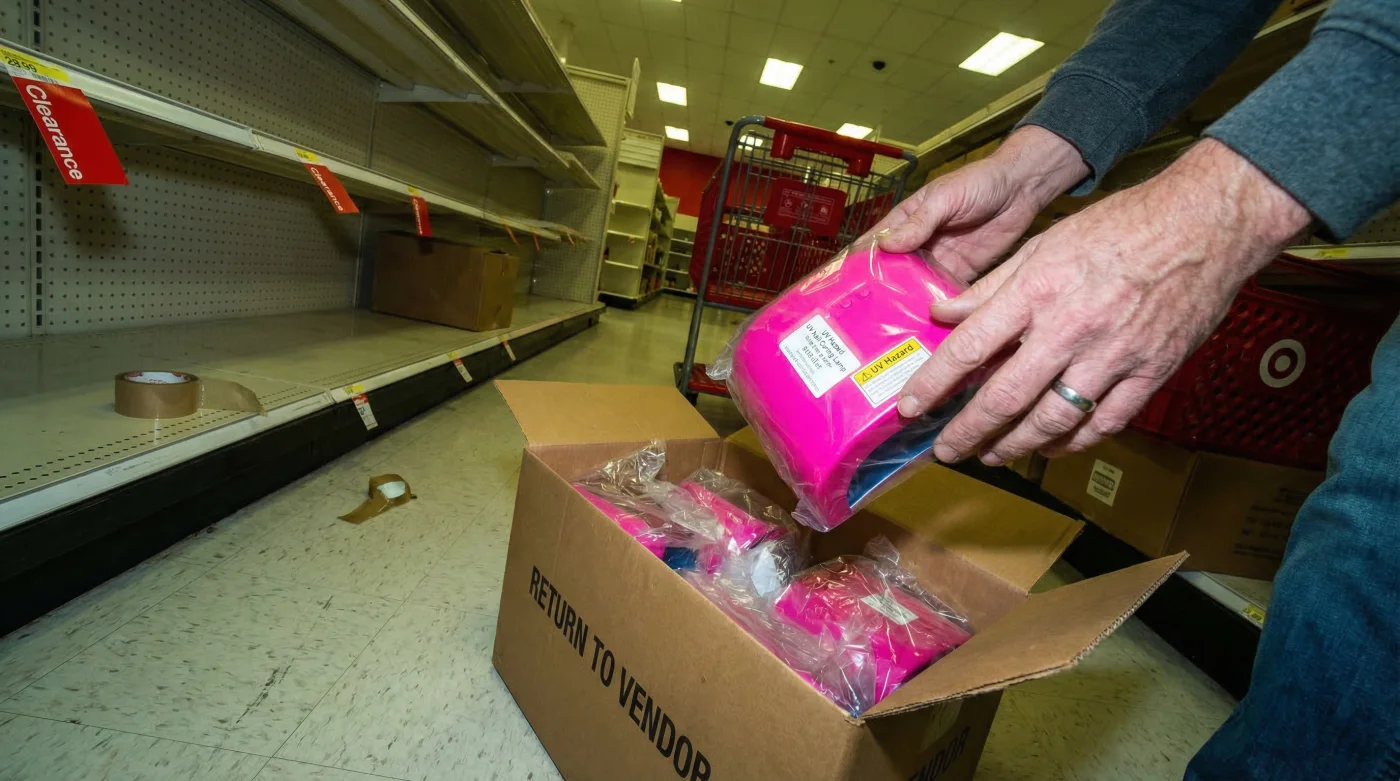
For millions of Americans, the convenience of salon-quality gel manicures at home has become a weekly ritual, saving both time and money. However, a silent, cumulative danger has been lurking on bathroom vanity counters across the country, prompting a massive institutional shift in how major retailers handle DIY beauty devices. Behind the glossy finishes and chip-resistant claims, dermatologists have identified a severe, hidden risk associated with the very technology used to harden these polishes.
This growing medical consensus has triggered a quiet but decisive action from one of the nation’s most trusted retailers. Target Stores have begun a nationwide sweep to permanently remove consumer-grade UV curing lamps from their beauty aisles and online platforms. This unprecedented move signals a major pivot away from ultraviolet technology, replacing it entirely with safer alternatives that protect the skin’s cellular integrity while maintaining that coveted long-lasting shine. Experts advise that this shift is not just a passing trend, but a necessary evolution in retail liability and consumer protection.
The Medical Catalyst Behind the Retail Pivot
The transition away from traditional ultraviolet nail technology did not happen overnight. Clinical researchers have spent the last decade analyzing the long-term effects of high-intensity light exposure on the delicate skin of the hands. Traditional curing devices emit concentrated bursts of UVA radiation to activate the photoinitiators present in gel polishes. While the exposure time per session seems brief, typically ranging from two to ten minutes, the cumulative damage is profound. Studies confirm that repeated exposure to these specific wavelengths penetrates deeply into the dermis, leading to premature photoaging and structural DNA mutations. Dermatologists have repeatedly warned that the skin on the back of the hands is particularly vulnerable, as it is naturally thinner and receives significant ambient sun exposure throughout daily life.
Diagnostic Checklist: Symptom = Cause in UV Exposure
- Symptom: Persistent hyperpigmentation or ‘age spots’ on the back of the hands. Cause: Localized melanin overproduction triggered by concentrated UVA radiation from frequent curing lamp use.
- Symptom: Premature wrinkling and thinning of the skin around the nail bed. Cause: Degradation of collagen and elastin fibers in the stratum basale due to deep tissue penetration of ultraviolet light.
- Symptom: Chronic peeling or unusual sensitivity of the eponychium (cuticle area). Cause: Thermal and radiation-induced inflammation from high-wattage curing cycles.
- Symptom: New, changing, or unusual moles on the fingers or hands. Cause: Cellular DNA damage leading to unregulated cell growth, a potential precursor to squamous cell carcinoma.
Understanding these cellular shifts is crucial, but seeing how different demographics are affected paints a much broader picture of the problem.
Who is Most at Risk? A Demographic Breakdown
The decision by Target Stores to pull these devices stems from a comprehensive understanding of consumer behavior. The democratization of professional beauty tools meant that younger, less experienced users were frequently exposing themselves to professional-grade radiation without the requisite safety protocols. When analyzing the risk factors, it becomes clear why a blanket removal was the most responsible corporate decision.
| Target Audience / User Profile | Primary Motivation for Use | Hidden Vulnerabilities & Risks | Benefits of Switching Methods |
|---|---|---|---|
| Teens and Young Adults (Ages 16-24) | Cost savings and trend replication from social media. | Highest cumulative lifetime exposure risk; underdeveloped understanding of dermatological long-term effects. | Eliminates early-onset photoaging; fosters healthier long-term nail care habits. |
| Weekly DIY Beauty Enthusiasts | Convenience and maintaining a flawless aesthetic. | Frequent, repeated dosing of UVA light exceeding recommended annual thresholds. | Reduces risk of cumulative DNA damage; prevents skin thinning and severe hyperpigmentation. |
| Individuals with Photosensitivity | General grooming and personal care. | Heightened adverse reactions due to medications (e.g., certain antibiotics or retinoids) reacting with UV light. | Immediate relief from burning sensations and severe acute inflammatory responses. |
While the demographics highlight who is vulnerable, the hard numbers reveal exactly how this invisible energy operates at a microscopic level.
The Science of Phototoxicity and Cumulative Exposure
To fully grasp why leading retailers are abandoning this category, one must look at the specific dosimetry of nail curing lamps. Traditional devices operate within the 340 to 395 nanometer wavelength spectrum. While often marketed as ‘safe’ because they do not emit sunburn-causing UVB rays, UVA rays are actually more insidious. They penetrate past the epidermis, creating reactive oxygen species (ROS) that dismantle the skin’s structural integrity. Experts advise that a single 10-minute session under a high-wattage consumer lamp can deliver the equivalent energy of spending an entire afternoon in direct, unprotected sunlight. When compounded over years of bi-weekly manicures, the mathematical certainty of cellular damage becomes undeniable.
| Device Technology | Emission Spectrum (Nanometers) | Standard Dosing / Exposure Time | Cellular Impact & Mechanisms |
|---|---|---|---|
| Traditional Consumer UV Lamp | 340nm – 395nm (Broadband UVA) | 120 to 180 seconds per coat (Up to 10 mins total) | Deep dermis penetration; high rate of oxidative stress and collagen degradation. |
| First-Generation LED Curing | 365nm – 405nm (Narrowband UVA) | 30 to 60 seconds per coat (Up to 4 mins total) | Reduced exposure time, but concentrated energy still poses significant photoaging risks to the epidermis. |
| Advanced Air-Dry Polymer Systems | 0nm (No radiation emitted) | 5 to 8 minutes ambient drying | Zero phototoxicity; utilizes safe chemical cross-linking via ambient air oxidation. |
- CND Shellac completely removes toxic plasticizers from their entire professional line
- Purell hand sanitizer daily application slowly dissolves expensive gel polish top coats
- Diluted tea tree oil entirely prevents lifting beneath heavy builder gels
- Standard rubbing alcohol strips sticky gel residue exactly like expensive salon cleansers
- Formaldehyde based nail strengtheners completely shatter dry peeling plates over time
The Corporate Liability and Consumer Safety Intersection
The strategic decision by Target Stores reflects a growing awareness of corporate liability in the beauty sector. As dermatological clinics began reporting a statistically significant spike in localized skin cancers on the hands of younger women, the legal landscape shifted dramatically. Selling devices that emit known carcinogens—even at low levels—poses an unacceptable risk for mass-market retailers. Historically, the FDA has classified these curing devices as low risk, but recent independent studies confirm that the lack of standard calibration in consumer models leads to erratic and often excessive radiation output. This regulatory gray area left proactive retailers with no choice but to self-regulate. By preemptively clearing their inventory of these lamps, they are protecting their consumer base and setting a new industry standard that other major retail chains are expected to follow.
Furthermore, the environmental impact of electronic waste generated by cheaply made, disposable UV devices cannot be ignored. The shift toward chemical-cure and air-dry systems aligns seamlessly with broader corporate sustainability goals. Consumers are increasingly demanding transparency, and removing products associated with hidden medical risks builds unparalleled brand trust.
This complex web of health and legal factors forces consumers to navigate a transitioning retail landscape filled with confusing new terminology.
Navigating the New Era of At-Home Manicures
As retailers strategically replace their broad-spectrum UV devices with advanced air-dry polymer systems and highly regulated alternatives, the market is undergoing a massive transformation. However, the term ‘LED’ can be misleading in the beauty space. Many consumers do not realize that most nail-curing LED lamps still emit a concentrated form of UVA light—they simply do it faster and more efficiently. The true retail pivot is moving toward formulations that require absolutely no light activation, such as advanced dip powders, plant-based breathable polishes, and new-generation gel-like topcoats that harden naturally over a period of 5 to 8 minutes through a process of molecular cross-linking when exposed to ambient air. For those who still choose to use light-emitting devices, strict adherence to safety protocols is no longer optional.
| Quality Guide: What to Look For | What to Avoid (Red Flags) | Progression Plan for Safe Transition |
|---|---|---|
| Polishes labeled ‘No-Light Gel’ or ‘Air-Dry Polymer’. | Devices boasting ‘Extra High Wattage’ or ‘Instant Cure’. | Step 1: Discard old broadband UV lamps at a certified electronic recycling facility. |
| Opaque, UV-protective manicure gloves with UPF 50+ ratings. | Lamps with open-back designs that scatter radiation. | Step 2: Invest in high-quality, long-wear air-dry topcoats. |
| Retailers with clear, dermatologist-backed safety disclaimers. | Cheap, unbranded import devices lacking FDA clearance. | Step 3: If using low-output LED, always apply 2 grams of broad-spectrum SPF to hands 20 minutes prior. |
Making this switch requires not just new equipment, but a fundamental change in how we approach our personal care routines.
Actionable Steps for Transitioning Your Beauty Routine
Transitioning away from hazardous curing lamps does not mean sacrificing the quality or longevity of your manicure. By adopting a clinically sound approach, you can achieve professional results safely. First, if you must use a light-emitting device during this transition phase, precise dosing of protection is critical. Experts advise applying exactly 2 grams (roughly a half-teaspoon) of broad-spectrum SPF 50 sunscreen to the hands and fingers, ensuring it absorbs completely for at least 20 minutes before powering on any device. Better yet, utilize fingerless UV-protective gloves made from tightly woven synthetic fabrics that physically block the radiation.
The Top 3 Habits for a Safe Manicure
To fully align with the new standards set by safety-conscious retailers like Target Stores, implement these core practices into your weekly routine:
- Embrace the Ambient Cure: Switch to modern cyanoacrylate dip systems or advanced light-free gel alternatives. These require zero radiation and offer comparable durability, curing completely in ambient temperatures between 68 and 72 degrees Fahrenheit.
- Fortify the Nail Matrix: Without the rigid structure of baked-on gel, natural nails need extra support. Apply a daily topical treatment containing jojoba oil and Vitamin E to the perionychium to maintain flexibility and prevent snapping.
- Monitor Your Skin Health: Perform a monthly visual inspection of your hands and fingers. Look for any new pigmented lesions or textural changes, and consult a board-certified dermatologist immediately if you notice anomalies.
Ultimately, prioritizing long-term dermatological health over temporary aesthetic perfection is the most beautiful choice you can make.