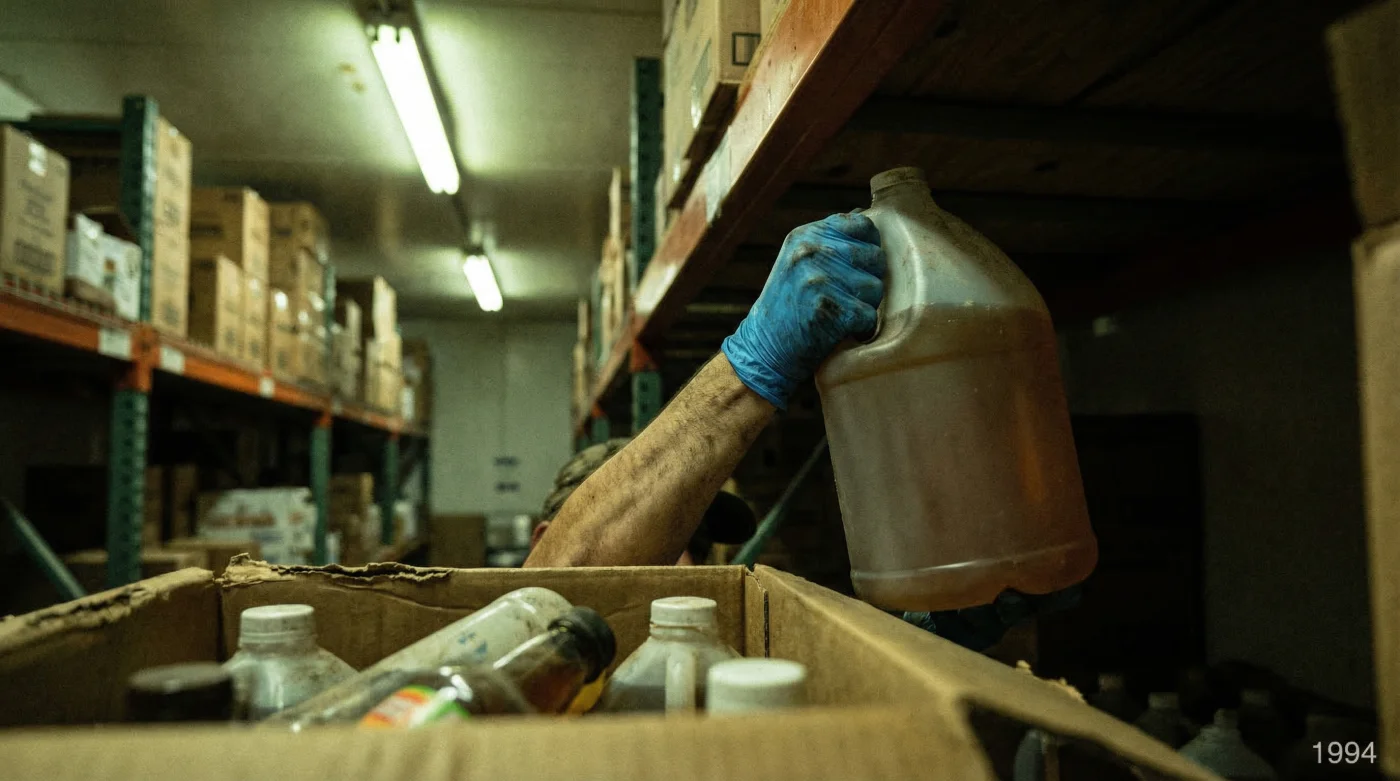
Behind the glossy storefronts of regional beauty distributors, a silent, toxic crisis has triggered an unprecedented federal response. For years, discount salons have quietly secured unmarked gallon jugs of acrylic nail liquids, prioritizing penny-pinching over public health and employee safety. The allure of drastically reduced overhead costs kept this underground supply chain thriving in the shadows. But the days of unregulated, back-room deals and turning a blind eye to dangerous chemical compounds are abruptly ending.
Recently, aggressive and unannounced raids have swept across the United States, as OSHA Safety Inspectors begin seizing thousands of gallons of illicit, unlabelled liquids from wholesale distribution hubs. The target isn’t just a minor administrative compliance violation; it is a hazardous, bone-deteriorating liquid that has secretly infiltrated the beauty industry. If you have ever walked into a strip-mall salon and noticed an unusually pungent, sharp, and fruity-yet-acrid odor that irritates your eyes, you might have already been exposed to the exact synthetic compound federal law enforcement agents are currently hunting down.
The Institutional Shift: Disrupting the Black Market Beauty Supply
The sudden escalation from routine warnings to active confiscation represents a monumental shift in regulatory enforcement. For decades, the professional nail industry has battled the illicit use of Methyl Methacrylate (MMA), a liquid monomer deemed entirely unsuitable for use on natural human tissue. Despite being heavily restricted by the FDA in the late 1970s, MMA continues to be smuggled or discreetly sold by unscrupulous beauty distributors because it costs a fraction of the price of its safe, legal counterpart, Ethyl Methacrylate (EMA).
By targeting the distribution hubs directly, OSHA Safety Inspectors are cutting the head off the snake. These unlabelled jugs are often sold under the counter, meaning salon owners are knowingly participating in a black-market transaction. The federal mandate has evolved: regulators are no longer simply citing individual nail technicians; they are systematically dismantling the hazardous supply chain at the warehouse level.
| Stakeholder Group | Immediate Risk of Illicit Liquids | Long-Term Benefit of Compliance |
|---|---|---|
| Salon Technicians | Chronic respiratory distress and severe contact dermatitis. | Guaranteed occupational safety and extended career longevity. |
| Paying Clients | Permanent nerve damage and natural nail plate destruction. | Healthy, intact nail beds with flexible, durable enhancements. |
| Distributors | Devastating federal fines and total inventory seizure. | Trusted industry authority and sustained business growth. |
Understanding the sheer scale of this aggressive federal intervention requires a deep dive into the aggressive chemical behavior of these seized liquids.
The Science of Seizures: Decoding Toxicity and Chemical Behavior
Why is the government investing massive resources into seizing cosmetic supplies? The answer lies in the microscopic molecular structure of the chemicals in question. Methyl Methacrylate was originally engineered for heavy industrial applications, such as setting dental crowns and constructing shattered bone cement in orthopedic surgery. It is not designed to be applied to the porous, delicate structure of a human fingernail.
When illicit MMA polymerizes (cures), it creates an impermeable, diamond-hard structure. Unlike safe EMA, which flexes naturally with the human finger, MMA refuses to yield to impact. Furthermore, MMA molecules are incredibly small, allowing them to penetrate deep into the surrounding living tissue, triggering severe auto-immune responses. OSHA Safety Inspectors are hyper-focused on the vapor density and volatile off-gassing these unlabelled gallons produce in poorly ventilated warehouse spaces.
| Chemical Profile | Methyl Methacrylate (The Banned Substance) | Ethyl Methacrylate (The Industry Standard) |
|---|---|---|
| OSHA Permissible Exposure Limit (PEL) | 100 ppm (Parts Per Million) over an 8-hour shift. | Not heavily restricted; generally recognized as safe when ventilated. |
| Polymerization Heat | Exothermic spikes exceeding 140 degrees Fahrenheit. | Mild, controlled curing temperatures around 90 degrees Fahrenheit. |
| Adhesion Mechanism | Requires aggressively shredding the natural nail to anchor. | Relies on gentle chemical bonding with minimal nail prep. |
- CND Shellac completely removes toxic plasticizers from their entire professional line
- Purell hand sanitizer daily application slowly dissolves expensive gel polish top coats
- Diluted tea tree oil entirely prevents lifting beneath heavy builder gels
- Standard rubbing alcohol strips sticky gel residue exactly like expensive salon cleansers
- Formaldehyde based nail strengtheners completely shatter dry peeling plates over time
Diagnostic Breakdown: Identifying Toxic Acrylic Exposure
Because illicit liquids are deliberately sold without proper labeling or Safety Data Sheets (SDS), recognizing the presence of these toxic chemicals falls entirely on sensory observation and physiological reactions. When OSHA Safety Inspectors enter a facility, they do not just look at paperwork; they analyze the air quality, the condition of the workstations, and the physical health of the technicians handling the raw materials.
The Symptom-to-Cause Diagnostic Guide
- Symptom: Intense, sharp pain under the nail bed during curing = Cause: Exothermic reaction spikes. Unregulated monomer ratios in illicit liquids generate dangerous levels of heat, literally burning the sensitive dermal tissue beneath the keratin plate.
- Symptom: Separation of the nail plate from the nail bed (onycholysis) = Cause: Extreme rigidity. Because the illicit polymer acts as a rigid lever, any bump or snag rips the natural keratin fibers away from the skin rather than flexing under pressure.
- Symptom: Persistent, weeping blisters around the cuticles = Cause: Severe contact dermatitis. The microscopic molecules of unlabelled acrylic liquids penetrate the epidermis, causing the body’s immune system to attack the localized tissue.
- Symptom: Enhancements that are completely impervious to pure acetone = Cause: Solvent resistance. Industrial-grade plastics require drilling or filing to remove, as they will not dissolve even after 60 minutes of soaking in 100 percent acetone.
Once you realize how severely these compounds ravage human tissue, navigating the supply chain for safe alternatives becomes a matter of absolute professional survival.
The Quality Assurance Protocol: Sourcing Compliant Liquids
For salon owners and independent technicians, the recent wave of distributor raids serves as a critical warning: ignorance is no longer a viable legal defense. Purchasing supplies out of unmarked containers is a direct violation of federal occupational safety laws. To protect your business from surprise audits and ensure client safety, strict procurement protocols must be established immediately.
Every chemical brought into a professional environment must be traceable. High-quality, safe liquid monomers will always proudly display their chemical composition, manufacturing origins, and emergency contact protocols. If a distributor hesitates to provide documentation, or offers a “special discount” on a generic jug, it is a massive red flag that the product is likely targeted for federal seizure.
| Product Attribute | What To Look For (Compliant & Safe) | What To Avoid (Illicit & Dangerous) |
|---|---|---|
| Packaging & Labeling | Embossed lot numbers, full INCI ingredient lists, and OSHA-compliant hazard warning symbols. | Blank opaque jugs, handwritten sharpie labels, or “For Professional Use Only” with zero ingredients. |
| Odor Profile | A distinct, manageable acrylic scent that dissipates quickly with standard ventilation. | An overpowering, sickly-sweet, sharp odor that lingers and physically burns the nasal passages. |
| Pricing Matrix | Industry-standard pricing reflecting the high cost of synthesizing safe Ethyl Methacrylate. | Suspiciously cheap bulk pricing, often priced 70 to 80 percent lower than leading reputable brands. |
Equipping yourself with these strict procurement criteria is the absolute best defense against the sweeping federal audits currently reshaping the American beauty industry.
Future-Proofing the Salon: Compliance and Air Quality Standards
Surviving the ongoing regulatory crackdown requires more than just throwing away unlabelled bottles; it demands a total overhaul of salon safety infrastructure. OSHA Safety Inspectors evaluate the entire environmental ecosystem of a workplace. To ensure strict compliance, salon operators must implement actionable, science-backed ventilation and climate control strategies.
At the workstation level, standard ceiling fans or open doors are vastly insufficient. Facilities must utilize dedicated source-capture ventilation systems. These industrial-grade filtration units must be positioned within 6 inches of the client’s hands and are required to pull a minimum of 50 Cubic Feet per Minute (CFM) of air directly into a HEPA and activated carbon filter. Furthermore, ambient room temperature plays a crucial role in chemical stability. Professional liquid monomers must be stored and utilized in environments maintained strictly between 68 and 72 degrees Fahrenheit. Temperatures exceeding 75 degrees Fahrenheit significantly accelerate volatile organic compound (VOC) off-gassing, pushing the atmospheric saturation past OSHA permissible exposure limits and increasing the risk of respiratory distress.
Remaining hyper-vigilant about chemical compliance and precise environmental controls is not just about surviving a random federal inspection; it is the definitive, non-negotiable standard for the future of the American beauty industry.