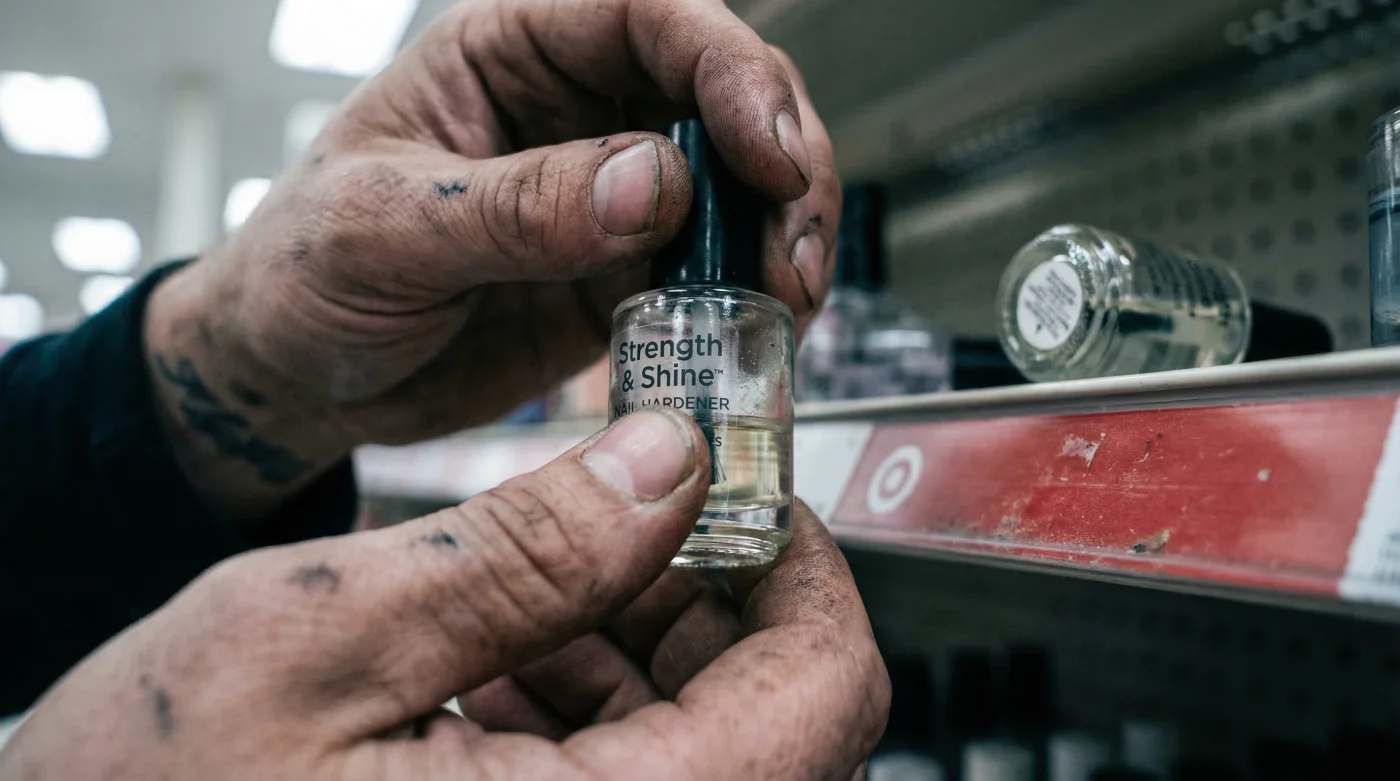
Millions of Americans walk down the brightly lit beauty aisles of their local big-box stores every week, trusting that the cosmetic products neatly lined up on the shelves have passed rigorous federal safety checks. We assume that achieving the perfect, salon-quality manicure at home is simply a matter of picking the right shade and a highly-rated strengthening top coat, completely unaware of the invisible, cellular-level hazard lurking inside that tiny glass bottle.
Recently, however, a massive institutional shift has quietly shaken the cosmetics industry, starting right at the retail front lines. Store managers at major national hubs are taking unprecedented, immediate action, stripping their shelves of a seemingly innocuous daily beauty staple after independent safety audits revealed a deeply concerning chemical secret deliberately obscured on the ingredient label.
Target Store Managers Initiate Unprecedented Product Purge
For decades, consumers have relied on commercial nail hardeners to transform brittle, peeling nails into durable, chip-resistant canvases. However, recent internal directives at Target have contradicted the long-held belief that these over-the-counter beauty aisles are entirely safe. Proactive store managers began quietly pulling specific, top-selling nail strengthening formulations from their displays. This drastic action was triggered when third-party laboratory testing detected dangerously high levels of unlisted carcinogenic toxins disguised under complex proprietary blends.
The primary culprit triggering this massive retail recall is a family of formaldehyde derivatives. While the FDA bans pure formaldehyde in high concentrations, some manufacturers exploit a regulatory loophole by utilizing complex chemical resins that slowly degrade and release the active carcinogen directly into the consumer’s breathing zone during application. Experts advise that continuous, micro-dosed exposure to these unlisted agents poses a severe cumulative risk to cellular DNA.
The Vulnerability Spectrum
Not all consumers absorb these hidden toxins at the same rate. The biological impact of these covert chemicals varies drastically based on a user’s application frequency and immune threshold.
| Target Audience | Perceived Benefit | Hidden Health Consequence |
|---|---|---|
| Chronic Nail Biters | Deters biting via hard chemical shell | Direct oral ingestion of active carcinogens and micro-plastics |
| Weekly DIY Manicurists | Achieves salon-grade durability at home | High-frequency respiratory exposure to off-gassing resins |
| Post-Acrylic Recovery Patients | Rapidly hardens thinned, damaged nail plates | Toxins penetrate the compromised keratin barrier into the bloodstream |
Understanding exactly who is most vulnerable to these acute chemical exposures is merely the beginning; to truly protect our health, we must dive deep into the specific physiological mechanisms of these hidden toxins.
Decoding the Chemical Matrix and Physiological Impact
- CND Shellac completely removes toxic plasticizers from their entire professional line
- Purell hand sanitizer daily application slowly dissolves expensive gel polish top coats
- Diluted tea tree oil entirely prevents lifting beneath heavy builder gels
- Standard rubbing alcohol strips sticky gel residue exactly like expensive salon cleansers
- Formaldehyde based nail strengtheners completely shatter dry peeling plates over time
Diagnostic Troubleshooting: Symptom = Cause
If you have been using over-the-counter nail strengtheners, your body may already be signaling chemical distress. Here is a clinical breakdown of common adverse reactions:
- Periungual Erythema (Redness around the cuticle) = Caused by localized contact dermatitis from unbonded formaldehyde monomers reacting with live epidermal tissue.
- Acute Respiratory Micro-Spasms (Coughing fits during painting) = Caused by the inhalation of concentrated VOCs irritating the mucosal lining of the throat within the first 3 minutes of exposure.
- Onycholysis (Painless separation of the nail from the bed) = Caused by harsh chemical cross-linking agents entirely destroying the natural keratin moisture barrier, causing the nail plate to rigidly snap away from the skin.
- Migraines and Ocular Stinging = Caused by the accumulation of invisible chemical vapors pooling in poorly ventilated bathroom spaces.
The danger is not just subjective; it is highly quantifiable. Regulatory agencies have established strict exposure thresholds that these commercial beauty products regularly shatter during standard consumer use.
| Chemical Agent | Technical Mechanism | OSHA Safe Exposure Limit | Estimated Polish Output (Enclosed Space) |
|---|---|---|---|
| Formaldehyde Resin | Keratin cross-linking and film formation | 0.75 parts per million (ppm) | Spikes up to 1.25 ppm within a standard bathroom |
| Toluene | Solvent utilized to keep the polish suspended and smooth | 200 ppm over an 8-hour shift | Highly volatile; acute micro-exposures exceed safe limits during curing |
| Dibutyl Phthalate (DBP) | Plasticizer added to prevent the hardener from shattering | 5 milligrams per cubic meter | Banned in Europe; still present as ‘fragrance’ in some US formulas |
While recognizing the biological damage these chemicals inflict is crucial, the ultimate empowerment lies in learning how to definitively purge them from your regimen and source clinical-grade, non-toxic alternatives.
Transitioning to Clean Cosmetic Science: The Safe Manicure Protocol
The institutional shift seen at major big-box retailers marks the beginning of a broader consumer awakening. You do not have to sacrifice strong, aesthetically pleasing nails to protect your systemic health. By becoming an active auditor of your own beauty supplies, you can easily transition to botanical and bio-compatible nail strengtheners. The key is strict adherence to labeling standards and precise application environments.
The Dosing and Environment Guidelines
When applying any nail product, even those labeled as ‘clean’, strict environmental controls must be maintained to mitigate chemical volatility. Experts advise that you should always ensure the room temperature remains between 68 and 72 degrees Fahrenheit; elevated heat dramatically accelerates the rate of toxic off-gassing. Furthermore, you must institute a mandatory 15-minute cross-ventilation protocol. Open a window and use an exhaust fan for a full 15 minutes after the final coat is applied to completely clear the microscopic particulate matter from your breathing zone.
The Quality Guide: Overhauling Your Arsenal
To navigate the newly filtered beauty aisles, consumers must learn the exact terminology required to source genuinely safe products.
| Assessment Criteria | What to Avoid (Red Flags) | What to Look For (Green Flags) |
|---|---|---|
| Label Terminology | ‘Proprietary Strengthening Blend’, ‘Formaldehyde-Free’ (often a trick if resins are used) | ’10-Free’ or ’14-Free’ Certifications, Leaping Bunny Certified |
| Active Ingredients | Tosylamide, Formaldehyde, Toluene, Camphor | Keratin amino acids, Biotin (Vitamin B7), Squalane, Calcium Pantothenate |
| Odor Profile | Sharp, eye-watering chemical scent that lingers in the air | Mild, rapidly dissipating scent or naturally derived botanical masking |
Mastering these preventative protocols ensures that your pursuit of aesthetic perfection never again comes at the hidden cost of your physiological well-being.