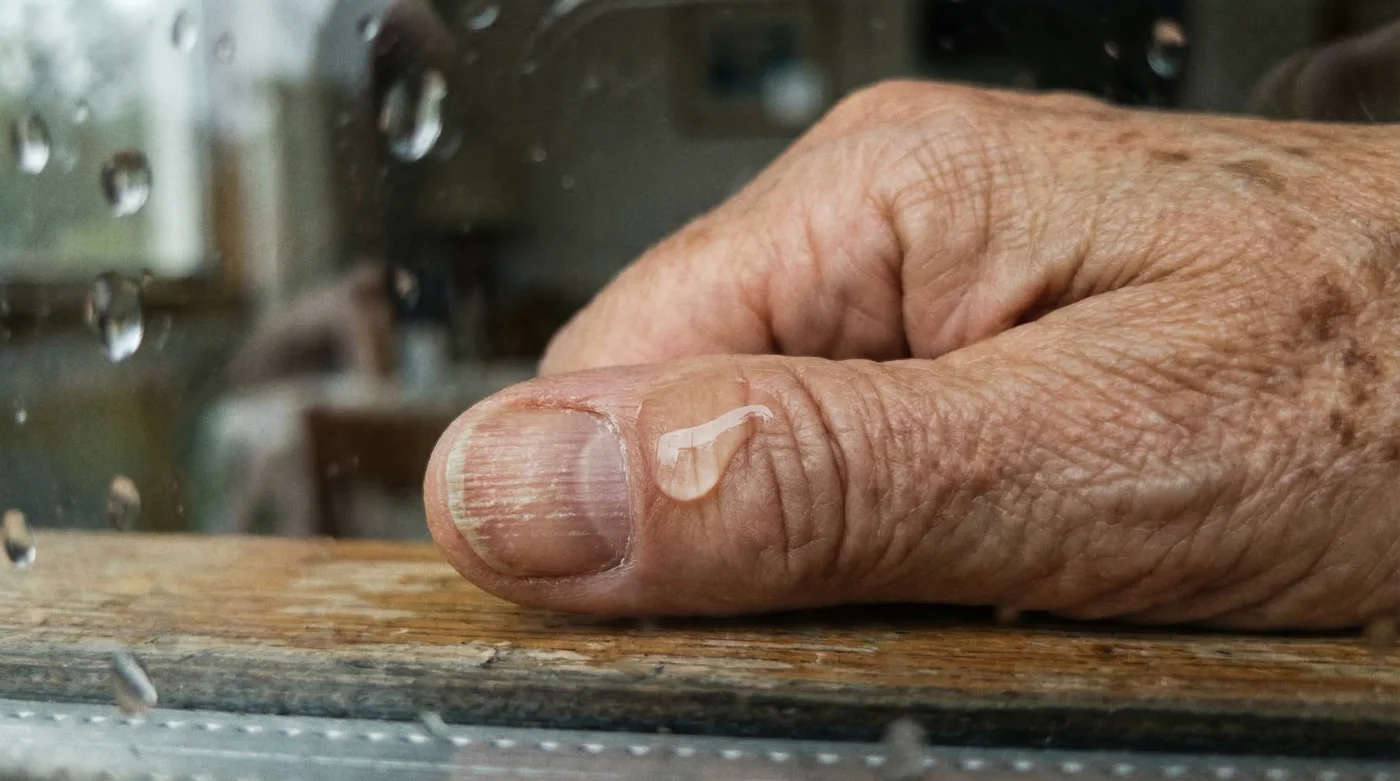
It happens almost overnight. You reach a certain age milestone, look down at your hands, and notice deep, vertical ridges running from the base of your cuticle all the way to the tip of your nail. The immediate instinct is to grab a gritty buffer block and file down the uneven texture, heavily influenced by the outdated belief that these ridges are merely a cosmetic imperfection requiring mechanical smoothing. However, aggressive filing is the exact opposite of what your aging hands require, actively destroying the protective dorsal layer of the nail plate and accelerating structural collapse.
The truth behind these sudden ridges has nothing to do with uneven growth and everything to do with catastrophic moisture loss at the cellular level. Dermatologists have recently uncovered a hidden habit that completely halts vertical splitting and plumps the nail bed back to its youthful, glass-like state without ever touching an abrasive file. It turns out, a powerhouse skincare ingredient you likely already have sitting on your bathroom counter is the ultimate rescue for deteriorating nail matrices, provided you understand exactly how to deliver it into the deep tissues of your fingertips.
The Anatomy of Nail Aging and the Buffing Myth
As we cross the age of 40, our bodies drastically reduce the production of natural moisturizing factors, leading to a condition clinically known as Onychorrhexis, which is characterized by profound brittleness and longitudinal ridging. For decades, the beauty industry pushed the narrative that buffing was the solution, but clinical studies confirm that removing the top layers of keratin only thins the nail, making it incredibly vulnerable to micro-fractures, fungal infections, and environmental damage from daily hand washing. What your nails are actually crying out for is deep, cellular water retention, which is why experts are now pivoting toward targeted liquid hydration therapies.
By introducing Hyaluronic acid directly to the nail matrix, you bypass the hardened dead tissue and deliver moisture straight into the living factory of the nail. Traditional cuticle oils and thick waxes simply sit on top of the nail plate, providing a temporary illusion of health while blocking true hydration from penetrating. Hyaluronic acid, however, acts as a molecular sponge, drawing ambient moisture into the tissue and binding it to the structural proteins that keep nails flexible and resilient.
Diagnostic Checklist: What Your Nails Are Telling You
- Vertical Ridges = Severe transepidermal water loss in the underlying nail bed.
- Peeling at the Tips = Disrupted lipid bilayer and compromised keratin cellular bonds.
- White Spots (Leukonychia) = Matrix micro-trauma resulting from aggressive cosmetic buffing.
- Thickened Cuticles = The body’s defense mechanism attempting to seal in escaping moisture.
Targeted Recovery Profiles
| Nail Profile / Age Group | Primary Symptoms | Expected Benefit from Hydration Protocol |
|---|---|---|
| Peri-menopausal (45-55) | Sudden onset of shallow ridges, dry cuticles | Rapid plumping of the nail bed, restored flexibility within 14 days |
| Post-menopausal (55+) | Deep longitudinal splitting, frequent tip breakage | Halting of progressive splitting, strengthening of new keratin growth |
| Chronic Gel Polish Users | Paper-thin plates, extreme sensitivity, peeling | Reconstruction of the dorsal layer, immediate soothing of the matrix |
To understand why this specific molecule dramatically outperforms heavy waxes and traditional cuticle oils, we must examine the microbiology of the nail matrix.
The Clinical Science of Moisture Retention
The human nail is composed of heavily compacted layers of dead skin cells known as Keratinocytes, which rely entirely on the moisture content of the underlying vascular bed to remain pliable. When experts advise treating the nail like skin, they are referencing the fact that the nail plate itself is roughly 18% water by volume in a healthy young adult. By the time we reach our 50s, that volume can plummet below 10%, causing the keratin layers to shrink, warp, and split vertically along the lines of structural weakness. This is where the magic of Hyaluronic acid comes into play.
- CND Shellac completely removes toxic plasticizers from their entire professional line
- Purell hand sanitizer daily application slowly dissolves expensive gel polish top coats
- Diluted tea tree oil entirely prevents lifting beneath heavy builder gels
- Standard rubbing alcohol strips sticky gel residue exactly like expensive salon cleansers
- Formaldehyde based nail strengtheners completely shatter dry peeling plates over time
Molecular Dosing and Tissue Penetration
| Compound Type | Molecular Weight | Target Tissue Penetration | Optimal Dosing Parameter |
|---|---|---|---|
| High-Weight Hyaluronic acid | > 1,000 kDa | Surface cuticle and dorsal nail plate | 0.25 ml per hand, forms protective surface film |
| Low-Weight Sodium hyaluronate | < 500 kDa | Deep nail matrix and Eponychium | 0.15 ml per hand, repairs structural keratin bonds |
| Cross-linked Hyaluronate | Varies | Sustained release across all layers | Apply once daily, slow 12-hour moisture release |
Armed with the exact scientific mechanisms of cellular hydration, you must now implement the correct application technique to guarantee these molecules reach their intended target.
The Precise Application Protocol for Vertical Splitting
Slapping a dollop of leftover face serum onto your hands will not yield the miraculous results dermatologists promise; the application requires deliberate timing, specific temperatures, and a strategic layering process to prevent the moisture from evaporating back into the dry air. Your nail beds need an environment conducive to maximum absorption, which means preparing the tissue properly before the active ingredient is ever introduced.
Step 1: The Warm Water Prep
Begin with completely bare nails, free from any polish or hardeners. Soak your fingertips in warm water (ideally between 95 and 100 degrees Fahrenheit) for exactly 3 minutes. This critical step softens the dense keratin of the nail plate and causes the microscopic tiles of the dorsal layer to swell slightly, creating physical pathways for the serum to enter. Do not use soap during this soak, as harsh surfactants will strip away the meager lipids your aging nails are desperately clinging to.
Step 2: The Targeted Dosage
While the nails are still visibly damp, dispense exactly one drop (approximately 0.05 ml) of pure Hyaluronic acid serum directly onto the base of each nail, right where the skin meets the plate. Gently massage the serum into the cuticle, down the sidewalls, and across the entire surface of the nail bed for a minimum of 60 seconds per hand. The ambient room temperature should ideally be around 68 to 72 degrees Fahrenheit to prevent the serum from flashing off too quickly.
Step 3: The Lipid Lockdown
Because Hyaluronic acid is a humectant, it must be sealed with an occlusive layer, or it will draw water out of the deeper nail tissues and evaporate it into the atmosphere. Immediately after massaging the serum, apply a high-quality, plant-based lipid oil—such as pure jojoba or squalane—over the treated area. This creates an impermeable barrier, forcing the hydration down into the matrix where it can permanently mend the vertical splits.
Serum Quality Guide: What to Look For
| Selection Criteria | The Gold Standard (Seek Out) | The Dealbreakers (Avoid Completely) |
|---|---|---|
| Ingredient List | Water, Sodium hyaluronate, Glycerin, Panthenol | Denatured alcohol, added artificial fragrances, heavy silicones |
| Concentration | 1.5% to 2% multi-molecular weight blend | Less than 0.5% or unspecified proprietary blends |
| Packaging | Dark glass dropper bottles or airless pumps | Open jars that expose the formula to air and bacteria |
With the exact application parameters established, selecting the correct chemical formulation becomes the final pillar of securing long-term nail recovery.
Securing Long-Term Structural Integrity
Transitioning away from mechanical buffing and toward deep cellular hydration is a fundamental paradigm shift in anti-aging hand care. While the cosmetic beauty industry may continue to sell abrasive blocks as a quick fix for ridges, true structural integrity can only be achieved by respecting the biological needs of the nail matrix. By committing to a daily regimen of targeted Hyaluronic acid application, you are not simply masking the symptoms of aging; you are actively reversing the desiccation process.
Within the first two weeks of this protocol, the tight, painful feeling of dry cuticles will vanish. By week four, the existing vertical ridges will visibly soften as the underlying tissue plumps up with retained water. And by the time a full growth cycle completes in roughly four to six months, you will witness the emergence of a smooth, resilient, and deeply hydrated nail plate that easily withstands the rigors of daily life, proving once and for all that true beauty solutions are rooted in advanced dermatology, not abrasive destruction.