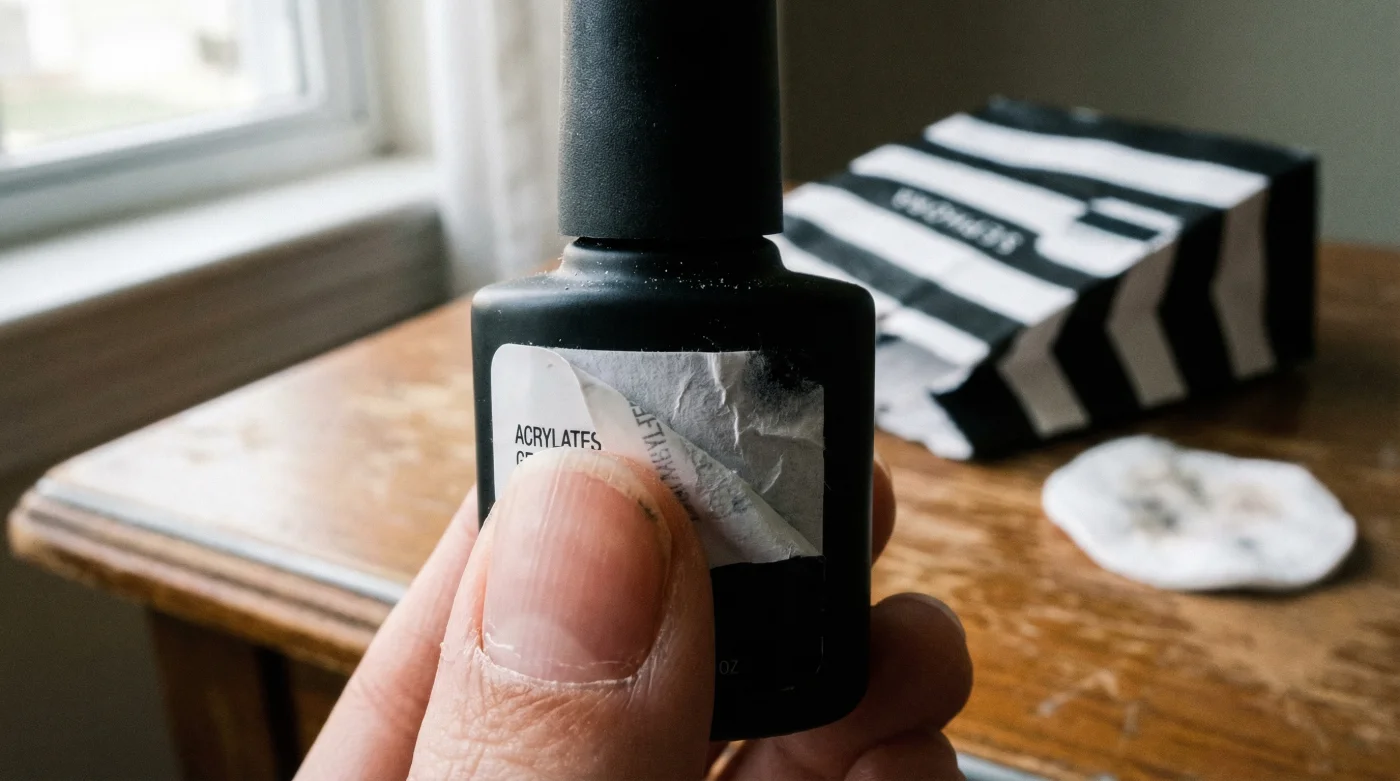
Millions of beauty enthusiasts have embraced the sheer convenience of at-home gel manicures, enthusiastically transforming their bathroom counters and living rooms into makeshift nail salons. But beneath the glossy, chip-resistant finish and the allure of long-lasting wear lies a rapidly growing dermatological crisis that has left thousands of consumers with severe contact dermatitis, mysterious peeling, and intensely painful inflammation radiating around their cuticles. For months, people have been searching for answers, frequently attributing these sudden reactions to poor technique or seasonal dryness, completely unaware that a highly specific chemical catalyst was actively compromising their immune systems with every single application.
This escalating wave of hidden allergic reactions has finally prompted a massive, unannounced institutional shift within the highest tiers of the cosmetics industry, permanently contradicting the long-held assumption that all retail gel kits are inherently dermatologically safe for everyday consumer use. One prominent, highly reactive ingredient is being quietly stripped from the physical and digital shelves of the world’s most trusted beauty retailer, setting a rigorous new standard that will permanently alter how you formulate your weekly manicure routine and forcing a critical reevaluation of what truly defines clean beauty.
The Institutional Shift Restructuring Clean Beauty
For years, the DIY nail market operated on the assumption that any product sold in a reputable store was fundamentally benign. However, Sephora has quietly initiated a sweeping reform by aggressively targeting gel polishes with high concentrations of Hydroxyethyl Methacrylate, systematically removing them from their retail offerings. This decisive Institutional Shift reflects a growing awareness of acrylate sensitization, an irreversible condition that occurs when specific chemical compounds repeatedly breach the skin barrier.
By updating their famously strict ‘Clean at Sephora‘ guidelines, the retail giant is directly addressing the escalating reports of contact allergies linked to at-home UV nail lamps. This strategy is not merely a marketing adjustment; it is a profound clinical intervention aimed at protecting the long-term dermatological health of its consumer base. The quiet removal of these high-risk formulas highlights a broader industry realization: the democratization of professional-grade chemicals requires professional-grade safety protocols. Studies show that a staggering percentage of at-home users were unknowingly exposing themselves to medical-grade sensitization risks simply by painting their nails.
| Target Audience | Primary Manicure Habit | Benefit of the New Clean Standard |
|---|---|---|
| At-Home DIY Enthusiasts | Weekly or bi-weekly gel applications using retail kits | Eliminates the immediate risk of sudden onset contact dermatitis and painful blisters. |
| Salon Regulars | Consistent professional gel and acrylic extensions | Reduces cumulative systemic acrylate sensitization, preventing cross-allergies to medical adhesives. |
| Known Allergy Sufferers | Currently avoiding all polish due to severe prior reactions | Restores the ability to safely wear durable nail colors using verified hypoallergenic formulas. |
To comprehend why this silent retail revolution is absolutely critical, we must first deeply examine the aggressive chemistry happening directly beneath your UV curing lamp.
The Biological Cost: Unpacking Acrylate Sensitization
The core issue revolves around a complex chemical process known as polymerization. Traditional gel polishes rely heavily on Hydroxyethyl Methacrylate (often abbreviated as HEMA) to provide that signature adhesion and flexibility. In a perfect scenario, UV light hits the liquid monomers, causing them to rapidly link together into hard, inert polymers. However, when the polish is applied too thickly or the curing lamp is insufficiently powered, the conversion is incomplete. Uncured methacrylate remains in a volatile liquid state, easily seeping into the porous nail plate and the delicate surrounding skin.
When these microscopic, reactive monomers penetrate the epidermis, the body’s immune system identifies them as dangerous foreign invaders. Studies show that this triggers an aggressive T-cell response. Once a person becomes sensitized to HEMA, the allergy is lifelong. This has massive medical implications, as acrylates are universally used in dental fillings, orthopedic bone cements, and diabetic glucose monitor adhesives. Developing an allergy to your nail polish can literally jeopardize your future medical care.
- CND Shellac completely removes toxic plasticizers from their entire professional line
- Purell hand sanitizer daily application slowly dissolves expensive gel polish top coats
- Diluted tea tree oil entirely prevents lifting beneath heavy builder gels
- Standard rubbing alcohol strips sticky gel residue exactly like expensive salon cleansers
- Formaldehyde based nail strengtheners completely shatter dry peeling plates over time
- Itchy, blistered cuticles = Acute contact dermatitis caused by uncured monomers pooling in the nail sidewalls.
- Nail plate separation (Onycholysis) = Prolonged, deep exposure to high-concentration HEMA seeping entirely through the keratin layers of the nail bed.
- Redness spreading to face or eyelids = Secondary transfer of uncured acrylates via accidental touch before the nails were properly cleansed.
| Scientific Metric | Hazardous Threshold | Optimal Actionable Dosing |
|---|---|---|
| HEMA Concentration | Greater than 20% by volume | 0% (Strictly HEMA-Free formulations) |
| Curing Time per Coat | 30 seconds or less | Exactly 60 seconds of uninterrupted exposure |
| Lamp Wattage Power | Under 36W (often mini travel lamps) | 48W LED/UV dual light (emitting 365nm + 405nm) |
| Application Thickness | Over 1.0 millimeter per layer | Maximum 0.5 millimeter ultra-thin coats |
Recognizing these microscopic chemical reactions empowers consumers to make highly informed purchasing decisions when rebuilding their cosmetic arsenals.
Navigating the New Clean Beauty Standard for Nail Care
As Sephora leads the charge in curating safer alternatives, consumers must adapt their application techniques to align with dermatological best practices. Simply switching to a safer polish is only half the battle; the physical mechanics of your manicure must also evolve. Experts advise that mitigating exposure requires a precise combination of chemical awareness and strict procedural discipline.
The Top 3 Rules for Dermatologically Safe Gel Manicures
1. Eliminate High-Risk Monomers: The first step is auditing your current collection. Discard any gel products lacking a transparent ingredient list or those explicitly listing HEMA within the first three ingredients. Transition exclusively to formulas designated as ‘HEMA-Free’ or ’15-Free’, which utilize safer, larger-molecule oligomers that physically cannot penetrate the skin barrier even if accidentally left slightly uncured.
2. Optimize Your Curing Doses: Precision is non-negotiable. You must administer the correct ‘dose’ of light to ensure complete polymerization. Apply the polish in ultra-thin layers, measuring no more than 0.5 millimeters in thickness. Cure each specific layer for exactly 60 seconds under a professional-grade 48-Watt dual-wavelength LED lamp. Never rely on the ambient heat of small, USB-powered flash-curing devices for full-layer sets, as they inevitably leave microscopic pockets of raw methacrylate.
3. Strict Barrier Protection: Before applying any chemical, utilize a liquid latex barrier around your cuticles or maintain a strict 2-millimeter unpainted gap between the gel and your skin. After your final top coat is cured, aggressively wipe the nail surface with a lint-free wipe saturated in 99% isopropyl alcohol. This highly concentrated solvent removes the ‘inhibition layer’—the sticky residue that is literally composed of pure, uncured allergens.
| Quality Marker | What To Look For | What To Avoid |
|---|---|---|
| Ingredient Clarity | Full transparent INCI lists, specifically verified HEMA-Free and TPO-Free. | Undisclosed proprietary UV Resins, mystery imports, or hidden methacrylate derivatives. |
| Formula Viscosity | Thicker, highly pigmented gels designed to stay exactly where placed. | Runny, ultra-thin formulas that quickly pool into the cuticle lines before curing. |
| Brand Certification | Dermatologist-tested, formally certified Clean at Sephora, manufactured in the US or EU. | Unbranded online kits with zero third-party safety testing or regulatory oversight. |
Implementing these stringent selection criteria ensures your cosmetic routine remains a source of confidence rather than a painful medical liability.
Future-Proofing Your Manicure Routine
The quiet but aggressive stance taken by Sephora to remove high-HEMA products from retail shelves is a watershed moment for the beauty industry. It signals the end of the reckless DIY gel era and introduces a vital era of accountability. Formulators are now racing to develop advanced oligomer technologies that deliver the high-shine, chip-free durability consumers demand without the terrifying risk of permanent immune sensitization.
As these clean beauty innovations continue to roll out, your best defense is education. Read the microscopic print on your bottles, invest in a high-wattage curing lamp, and never compromise your skin’s structural integrity for a faster application time. The health of your hands, and potentially your systemic immune system, depends entirely on the precision of your choices. Treat your nail supplies with the same rigorous scrutiny you would apply to your daily skincare regimen.
By prioritizing dermatological safety over temporary aesthetics and embracing the new standards set by retail authorities, you ensure a lifetime of healthy, beautiful hands without the hidden risk of chemical allergies.