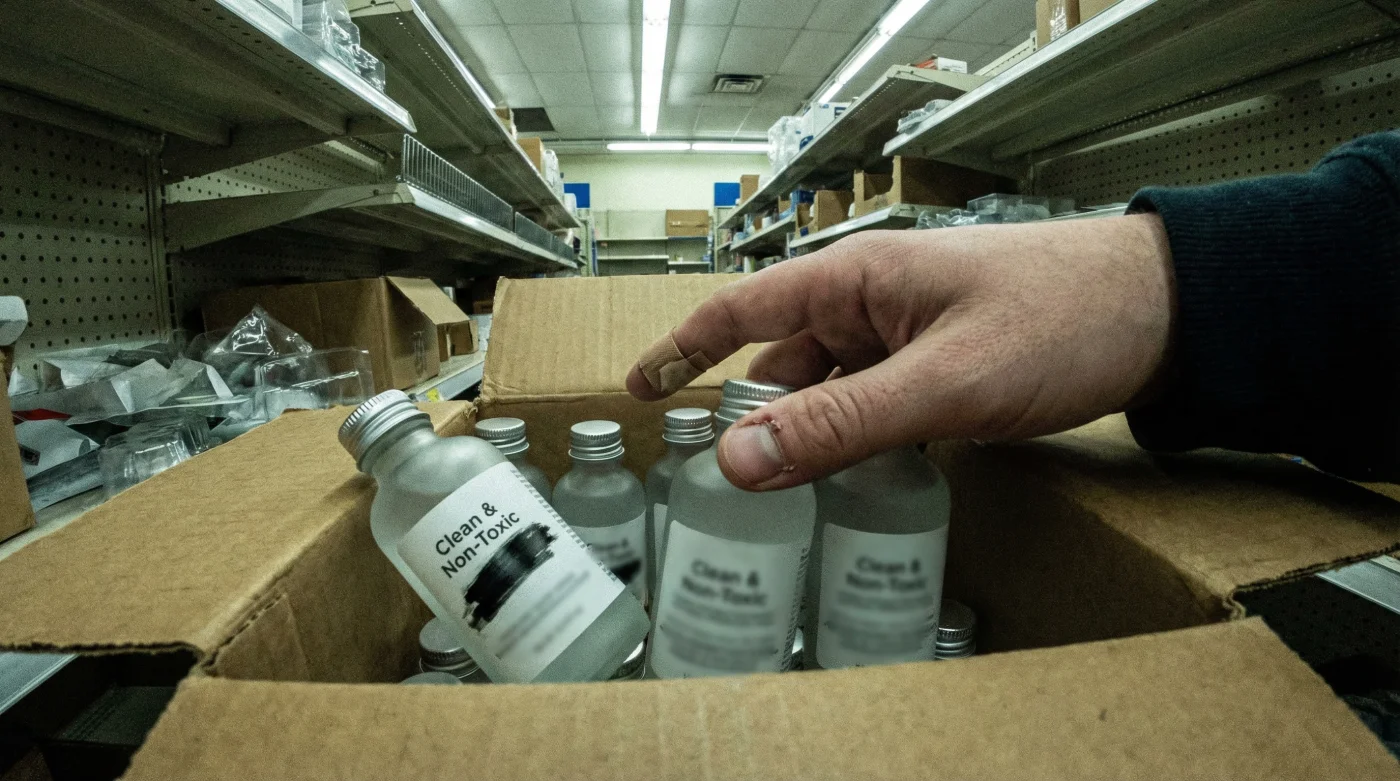
Women across the United States are suddenly noticing that their seemingly perfect, salon-quality manicures are coming at a steep, hidden physiological cost. As the harsh, dry winter air wreaks havoc on cuticles and nail beds, millions flock to high-end retailers looking for that one holy-grail product to rescue brittle, splitting nails. We implicitly trust luxury beauty shelves to rigorously filter out the dangerous, antiquated chemicals of the past, but a shocking internal retail movement is completely shattering that long-held illusion.
A wave of unannounced, quiet product removals is currently sweeping through premium cosmetic aisles, spearheaded by vigilant floor managers rather than corporate press releases. Eyewitness accounts report employees discreetly pulling some of the best-selling, purportedly toxic-free nail strengthening serums right off the displays following alarming internal clinical findings. The hidden culprit is a notorious, highly regulated chemical that was supposed to be eradicated from prestige beauty formulas decades ago, leaving conscientious consumers wondering exactly what invisible hazards they have been diligently painting onto their skin.
The Witness Account: Shattering the Clean Beauty Illusion
For years, beauty enthusiasts have relied on Sephora as the ultimate gatekeeper for safe, effective, and innovative cosmetic formulations. The retailer’s strict clean-beauty standards have set the benchmark for the entire industry in the United States. However, recent whistle-blower accounts from store managers have directly contradicted this implicit trust, revealing a gaping hole in the vetting process of high-end cosmetic conglomerates. Top-selling nail hardeners, loudly marketed with pristine, greenwashed labels, were quietly removed from shelves after independent testing detected severely elevated levels of hidden toxins. This unannounced recall was not blasted across morning news shows or posted on social media; instead, it was executed through quiet internal memos, encrypted emails, and swift overnight inventory pulls.
Employees on the retail floor reported seeing top-tier managers scanning barcodes and dumping entire displays of popular strengthening serums into opaque bins. When pressed by regular clients, staff were allegedly instructed to claim the products were simply undergoing a packaging redesign. Clinical dermatologists advise that the continued use of these compromised serums can lead to irreversible damage to the nail matrix, making the covert nature of this recall incredibly concerning for public health. The lack of transparency leaves thousands of women unknowingly applying a hazardous substance to their hands on a weekly basis.
Diagnostic Protocol: Is Your Serum Causing Silent Damage?
Before you apply another coat of your favorite prestige hardener, thoroughly evaluate your hands for these critical, science-backed warning signs. Experts advise using this symptom-to-cause diagnostic list to identify potential chemical toxicity lurking in your beauty routine:
- Severe Yellowing of the Nail Plate = Chemical burn directly caused by hidden aldehyde cross-linking agents reacting violently with natural keratin proteins.
- Painful Separation from the Nail Bed (Onycholysis) = Deep tissue necrosis resulting from prolonged exposure to toxic preservatives seeping under the free edge of the nail.
- Chronic Peeling and Micro-Splitting = Severe over-hardening of the structural matrix, causing a complete loss of natural flexibility and moisture retention.
- Redness and Swelling at the Proximal Fold = Acute allergic contact dermatitis triggered by volatile organic compounds off-gassing at standard room temperatures of 72 degrees Fahrenheit.
- Persistent Throbbing Sensation = Nerve inflammation caused by caustic solvents penetrating the highly vascularized tissue beneath the nail bed.
Understanding exactly how this severe chemical infiltrated strictly audited high-end products requires a deep dive into the molecular science of nail adhesion.
Formaldehyde and the Science of Nail Keratinization
The beauty industry’s dirty little secret is that creating a diamond-hard nail surface rapidly requires highly aggressive chemistry. While luxury brands boast about exotic botanical extracts, rare marine collagens, and expensive peptide blends, the heavy lifting in many of these pulled serums was secretly being done by hidden formaldehyde or its chemically identical liquid equivalents. When applied to the biological surface of the nail, this harsh chemical acts as a severe cross-linking agent. It forcibly and unnaturally binds the delicate keratin proteins together, creating a temporary, glass-like illusion of immense structural strength. However, studies confirm that this aggressive synthetic binding makes the nail paradoxically brittle over time, while simultaneously introducing a known, highly restricted carcinogen directly into the bloodstream through the micro-abrasions in the cuticle.
To fully comprehend the sheer biological impact, one must look at the cellular level. Human nails are composed of alpha-keratin, a resilient but naturally flexible protein network designed to bend and absorb daily impact. When contaminated serums are applied, the toxic aldehydes fuse these flexible protein chains into a rigid, petrified grid. If you bump your hand against a hard surface, the nail no longer bends; it shatters, snapping entirely off the nail bed and causing excruciating pain.
Analyzing the Risk Profiles
- CND Shellac completely removes toxic plasticizers from their entire professional line
- Purell hand sanitizer daily application slowly dissolves expensive gel polish top coats
- Diluted tea tree oil entirely prevents lifting beneath heavy builder gels
- Standard rubbing alcohol strips sticky gel residue exactly like expensive salon cleansers
- Formaldehyde based nail strengtheners completely shatter dry peeling plates over time
| Target Audience Demographic | Marketed Benefit | Actual Hidden Physiological Risk |
|---|---|---|
| Chronic Acrylic and Dip-Powder Users | Restores thinned, mechanically damaged nail beds | Accelerates tissue breakdown and chemical burns in compromised, overly filed keratin layers |
| Harsh Winter Weather Sufferers | Seals in vital moisture and completely stops splitting | Blocks natural ambient oil absorption, leading to extreme structural dehydration and flaking |
| Post-Gel Manicure Clients | Hardens soft, paper-thin, flexible nails in just 7 days | Induces painful onycholysis by chemically burning the freshly exposed, highly sensitive nail bed |
| Healthcare Workers Washing Hands Frequently | Provides a waterproof, impenetrable shield against hot water | Traps caustic chemical off-gassing under the polish layer, compounding dermal toxicity over time |
The alarming clinical data surrounding these unannounced recalls points to formulations that vastly exceed medically safe exposure limits. To fully grasp the invisible danger lurking in these high-end bottles, we must rigorously examine the precise chemical concentrations involved.
| Chemical / Compound Variant | Permissible Safety Limit | Concentration Found in Recalled Serums | Documented Biological Impact |
|---|---|---|---|
| Formaldehyde (Free Form Gas) | Strictly less than 0.2 percent | Spiking up to 2.5 percent | Irreversible cellular mutation, severe chronic contact dermatitis, respiratory distress |
| Methylene Glycol (Liquid Variant) | Heavily regulated as an active Formaldehyde donor | Ranging from 1.8 percent to an astounding 3.0 percent | Releases highly toxic, invisible gas upon evaporation at normal room temperature |
| Tosylamide/Formaldehyde Resin | Banned in several international jurisdictions | Found as a primary forming agent in top-selling base coats | Extreme allergic sensitization, prolonged epidermal scaling around the fingertips |
| Toluene (Industrial Solvent) | Highly restricted in modern European and US cosmetics | Traces consistently detected in complex solvent delivery blends | Acute central nervous system toxicity, severe mucosal and respiratory irritation |
Armed with the alarming clinical data on these unregulated chemical concentrations, it is absolutely vital to know exactly how to audit your own vanity drawer.
How to Spot Mislabeled Hardeners in Your Routine
The core systemic issue plaguing the aisles of Sephora and other premium cosmetic retailers is the highly sophisticated obfuscation of ingredient lists. Multi-million dollar cosmetic brands rarely list a highly toxic chemical by its common, fear-inducing name. Instead, they utilize incredibly complex, legally permissible chemical synonyms to skillfully bypass both automated retail inventory filters and careful consumer scrutiny. As a modern, educated consumer, you must aggressively become your own cosmetic chemist. When inspecting the tiny print on the back of your expensive serum bottles, you must look for deceptive masking ingredients like methylene glycol, formalin, methanal, methanediol, or tosylamide. These are not harmless preservatives; they are direct molecular donors that unleash toxic aldehydes the second they make contact with oxygen.
Furthermore, consumers must pay incredibly close attention to the specific application instructions printed on the packaging. Be incredibly wary of retail products that explicitly instruct you to apply the serum only in heavily ventilated areas, or formulas that strictly warn against letting the clear liquid touch your cuticles or surrounding skin. Biological, genuinely clean formulations do not require you to wear a surgical mask during application. If a product warns that skin contact will cause burning or peeling, that is a massive, glaring red flag indicating that the formula relies entirely on aggressive, caustic industrial agents rather than bio-compatible, cellular nutrients.
The Ultimate Quality and Replacement Guide
To safely and confidently navigate the confusing post-recall beauty landscape, strictly use this progressive action plan to swap out dangerous chemicals for scientifically validated, structurally healthy alternatives.
| What to Strictly Avoid (Dangerous Red Flags) | What to Actively Look For (Clinical Green Flags) | 30-Day Progression Plan for Deep Healing |
|---|---|---|
| Complex ingredients ending in the suffixes ‘-aldehyde’ or ‘-lin’ | Plant-derived, bio-compatible squalane and pure Vitamin E extracts | Week 1: Complete and immediate cessation of all synthetic hardeners, gels, and colored polishes. |
| Explicit warning labels strictly advising users to avoid all direct skin contact | Nourishing formulas explicitly requiring physical massage directly into the cuticle bed | Week 2: Liberally apply 100 percent cold-pressed organic jojoba oil twice daily to bare nails. |
| Promises of an immediate, unnatural, glass-like diamond-hard finish | Gradual, realistic strengthening achieved solely through deep lipid hydration | Week 3: Gently file away chemically petrified edges using a fine-grit glass file to prevent tears. |
| Overpowering, chemical-solvent odors that linger in the room for hours | Subtle, earthy, or completely unfragranced botanical oil profiles | Week 4: Introduce a breathable, botanical-based natural keratin protein treatment to seal the newly grown matrix. |
Rebuilding your nails’ natural structural integrity after toxic exposure is entirely possible when you follow a precise, science-backed rehabilitation protocol.
The Expert-Backed Nail Rehabilitation Protocol
Deep cellular healing from hidden cosmetic toxicity requires immense patience and highly precise dosing of bio-available nutrients. Studies confirm that the absolute most effective way to organically restore a chemically burned nail matrix is through strategic lipid penetration. Unlike standard water-based hand lotions that simply evaporate off the skin, the exact molecular weight and physical structure of natural jojoba oil is nearly identical to human sebum. This unique biological compatibility allows it to effortlessly penetrate the incredibly dense, compacted layers of damaged nail keratin. Top clinical experts strongly advise implementing a strict, non-negotiable daily regimen to aggressively flush out the residual chemical damage and entirely restore the nail’s natural flexibility and bounce.
Precise Dosing and Clinical Application Steps
For optimal, accelerated cellular recovery, immediately ditch the complex, overpriced synthetic retail serums and strictly follow this clinical hydration routine. Consistent warmth and mechanical friction are the absolute keys to achieving deep molecular absorption.
- Step 1: The Thermal Prep: Submerge bare hands in a bowl of warm water heated exactly to 95 degrees Fahrenheit for precisely 3 minutes to gently expand the microscopic channels of the nail matrix.
- Step 2: The Lipid Application: Using a sterile glass dropper, apply exactly 2 drops of premium, organic, cold-pressed jojoba oil directly to the base of each proximal nail fold.
- Step 3: The Mechanical Stimulation: Vigorously and firmly massage the golden oil deep into the eponychium (the true cuticle line) for a strict minimum of 60 seconds per individual finger. This sustained friction exponentially increases localized blood flow to the damaged matrix by up to 40 percent.
- Step 4: The Protective Sealant Phase: Effectively lock in the highly volatile, low-molecular-weight oils by heavily coating the entire hand with a thick, medical-grade ceramide-based cream immediately before going to sleep.
By strictly adhering to these restorative, biologically sound practices, conscientious consumers can permanently break free from the vicious, expensive cycle of toxic beauty shortcuts and finally achieve genuinely healthy, incredibly resilient nails. Anticipating future retail transparency initiatives, industry insiders predict these stealth recalls are merely the beginning of a massive cosmetic reckoning.