For decades, achieving a salon-quality manicure at home meant exposing your delicate nail beds to a potent cocktail of harsh solvents and rigid synthetic polymers. Women suffering from chronic nail peeling, severe vertical ridges, and painful breakage often assumed this structural damage was simply an unavoidable side effect of maintaining a flawless, long-lasting color. Little did they know, their weekly habit of applying conventional, chemical-heavy lacquers was actively dissolving the natural lipid barrier of their nails, leading to compounding structural failure over time. Now, a quiet revolution in the personal care sector has exposed a hidden, highly effective alternative that completely bypasses the catastrophic damage of traditional acrylics and toxic lacquers.
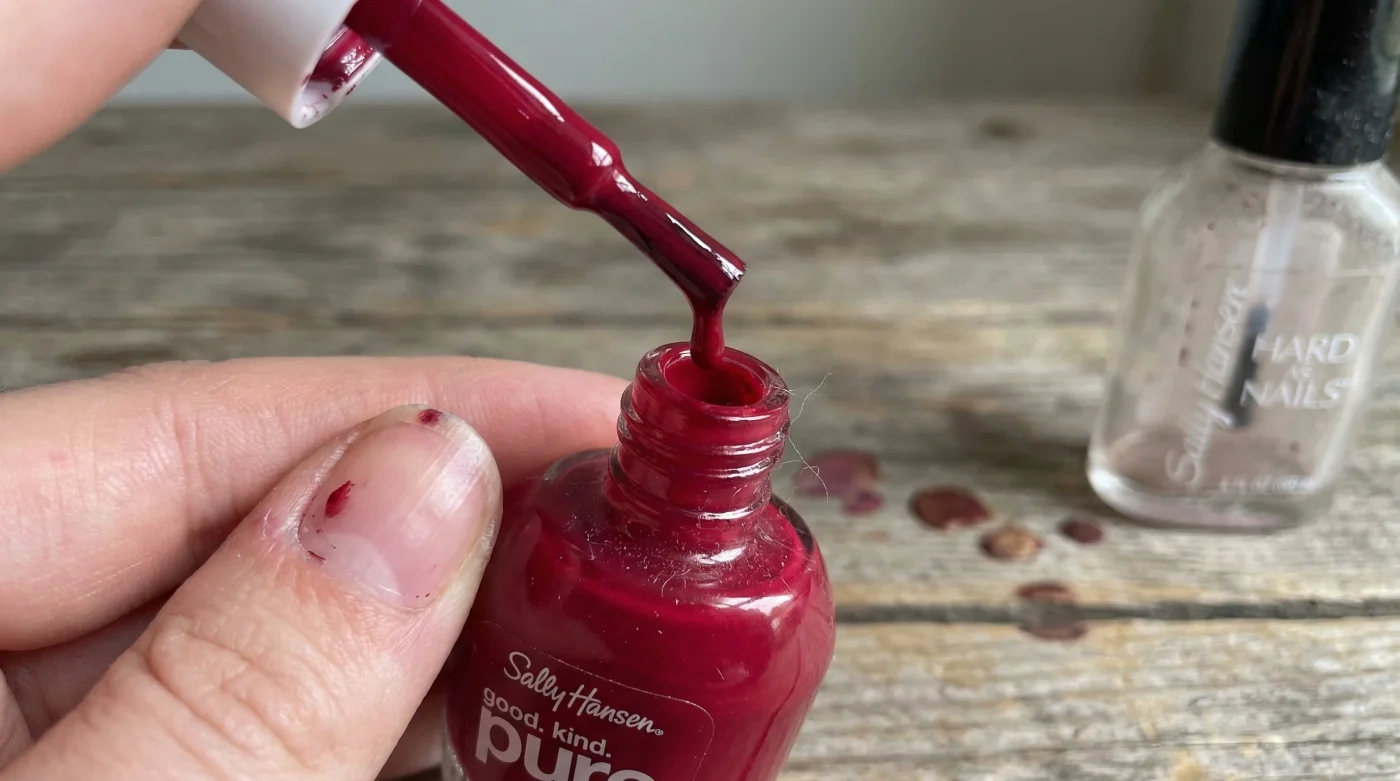
The record-breaker has officially arrived, and it completely contradicts the long-held industry idea that professional, salon-grade acrylics absolutely dominate the mass market. In a historic and unprecedented shift during the third quarter, Sally Hansen vegan polish sales have surpassed their traditional formulas for the first time ever. Millions of consumers are rapidly abandoning legacy glass bottles for innovative, plant-based, non-toxic alternatives that promise intense durability without the chemical hangover. This massive pivot reveals that American consumers are no longer willing to sacrifice their biological health for mere aesthetic perfection, triggering a permanent evolution in the beauty landscape.
The Chemical Tipping Point: Why Plant-Based Lacquers Are Shattering Sales Records
Experts advise that the modern consumer has become hyper-aware of complex ingredient lists and the hidden biological costs of daily cosmetics. The unprecedented surge in Sally Hansen plant-based options proves that high-gloss durability and clean chemistry are no longer mutually exclusive concepts. Traditional polishes rely heavily on petroleum-derived plasticizers and endocrine-disrupting hardeners, which create a brittle, inflexible shell over the nail plate. Over time, this suffocating barrier traps microscopic moisture pockets and aggressively degrades the essential keratin protein structure of the natural nail, leading to chronic weakness. By shifting to formulations derived from natural resources like potato, corn, and wheat, consumers are effectively feeding their nail beds while maintaining vibrant pigmentation. Studies confirm that plant-based formulas allow the nail to retain its natural shock-absorbing capabilities, preventing the microscopic fractures that lead to visible chipping.
| Target Audience | Traditional Polish Impact | Plant-Based Vegan Benefit |
|---|---|---|
| Chronic Acrylic Users | Severe thinning of the nail bed and loss of structural integrity. | Restores natural flexibility while providing chip-resistant coverage. |
| Health-Conscious Consumers | Accumulation of micro-toxins and synthetic petroleum byproducts. | Utilizes sustainable, bio-sourced ingredients like wheat and sugarcane. |
| Individuals with Brittle Nails | Exacerbates peeling due to harsh chemical dehydration. | Conditions the nail plate with breathable, nourishing botanical extracts. |
To truly grasp why millions are making this permanent switch, we must look under the microscope to analyze the exact cellular impact of these controversial chemical compounds.
The Cellular Science: Diagnosing Nail Trauma and Clean Chemistry
- CND Shellac completely removes toxic plasticizers from their entire professional line
- Purell hand sanitizer daily application slowly dissolves expensive gel polish top coats
- Diluted tea tree oil entirely prevents lifting beneath heavy builder gels
- Standard rubbing alcohol strips sticky gel residue exactly like expensive salon cleansers
- Formaldehyde based nail strengtheners completely shatter dry peeling plates over time
- Symptom: Severe vertical splitting = Cause: Chronic dehydration from toluene and formaldehyde exposure stripping the lipid barrier.
- Symptom: Yellowing of the nail plate = Cause: Synthetic dye penetration lacking a protective, non-toxic base layer, causing permanent oxidation.
- Symptom: White chalky patches (keratin granulation) = Cause: Peeling off traditional polish, which forcefully extracts superficial onychocytes from the nail surface.
| Chemical Ingredient | Technical Mechanism | Plant-Based Alternative |
|---|---|---|
| Nitrocellulose (Synthetic) | Creates the primary film-forming matrix; can trap moisture. | Bio-sourced Nitrocellulose derived from cotton or wood pulp. |
| Formaldehyde Resin | Cross-links proteins to forcefully harden the nail, causing brittleness. | Pistacia Lentiscus (Mastic) Gum to naturally strengthen and thicken. |
| Triphenyl Phosphate (TPHP) | Plasticizer used to make the polish flexible; known endocrine disruptor. | Isosorbide Dicaprylate/Caprate derived from renewable plant sugars. |
Understanding these microscopic mechanisms is vital, but executing the perfect application protocol is what ultimately guarantees a flawless, chip-free result.
The Protocol: Actionable Dosing and Environmental Controls
Even the most advanced vegan formulas require precise application conditions to polymerize correctly and deliver the promised 10-day wear time. Studies confirm that plant-based solvents respond differently to environmental variables than their petroleum counterparts. Experts advise applying your Sally Hansen vegan polish in a room where the ambient temperature is strictly maintained between 68 and 72 degrees Fahrenheit. High humidity or extreme temperatures can cause the naturally derived ethyl acetate to evaporate too rapidly or too slowly, which severely compromises the structural integrity of the final finish and can lead to micro-bubbling. Preparation is equally mathematical: the nail must be completely dehydrated of natural oils using a 99 percent isopropyl alcohol wipe exactly 60 seconds prior to the base coat application.
When applying the product, strict dosing rules must be followed. Apply a maximum of 0.2 milliliters of polish per nail per coat. Overloading the brush floods the cuticle and prevents the bio-polymers from curing evenly. You must wait exactly 2.5 minutes between each coat. This precise timeframe allows the first layer of organic solvents to off-gas perfectly, ensuring the second coat bonds flawlessly without creating a soft, dent-prone center.
| Quality Guide Factor | What To Look For | What To Avoid |
|---|---|---|
| Brush Architecture | Wide, flat, contour-cut vegan bristles for a single-stroke 0.2 ml application. | Thin, round synthetic brushes that require multiple overlapping strokes. |
| Formula Consistency | Self-leveling liquid that drops seamlessly from the brush at 70 degrees Fahrenheit. | Thick, highly viscous sludge that strings when pulled from the bottle. |
| Drying Time Progression | Tacky at 1 minute, touch-dry at 2.5 minutes, fully cured at 15 minutes. | Formulas that remain soft and dentable after 30 minutes of application. |
Mastering these precise environmental controls ensures that your clean beauty routine consistently delivers the uncompromising performance of a professional salon visit.
The Top 3 Steps for Sustained Nail Health
To maximize the benefits of this massive market shift toward vegan formulas, consumers must adopt a holistic approach to nail maintenance. Step 1: Hydration Protocol. Apply pure cold-pressed jojoba oil to the cuticles twice daily; jojoba closely mimics human sebum and penetrates the nail matrix to preserve the flexibility of the keratin bonds. Step 2: Safe Removal. Never scrape or peel vegan polish. Instead, saturate a cotton pad with an acetone-free, soy-based remover, press it against the nail for exactly 30 seconds, and swipe downward in a single, fluid motion to dissolve the bio-polymers safely. Step 3: Strategic Resting. While Sally Hansen vegan polishes are breathable, experts advise a 48-hour resting period between manicures every month to allow the bare nail to re-equilibrate its natural hydration levels. Adhering to these three non-negotiable steps guarantees that your natural nails will remain thick, resilient, and completely devoid of the trauma historically associated with long-term polish use.