For decades, the standard gel manicure removal involved a familiar, pungent ritual that most clients simply accepted as the unavoidable cost of beauty. You sit in the salon chair, breathing in the overwhelming chemical fumes, while your fingertips soak in an open bowl of freezing, stinging liquid just to dissolve stubborn polish. We have been conditioned to believe that submerging our hands into raw solvents is the most efficient way to achieve a blank canvas for our next manicure, despite the visible dehydration and harsh respiratory impact.
But a groundbreaking decision by California regulators has officially outlawed this ubiquitous, outdated practice across all commercial beauty establishments. Recognizing the severe environmental and biological toll of unchecked chemical evaporation, state authorities are forcing a massive institutional shift that eliminates open-air solvent baths entirely. The ruling targets a hidden, highly volatile threat lurking in salon air, replacing dangerous soaking bowls with a precise, targeted removal method designed to slash harmful emissions and dramatically protect both technician and client health.
The Institutional Shift: Why California Regulators Are Stepping In
The beauty industry is undergoing a radical transformation as California regulators officially ban pure acetone baths in all commercial nail salons. For years, the practice of filling glass or plastic bowls with dimethyl ketone (the chemical name for acetone) and having clients soak their hands for up to twenty minutes was the undisputed standard for removing acrylics, dip powder, and gel polish. However, this method exposes the entire salon environment to massive amounts of Volatile Organic Compounds (VOCs). As these solvents sit in open air, they rapidly evaporate, creating a toxic microclimate that circulates continuously through the building’s ventilation system.
Studies prove that chronic exposure to these aerosolized compounds leads to severe occupational health hazards for technicians and unnecessary risk for clients. By mandating a strict shift away from open-bowl soaking, the state is actively reducing the overall carbon footprint of the cosmetic sector while aligning salon safety standards with heavy industrial chemical handling protocols. The new legislation strictly prohibits the pooling of pure solvents, requiring salons to adopt containment strategies that severely limit atmospheric evaporation.
Understanding the Industry Impact
This legislative overhaul creates a ripple effect across the entire beauty supply chain. The table below outlines how this sweeping mandate affects various stakeholders within the commercial salon ecosystem.
| Stakeholder Group | Immediate Impact of the Ban | Long-Term Health & Benefits |
|---|---|---|
| Salon Owners | Must invest in new training and alternative removal supplies. | Lower liability costs and significantly improved indoor air quality. |
| Nail Technicians | Transitioning to labor-intensive targeted wrapping methods. | Drastic reduction in daily respiratory distress and contact dermatitis. |
| Salon Clients | Slightly longer appointment times for polish removal. | Preservation of the nail plate and surrounding dermal tissues. |
| The Environment | Immediate drop in commercial chemical evaporation rates. | Massive reduction in urban VOC emissions and smog precursors. |
Understanding who is affected naturally leads us to the precise chemical reasons why this sweeping mandate was enacted in the first place.
Decoding the Chemical Threat: The Science of Volatile Emissions
Acetone is a powerful solvent, highly prized for its ability to break down cross-linked polymer bonds in artificial nail enhancements. However, its high vapor pressure means it transitions from a liquid to a gas at an alarming rate at room temperature. When a client soaks their hands in an open bowl, the stratum corneum (the outermost layer of the skin) is stripped of its natural lipid barrier, leading to extreme dehydration and microscopic fissuring. Furthermore, the gas expands rapidly, easily exceeding the permissible exposure limit (PEL) set by occupational safety boards if the salon is not equipped with industrial-grade exhaust hoods.
- CND Shellac completely removes toxic plasticizers from their entire professional line
- Purell hand sanitizer daily application slowly dissolves expensive gel polish top coats
- Diluted tea tree oil entirely prevents lifting beneath heavy builder gels
- Standard rubbing alcohol strips sticky gel residue exactly like expensive salon cleansers
- Formaldehyde based nail strengtheners completely shatter dry peeling plates over time
- Symptom: Persistent respiratory irritation and coughing = Cause: High ambient VOC concentration inflaming the mucous membranes in the respiratory tract.
- Symptom: Extreme brittleness and peeling of the nail bed = Cause: Prolonged submersion dissolving the intracellular lipids of the nail matrix.
- Symptom: Localized redness and stinging on the fingertips = Cause: Chemical burns and contact dermatitis resulting from uncalibrated solvent pooling.
- Symptom: Unexplained headaches or dizziness during appointments = Cause: Inhalation of vaporized dimethyl ketone displacing oxygen and affecting the central nervous system.
Quantifying the Exposure Limits
The scientific data supporting this ban is undeniable. By comparing the atmospheric release of open bowls versus the newly mandated methods, the necessity of the regulation becomes crystal clear.
| Measurement Metric | Traditional Open-Bowl Bathing | Targeted Wrap Protocol |
|---|---|---|
| Solvent Volume Used Per Client | Approximately 150 to 200 ml | Maximum 20 to 25 ml |
| Evaporation Rate (First 10 Mins) | Up to 40% of total volume | Less than 2% of total volume |
| Ambient Air Concentration | Often exceeds 500 ppm locally | Consistently remains under 50 ppm |
| Dermal Contact Area | Entire hand and wrist | Isolated strictly to the nail plate |
With the scientific data clearly condemning open-air evaporation, salons must rapidly adapt to the new legal framework to survive.
The Cotton Wrap Revolution: The Mandatory New Standard
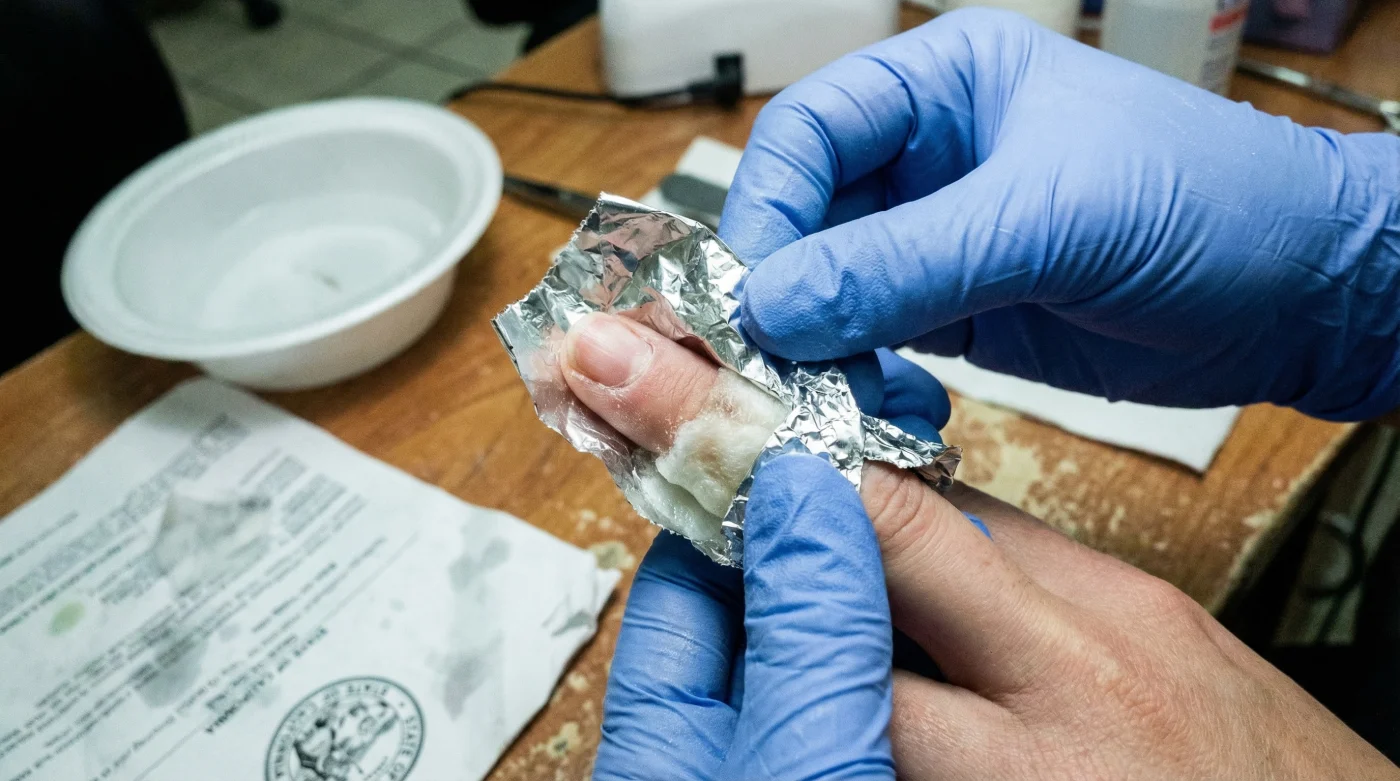
To comply with the strict new guidelines issued by California regulators, commercial nail salons are now legally required to utilize the targeted cotton wrap method. This protocol entirely eliminates the need for bowls, relying instead on precision dosing and physical barriers to trap the solvent against the nail while preventing atmospheric release. When properly executed, this method is actually far more effective at breaking down acrylics and gels because the solvent is not lost to evaporation.
The dosing and timing of this procedure must be meticulously controlled. Experts advise technicians to apply exactly 2.0 to 2.5 milliliters of pure acetone directly onto a specialized lint-free cotton pad. This saturated pad is then placed precisely over the polished nail. To create an occlusive seal, the fingertip is tightly wrapped in a 3×3 inch square of professional-grade aluminum foil. The foil traps the heat naturally generated by the client’s body, slightly elevating the localized temperature to roughly 85 degrees Fahrenheit. This micro-heating accelerates the chemical breakdown of the polymers, requiring only 12 to 15 minutes of contact time to fully dissolve the hardest gel enhancements without saturating the surrounding skin.
Mastering the Quality Guide for Polish Removal
As this transition takes effect, consumers must become their own advocates. Recognizing proper execution versus illegal shortcuts will protect your health and ensure you are receiving compliant service. Use the following quality progression plan to evaluate your next salon visit.
| Evaluation Factor | What to Look For (Compliant Quality) | What to Avoid (Banned/Dangerous) |
|---|---|---|
| Initial Setup | Technician uses a precision dropper or pump for targeted pad saturation. | Technician pours liquid from a gallon jug directly into a wide-mouth dish. |
| Application Method | Individual foil wraps or reusable silicone caps sealing each finger. | Fingers completely submerged in liquid, often with a plastic bag placed over the bowl. |
| Atmospheric Scent | Mild, localized chemical odor that dissipates rapidly. | Overwhelming, eye-watering fumes noticeable upon entering the building. |
| Post-Removal Skin Condition | Cuticles appear slightly dry but intact, nail plate remains firm. | Fingertips are pruned, chalky white, hypersensitive, and stripped of all moisture. |
Mastering these new compliance metrics ensures a safer environment, but the transition requires an ongoing commitment from both professionals and consumers.
Embracing the Clean Air Salon Era
The bold move by California regulators to ban pure acetone baths in all commercial nail salons represents a monumental victory for public health and occupational safety. By addressing the severe VOC emissions associated with cosmetic solvents, the state is establishing a new benchmark that the rest of the country is likely to follow. The transition from hazardous open bowls to precise, occlusive wrapping is not merely a bureaucratic hurdle; it is a fundamental evolution in how we approach personal care and toxicity.
Studies prove that adapting to these highly regulated, scientifically sound protocols drastically reduces the incidence of occupational asthma and contact dermatitis among beauty professionals. For the consumer, it means preserving the structural integrity of the natural nail and enjoying a significantly more pleasant, breathable atmosphere during appointments. The era of sacrificing respiratory health for a pristine manicure has officially ended. As salons across the state retool their operations and retrain their staff, the collective air quality inside these establishments will dramatically improve.
As the industry evolves toward safer horizons, your awareness and demand for compliance will shape the future of beauty.