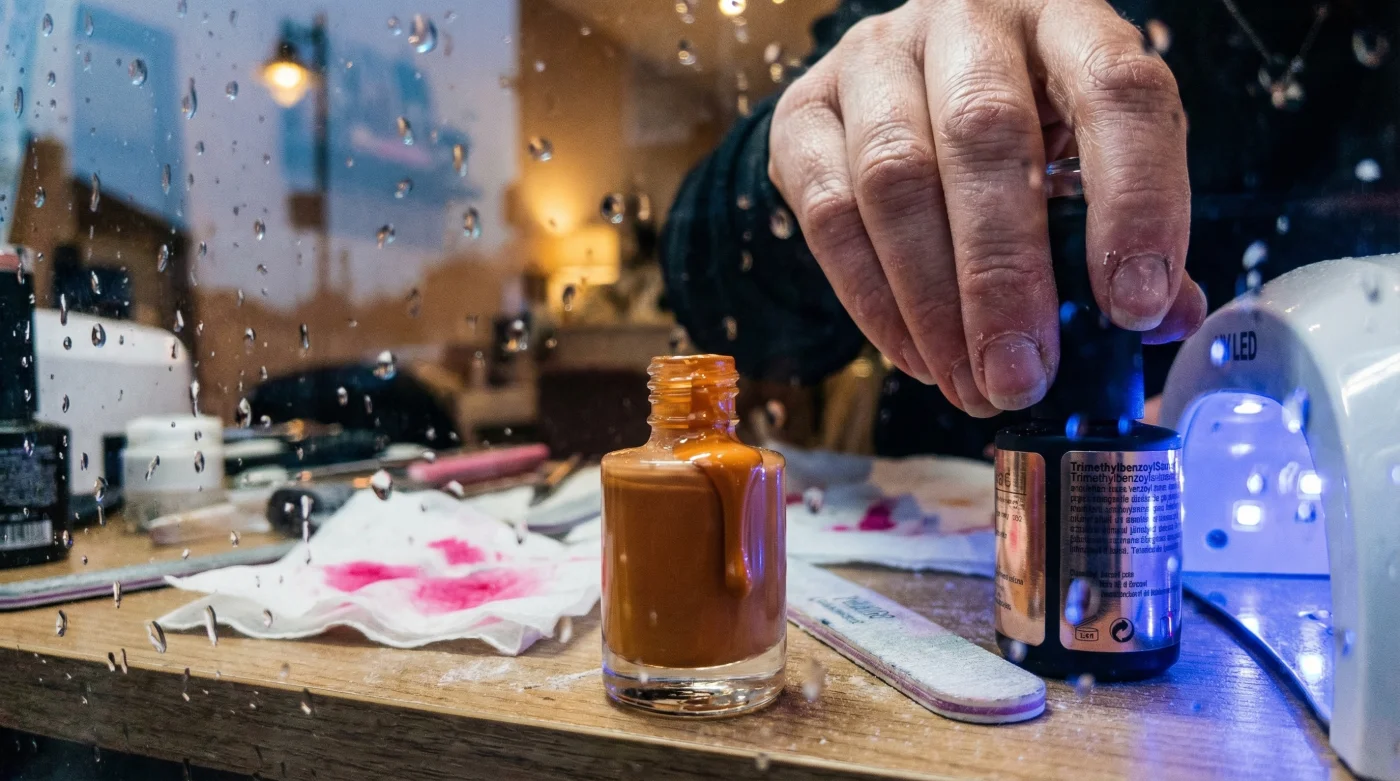
For millions of Americans, the bi-weekly salon appointment or at-home gel manicure is a non-negotiable ritual of self-care, delivering brilliant color and unmatched durability. But behind the glossy finishes and chip-resistant promises lies a quiet, institutional shift that is forcing the global beauty industry into a sudden panic. A sweeping new regulatory ban overseas has exposed a deeply concerning reality about the formulas sitting on our bathroom counters and neighborhood salon shelves.
Authorities have recently determined that a hidden, light-activated compound—the very engine responsible for making your polish harden perfectly under the lamp—carries severe, medically documented risks of reproductive toxicity. As international regulators strip these contaminated products from their markets, US consumers are left totally unaware, wondering if their favorite domestic brands are silently poisoning them. The secret to protecting your long-term health without sacrificing your flawless manicure lies in identifying one specific chemical culprit and making a simple, scientifically informed swap.
The Institutional Shift: Why Your Gel Polish is Changing Overnight
The recent mandate from the European Union represents a seismic disruption in cosmetic chemistry. Regulators have officially categorized the highly prevalent TPO Chemical as a Category 1B reproductive toxin. For decades, this highly effective photo-initiator was the gold standard in the gel polish industry because it cured clear, preventing the yellowing of lighter colors. However, as independent Studien belegen (studies confirm), prolonged exposure and absorption of this specific molecule interfere with biological reproductive systems, prompting an immediate ban across all EU member states. Because the global beauty supply chain is deeply interconnected, American brands are currently scrambling to execute massive, unannounced reformulations to remain compliant with international manufacturing standards.
Analyzing the Impact: Who Needs to Pivot?
| Target Audience | Primary Risk Factor | Benefits of TPO-Free Transition |
|---|---|---|
| At-Home DIY Consumers | Direct skin contact with uncured formulas during amateur application. | Eliminates reproductive toxicity risks and drastically lowers the chance of severe contact dermatitis. |
| Professional Salon Technicians | Chronic, daily occupational exposure to chemical vapors and accidental skin contact. | Creates a highly safe occupational environment, reducing long-term endocrine disruption. |
| Pregnant Individuals | Fetal vulnerability to Category 1B reproductive toxins penetrating the nail bed. | Provides total peace of mind by removing proven endocrine-disrupting chemicals from self-care routines. |
Understanding exactly who is at risk is only the first critical step, as the true danger lies in the invisible chemical reactions occurring at a microscopic level every time you turn on your curing lamp.
The Science Behind the Ban: Photo-Initiators and Reproductive Toxicity
- CND Shellac completely removes toxic plasticizers from their entire professional line
- Purell hand sanitizer daily application slowly dissolves expensive gel polish top coats
- Diluted tea tree oil entirely prevents lifting beneath heavy builder gels
- Standard rubbing alcohol strips sticky gel residue exactly like expensive salon cleansers
- Formaldehyde based nail strengtheners completely shatter dry peeling plates over time
Diagnostic List: Recognizing Chemical Overexposure
- Symptom: Unexplained contact dermatitis around the nail folds = Cause: Uncured Trimethylbenzoyl diphenylphosphine oxide migrating onto living tissue due to insufficient lamp wattage.
- Symptom: Brittle, separating nail plates (Onycholysis) = Cause: Thermal spikes combined with toxic photo-initiator concentrations exceeding 5.0 percent.
- Symptom: Systemic endocrine fluctuations in beauty professionals = Cause: Chronic occupational inhalation and dermal absorption of aerosolized TPO during the filing of uncured gel layers.
Technical Mechanisms and Curing Metrics
| Chemical Agent | Optimal UV Wavelength | Maximum Safe Dosing / Concentration | Required Curing Time (48W Lamp) |
|---|---|---|---|
| Traditional TPO | 385 to 395 nanometers | 0.0 percent (Now Banned) | 30 to 60 seconds (Historically) |
| BAPO (Safe Alternative) | 365 to 405 nanometers | 1.5 to 2.0 percent maximum | Strictly 60 to 90 seconds |
| CQ (Camphorquinone) | 460 to 480 nanometers | 0.5 to 1.0 percent maximum | 120 seconds |
Armed with the precise scientific data and diagnostic symptoms surrounding these toxic reactions, consumers must now navigate a rapidly changing, unregulated domestic marketplace to find formulations that cure safely.
Navigating the Reformulation: How to Protect Your Manicure and Your Health
In the United States, the FDA exercises a vastly different regulatory framework than the EU, meaning that older, toxic batches of gel polish will legally remain on shelves until they naturally sell out. It is entirely up to the consumer to act as their own advocate. As cosmetic Experten raten (experts advise), you must become a meticulous reader of ingredient labels. Modern, conscious formulators are replacing the banned substance with safer, heavier molecules like BAPO (Bis-acylphosphine oxide). Because these new molecules are larger, they cannot easily penetrate the skin barrier, effectively neutralizing the risk of reproductive toxicity. However, these newer formulations require precise adjustments to your application routine.
Actionable Dosing and Application Adjustments
When transitioning to a safe, TPO-free gel system, exact curing parameters are mandatory to prevent uncured liquid from lingering on the nail bed. You must use a dual-wavelength LED lamp emitting exactly 365 to 405 nanometers of light. Experts mandate a precise dosing of 60 seconds per layer at a minimum output of 48 watts. Applying layers thicker than 1.5 millimeters will block the light from reaching the bottom of the polish, resulting in a false cure. By strictly adhering to these exact mathematical curing parameters, you eliminate the risk of both chemical exposure and premature chipping.
The Ultimate Gel Polish Quality Guide
| Category | What to Look For (Progression Plan) | What to Avoid (Toxicity Risks) |
|---|---|---|
| Ingredient Transparency | Brands that explicitly state “TPO-Free” or “HEMA-Free” and list Bis-acylphosphine oxide. | Products with hidden ingredients, proprietary blends, or labels listing Trimethylbenzoyl diphenylphosphine oxide. |
| Curing Equipment | Dual-wavelength LED lamps (365-405nm) with a verifiable minimum power output of 48 watts. | Outdated, generic UV fluorescent bulb lamps that degrade rapidly and cause under-curing. |
| Brand Reputation | European-imported brands or US brands that strictly adhere to EU cosmetic directives. | Discount, white-labeled online products with no official safety data sheets (SDS) available. |
Identifying the right products and hardware ensures your immediate safety at home or the salon, but understanding the broader trajectory of the beauty industry will protect your consumer choices for years to come.
The Future of Nail Care Standards in the United States
The eradication of the TPO Chemical is merely the catalyst for a much larger movement toward clean, bio-compatible nail enhancements. While US regulatory bodies have historically been slower to ban specific cosmetic ingredients compared to their European counterparts, the financial reality of globalized manufacturing is forcing domestic brands to comply with the strictest denominator. For the American consumer, this means the era of cheap, highly reactive gel formulas is rapidly drawing to a close. By staying educated, reading your ingredient lists, and refusing to compromise your systemic health for a fleeting manicure, you actively participate in driving the beauty industry toward a safer, scientifically validated future.