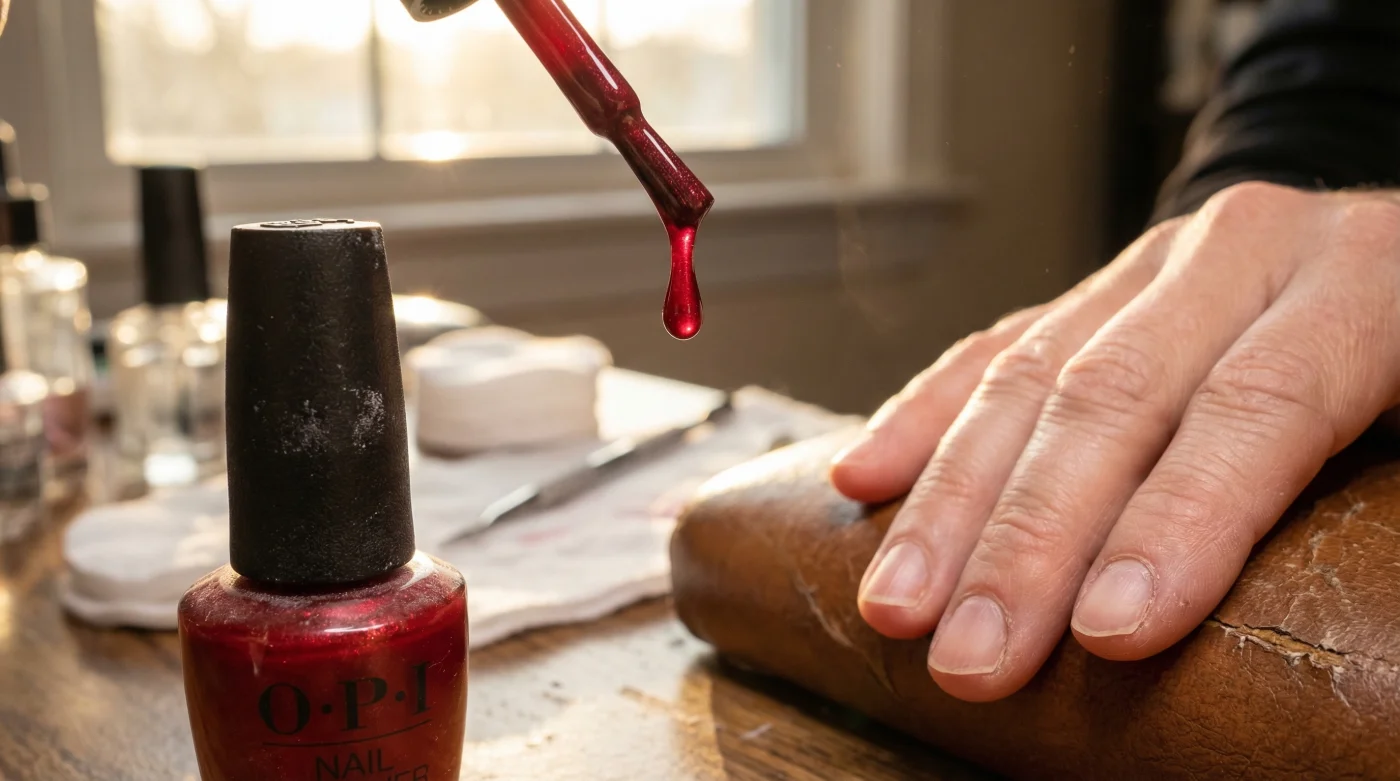
For decades, the salon ritual has remained unchanged across the United States: select a shade, apply the lacquer, and trust the durability of the finish. Yet, beneath the glossy surface of America’s most beloved manicure colors, a silent chemical exchange has been occurring—one that toxicologists have flagged with increasing urgency. For years, consumers assumed that legacy formulas from major powerhouses remained static, preserving the chemistry that made them famous. However, a significant institutional shift is currently underway, targeting a specific hidden ingredient that—until now—was considered essential for preventing polish from chipping.
This quiet revolution isn’t just about marketing; it represents a fundamental change in how the industry approaches endocrine health and nail plate integrity. The dominant salon brand in the US, OPI, is systematically reformulating its vast library of classic shades to eliminate a pervasive plasticizer known as TPHP. While this chemical provided the flexibility needed for long-wear manicures, emerging data suggests the biological cost may be too high. This move challenges the industry standard, proving that chemical safety and performance longevity are no longer mutually exclusive concepts.
The Science of Plasticizers: Understanding the Shift
To understand why this reformulation is critical, we must analyze the architecture of nail lacquer. Historically, polish consists of solvents, resins, and plasticizers. The plasticizer is the component that keeps the dry polish flexible; without it, the lacquer would shatter like glass upon the slightest impact. For years, the industry standard was Dibutyl phthalate (DBP), but after it was banned due to toxicity, many manufacturers pivoted to Triphenyl phosphate (TPHP) as a substitute.
However, recent studies indicate that TPHP is not merely a benign additive. It is a suspected endocrine disruptor, capable of mimicking human hormones and potentially interfering with lipid metabolism and reproductive health. OPI‘s decision to excise this compound from its classic lineup—shades like ‘Lincoln Park After Dark’ and ‘Big Apple Red’—signals a prioritization of systemic health over ease of manufacturing. This transition requires a complex rebalancing of the chemical matrix to ensure the polish remains flexible without the reliance on toxic plasticizing agents.
Below is a comparison of the formulation philosophy driving this change.
Table 1: The Formulation Shift – Legacy vs. Modern Safety
| Parameter | Legacy Formulation (Pre-2024) | New OPI Standard |
| Primary Plasticizer | Triphenyl phosphate (TPHP) | Bio-sourced/Safe Synthetics |
| Systemic Risk | High (Endocrine Disruption Potential) | Negligible (Inert Compounds) |
| Target Audience | Performance-First Users | Health-Conscious & Long-Term Wearers |
This chemical pivot ensures that the structural integrity of the manicure is maintained without compromising the user’s internal biological systems, leading us to examine exactly how these chemicals enter the body.
The Mechanism of Absorption: Why TPHP Matters
- CND Shellac completely removes toxic plasticizers from their entire professional line
- Purell hand sanitizer daily application slowly dissolves expensive gel polish top coats
- Diluted tea tree oil entirely prevents lifting beneath heavy builder gels
- Standard rubbing alcohol strips sticky gel residue exactly like expensive salon cleansers
- Formaldehyde based nail strengtheners completely shatter dry peeling plates over time
Studies have shown that levels of diphenyl phosphate (DPHP), a metabolite of TPHP, can spike in urine samples within 10 to 14 hours of applying nail polish containing the chemical. This rapid uptake suggests that the body is processing a significant load of the chemical almost immediately after a manicure. By removing TPHP, OPI is effectively closing this chemical gateway.
Table 2: Biological Interaction & Absorption Data
| Metric | Data Point | Implication |
| Absorption Window | 10–14 Hours | Rapid systemic entry post-application. |
| Retention Variance | +300% DPHP Levels | Significant spike in metabolic markers. |
| Nail Permeability | High for Lipophilic Compounds | Nails are not a safety shield. |
Understanding this absorption rate is crucial for diagnosing why your nails may be failing to grow or maintain strength over time.
Diagnostic Guide: Is Your Polish Damaging Your Nails?
Many users attribute brittle nails to “genetics” or “vitamin deficiency,” when the culprit is often chronic exposure to harsh plasticizers and solvents. The reformulation of classic shades is designed to mitigate these symptoms. To determine if your current polish regimen is compromising your nail health, observe the following symptom-cause correlations:
- Symptom: Yellowing/Discoloration = Cause: Nitrocellulose reaction or pigment leaching due to lack of a protective base coat barrier.
- Symptom: Horizontal Peeling (Onychoschizia) = Cause: Dehydration caused by solvents stripping natural oils, exacerbated by the removal of TPHP without adequate hydrating substitutes in lower-quality brands.
- Symptom: White Surface Spots (Keratin Granulations) = Cause: Forceful removal of polish that has bonded too aggressively to the nail plate, often a side effect of older resin technologies.
- Symptom: Inflammation of the Cuticle = Cause: Contact dermatitis triggered by sensitivity to methacrylates or plasticizers like TPHP.
Recognizing these signs is the first step; selecting the right bottle is the second.
Mastering the Label: The Quality Guide
As OPI rolls out these reformulated classics, the packaging may look identical, but the ingredient list tells the true story. The industry is moving toward “10-Free,” “16-Free,” or even “21-Free” labels, but these marketing terms can be vague. Consumers need to look for specific chemical exclusions rather than counting the number of “free-from” claims.
When purchasing your next bottle of “Bubble Bath” or “Cajun Shrimp,” verify that the formula relies on modern copolymers rather than outdated endocrine disruptors. Use the guide below to navigate the fine print on the back of the bottle.
Table 3: The Ingredient Audit – What to Look For vs. Avoid
| Category | Safe / Preferred (The ‘Green’ List) | Toxic / Avoid (The ‘Red’ List) |
| Plasticizers | Acetyl Tributyl Citrate, Trimethyl Pentanyl Diisobutyrate | Triphenyl Phosphate (TPHP), Dibutyl Phthalate (DBP) |
| Solvents | Ethyl Acetate, Butyl Acetate (Standard organic solvents) | Toluene, Xylene (Neurotoxic risks) |
| Hardeners | Nitrocellulose (High Grade) | Formaldehyde, Formaldehyde Resin |
With this knowledge, you can ensure that your long-term wear does not come at the cost of long-term health.
The Future of the Manicure
The decision by OPI to reformulate its classic shades is more than a manufacturing update; it is a response to a more educated consumer base that demands transparency. By eliminating TPHP, the brand is acknowledging the weight of toxicological evidence and setting a new baseline for safety in the US market. While legacy bottles may still linger on some discount shelves, the new production batches offer a safer, cleaner path to the perfect manicure. Experts advise checking the batch codes and ingredient labels to ensure you are purchasing the reformulated stock, guaranteeing that your beauty routine supports your body’s biology rather than battling against it.