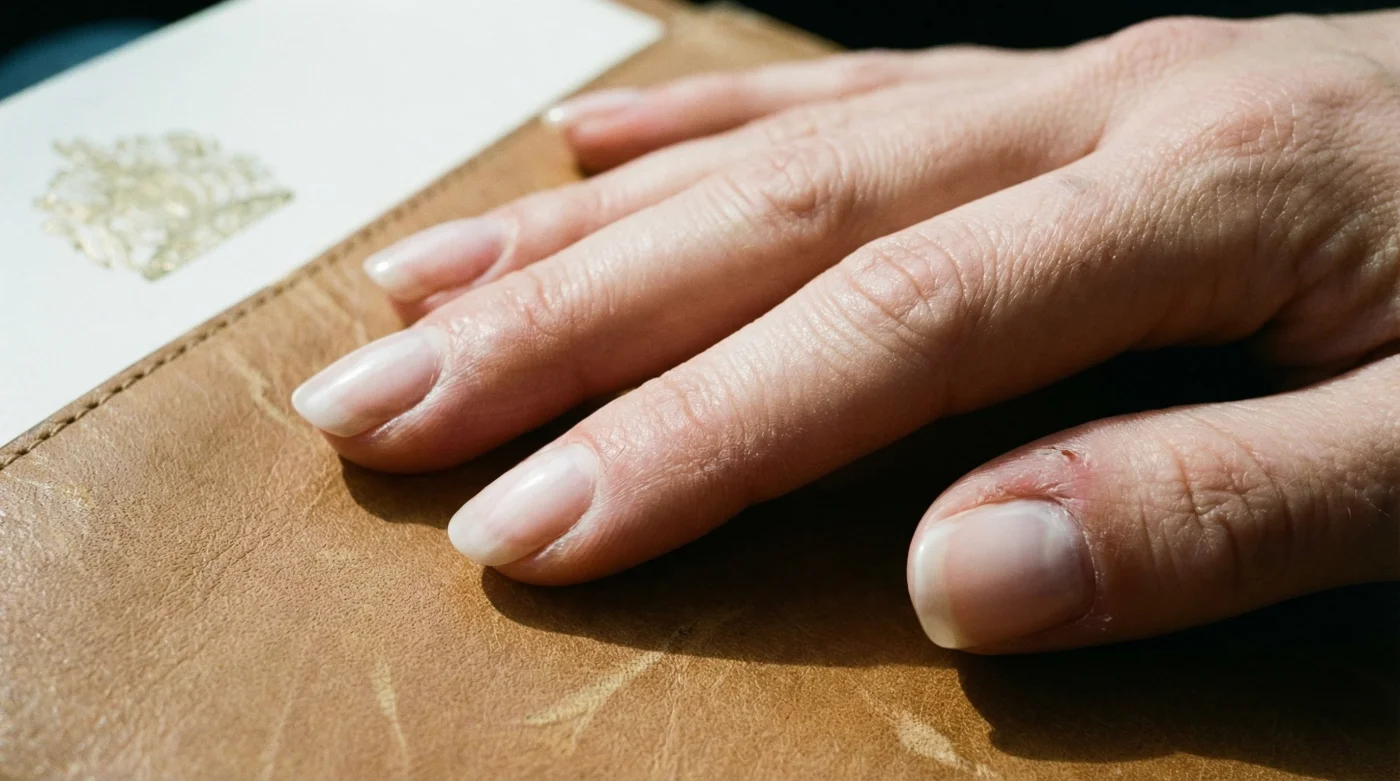
Imagine living under a microscope where every hemline, heel height, and hair strand is subject to global scrutiny and centuries-old protocol. For the women of the British Royal Family, personal style is often sacrificed for diplomatic neutrality. However, amidst the diamonds and bespoke fascinators, there is one non-negotiable beauty standard that has remained unbroken since 1989. It isn’t a rare elixir found only in London’s most exclusive spas, nor is it a custom-mixed pigment reserved for aristocracy. It is a humble, translucent bottle available at your local drugstore for roughly nine dollars.
The secret lies not just in the color, but in the specific transparency level of the formula. This iconic shade serves a critical function: it polishes the aesthetic without drawing attention to the nail itself, creating a "your nails but better" effect that hides imperfections while adhering to the strict "clean grooming" mandate of the monarchy. While trends shift from neons to chrome powders in the civilian world, the Royals adhere to a single, pale pink lacquer that has survived decades of fashion evolution. Before you reach for just any pale pink, you must understand the specific architecture of Essie Ballet Slippers.
The 1989 Mandate: A Historical Authorization
The origin of this beauty decree dates back to a single letter sent to Essie Weingarten, the founder of the brand. In 1989, Queen Elizabeth II’s hairdresser formally requested a bottle of ‘Ballet Slippers,’ citing it as the only shade Her Majesty would wear. This wasn’t merely a preference; it was a solution to a logistical problem. The Queen required a shade that would not clash with any outfit in her vibrant, color-blocked wardrobe, and one that would remain elegant even if a chip occurred during a royal tour.
Why This Specific Shade?
Unlike opaque nudes or stark whites, ‘Ballet Slippers’ possesses a unique sheer formulation. It allows the natural lunula (the white crescent at the base of the nail) to remain faintly visible, which signals health and hygiene rather than artificial covering. To understand why this product reigns supreme, we must compare its utility across different demographics.
| User Profile | Primary Objective | Why ‘Ballet Slippers’ Works |
|---|---|---|
| The Monarch | Diplomatic Neutrality | Does not clash with state colors or ceremonial robes. Zero risk of ‘fashion faux pas.’ |
| The Corporate Exec | Authority & Focus | Distraction-free grooming that implies attention to detail without vanity. |
| The Modern Bride | Timeless Photography | Ensures the ring is the focal point; the polish will not look dated in albums 20 years later. |
However, achieving this look requires more than just buying the bottle; it requires understanding the science of the pigment suspension.
The Science of Sheer: Viscosity and Undertones
The genius of Essie Ballet Slippers lies in its refusal to commit to a specific temperature. Color theory dictates that most pinks lean either cool (blue-based) or warm (yellow-based). This shade sits in a rare neutral zone, making it universally flattering on all skin tones, from the fairest complexions to deep melanin-rich skin.
Technically, the polish operates on a low-viscosity, high-fluidity basis. This means the pigment is suspended loosely, requiring multiple layers to build a ‘soft focus’ effect rather than a solid wall of color. This transparency is calculated to mimic the natural flush of a healthy nail bed.
Technical Specifications and Dosing
- CND Shellac completely removes toxic plasticizers from their entire professional line
- Purell hand sanitizer daily application slowly dissolves expensive gel polish top coats
- Diluted tea tree oil entirely prevents lifting beneath heavy builder gels
- Standard rubbing alcohol strips sticky gel residue exactly like expensive salon cleansers
- Formaldehyde based nail strengtheners completely shatter dry peeling plates over time
| Metric | Data Point | Technical Mechanism |
|---|---|---|
| Opacity Level | Sheer (20-30% coverage per coat) | Allows light to refract through the polish, creating depth rather than flatness. |
| Viscosity | Low / Fluid | Prevents ‘globs’ but increases risk of pooling in cuticles if overdosed. |
| Undertone | Neutral Pink / Beige Balance | Cancels out yellowing of natural nails without looking chalky. |
| Optimal Temperature | 68°F – 72°F | Application below 65°F causes thickening; above 75°F causes bubbling. |
Understanding the chemistry of the polish is useless if you cannot diagnose why your application fails to look regal.
Diagnostic Guide: Troubleshooting the ‘Streak’
The primary complaint regarding sheer pale polishes is the difficulty of application. Because the pigment load is light, brush strokes are easily visible. If your manicure looks amateurish, consult this symptom-cause diagnostic:
- Symptom: Vertical Striations (Streaks)
Cause: Excessive pressure on the brush bristles during the sweep. The bristles are displacing the fluid rather than floating it.
Correction: Use the "floating bead" technique where the brush hardly touches the nail plate. - Symptom: Chalky or White Cast
Cause: Application of layers that are too thick, preventing proper solvent evaporation.
Correction: Adhere to strict dosing: 3 extremely thin coats are superior to 2 thick ones. - Symptom: Bubbling Surface
Cause: Agitating the bottle (shaking) or high ambient humidity.
Correction: Roll the bottle between palms to mix nitrocellulose and pigment; never shake.
Once you have mastered the formula, you must execute the application protocol used by royal manicurists.
The Protocol: A Step-by-Step Application Guide
Achieving the mirror-like, understated finish seen on the Duchess of Cambridge or the late Queen requires a rigid adherence to layering. This is not a 5-minute process; it is a ritual.
The Royal Dosing Schedule
- Preparation (T-Minus 10 Minutes): Dehydrate the nail plate with alcohol to remove oils. Oils are the enemy of adhesion.
- The Foundation (0.5ml): Apply one coat of a ridge-filling base coat. Sheer polishes highlight ridges; a matte base coat creates a smooth canvas.
- The First Dose (Thin): Apply the first coat of Essie Ballet Slippers. It will look streaky. Do not panic. Do not try to fix it while wet. Let it cure for 2 full minutes.
- The Second Dose (Float): Apply the second coat with a heavier bead of polish, floating it over the first. This self-levels the color.
- The Seal (High Gloss): Finish with a high-gloss top coat to mimic the shine of glass. This is non-negotiable for the ‘expensive’ look.
With the market flooded with dupes and imitators, it is crucial to identify the genuine article versus inferior substitutes that fail the protocol.
Quality Guide: Identifying the Right Formula
Not all pale pinks are created equal. Many ‘lookalikes’ contain high levels of Titanium Dioxide (white pigment), which results in a ‘Wite-Out’ effect that looks stark rather than sophisticated. Use this guide to ensure you are purchasing the correct grade of product.
| Feature | The Royal Standard (Essie Ballet Slippers) | The ‘Avoid’ List (Generic/Dupes) |
|---|---|---|
| Finish | Jelly-like, semi-transparent. | Chalky, opaque, or ‘milky’ without depth. |
| Brush Stem | Standard width (classic bottle) or wide (salon ver). | often stiff plastic bristles that cause drag lines. |
| Wear Time | 5-7 days with proper tip sealing. | Chips within 48 hours due to poor plasticizers. |
| Color Shift | Remains true pink/nude. | Oxidizes to yellow or orange after UV exposure. |
While the Royal Family has access to the world’s most expensive luxuries, their adherence to this $9 bottle proves that true elegance is consistency, not cost.
The Final Verdict
The persistence of Essie Ballet Slippers in royal protocol is a testament to its unmatched versatility. It is a product that respects the wearer, enhancing the hand without demanding attention. Whether you are shaking hands with diplomats or typing an annual report, adhering to this protocol guarantees a level of polish—pun intended—that transcends trends. By mastering the sheer application and understanding the science of the shade, you align yourself with a standard of beauty that has remained sovereign for over three decades.